

No products in the cart.
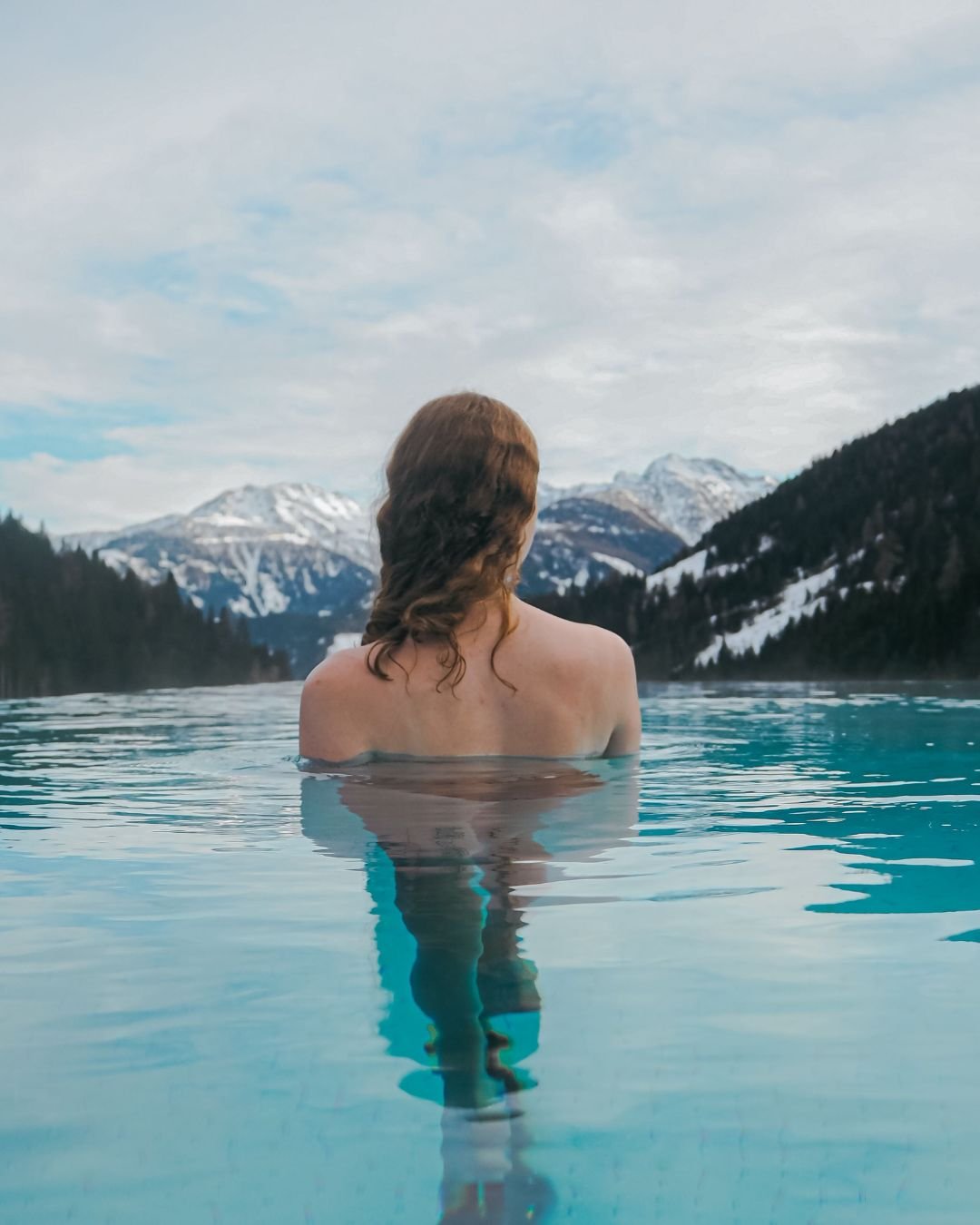
Thermal Bath Culture in Switzerland — Water, Weather, and Winter Rituals
One of the quietest pleasures of traveling through Switzerland in colder months is the thermal bath.
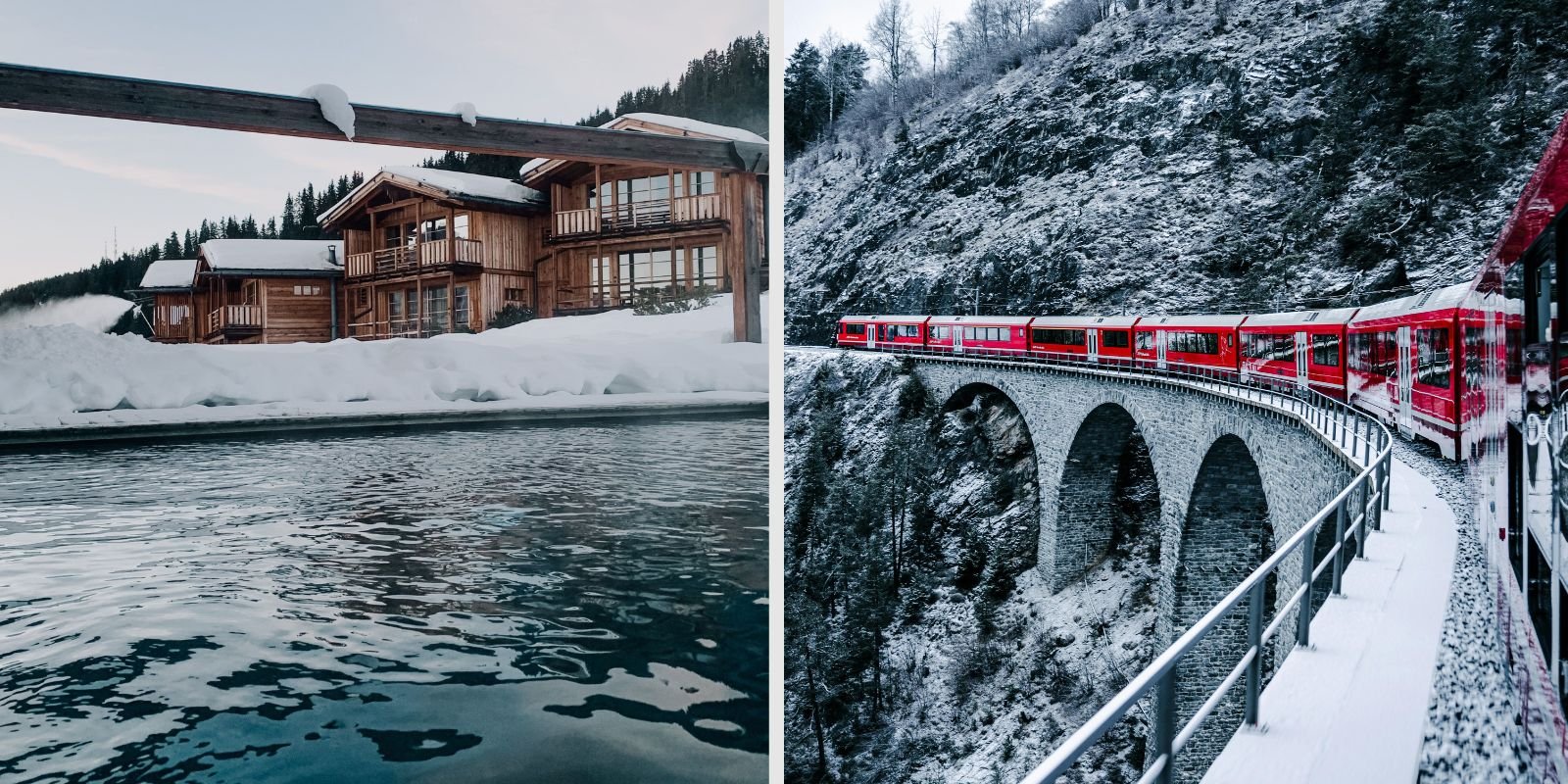
Not only for the water itself, but for the atmosphere surrounding it: trains arriving through fog and snow, steam rising into mountain air, stone pools warm against winter temperatures, and the strange calm that settles over everything once you enter the water.
In Switzerland, thermal baths are not only luxury destinations or wellness retreats. Many are woven naturally into seasonal life — places people return to during long winters, mountain storms, cold evenings, or weekends when the weather encourages slowing down for a few hours.
The experience feels deeply connected to climate and landscape. Water, weather, architecture, and silence all become part of the same ritual.
Water Beneath the Mountains
Switzerland’s bath culture stretches back centuries. Towns such as Baden, Leukerbad, Scuol, and Yverdon-les-Bains developed around mineral springs long before modern spa tourism existed, in some cases dating back to Roman times.
What remains interesting today is not simply the history itself, but the continuity of the ritual. People still travel toward warm water during winter months much as they always have: by train, through valleys and mountain towns, arriving at places shaped by stone, steam, and weather.
Thermal baths in Switzerland often feel less performative than in many other countries. The atmosphere tends to be quieter, more architectural, and more closely tied to the landscape around them.
The Feeling of a Swiss Thermal Bath
A thermal bath day in Switzerland often begins outside the bath itself.
A train ride through fog. Snow gathering beside the tracks. The transition from cold air into warm interior spaces. Changing rooms filled with winter boots and wool coats. Steam collecting against glass while mountains disappear gradually into evening light.
The strongest baths understand this rhythm well. The experience is not only about pools or treatments, but about transitions between temperatures, textures, light, and silence.
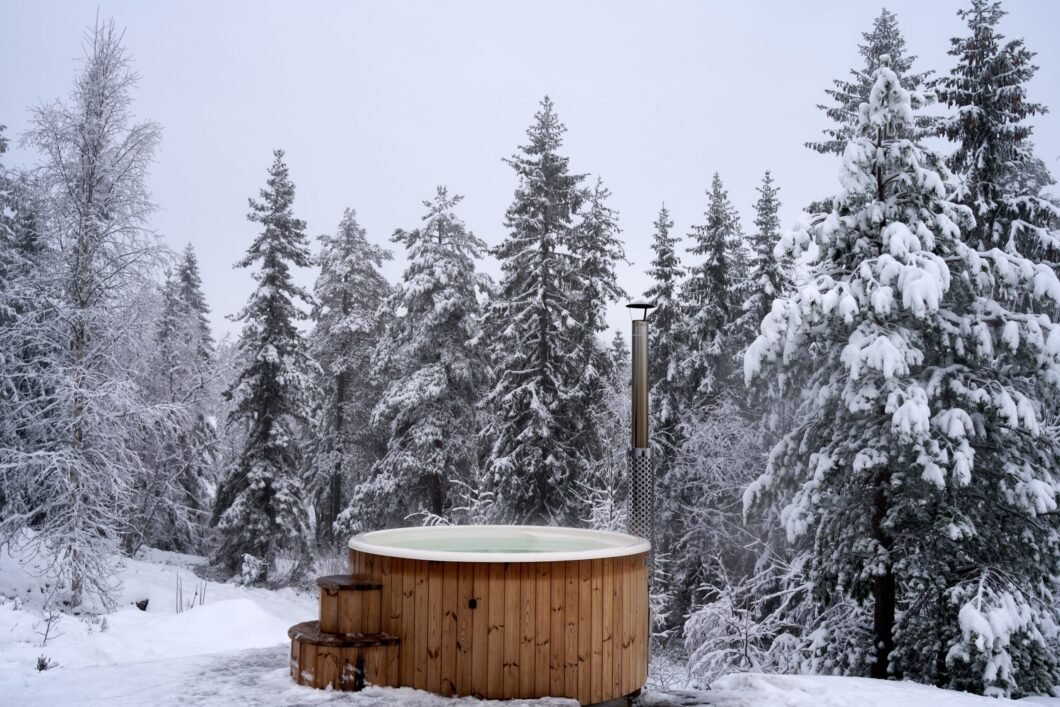
In winter especially, the contrast becomes memorable: cold air against your face while standing in warm outdoor water, snow falling quietly into steam, conversations lowering naturally as the evening settles in.
Architecture & Atmosphere
Swiss thermal baths are also deeply connected to architecture.
Many contemporary bath spaces in Switzerland avoid decorative luxury in favor of restraint: stone, wood, concrete, shadow, natural light, and carefully controlled acoustics.
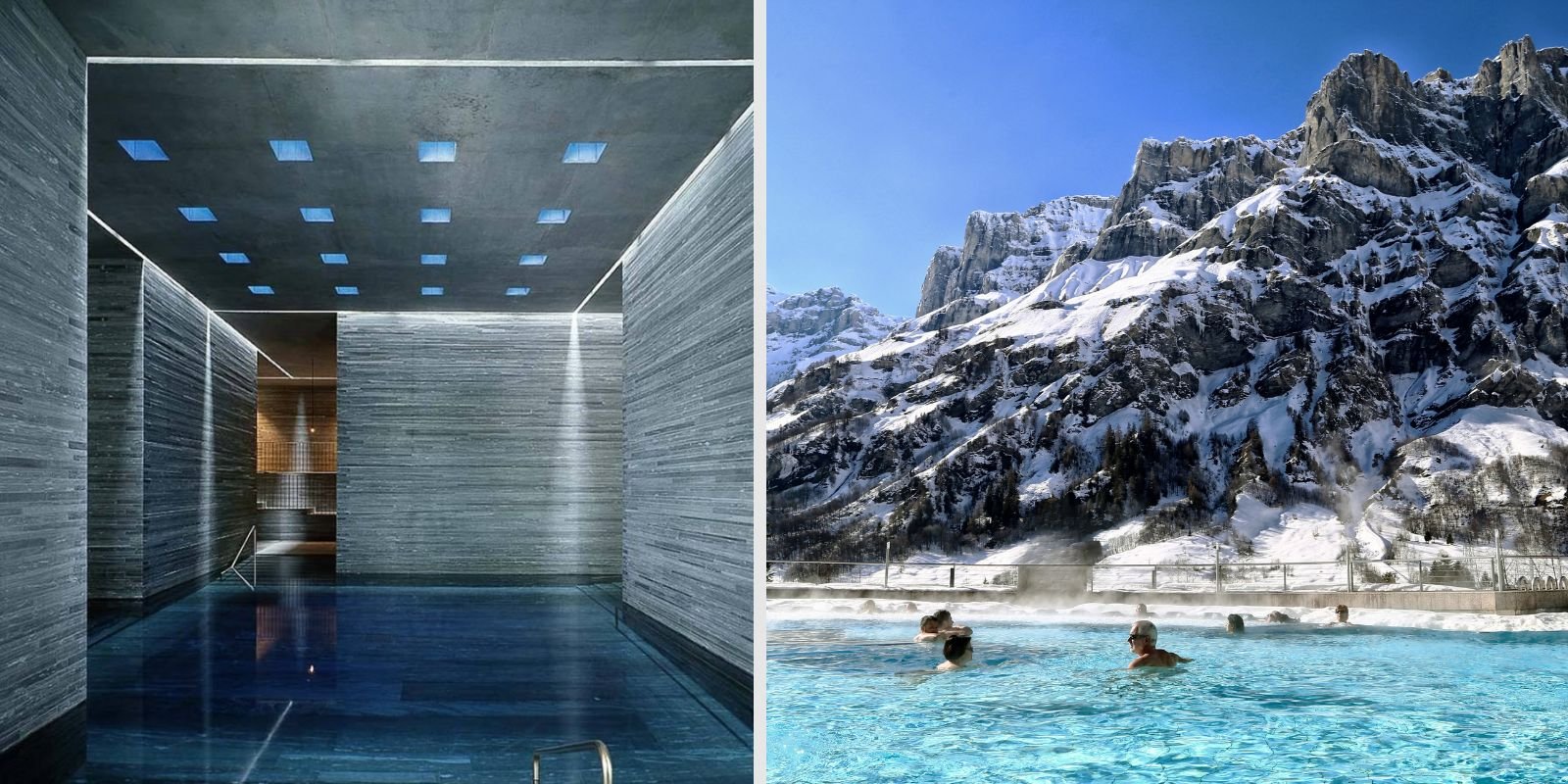
At Therme Vals, designed by Peter Zumthor, the baths feel almost carved directly into the mountain itself. Local stone, dim passageways, echoing water, and shifting light create an atmosphere that feels both ancient and modern at the same time.
Elsewhere, baths such as Fortyseven Thermal Baths connect historic bathing culture with contemporary Swiss design, while alpine baths like Mineralbad & Spa Rigi Kaltbad and Bogn Engiadina place the experience directly within mountain weather itself.
The architecture rarely tries to dominate the landscape. More often, it frames it.
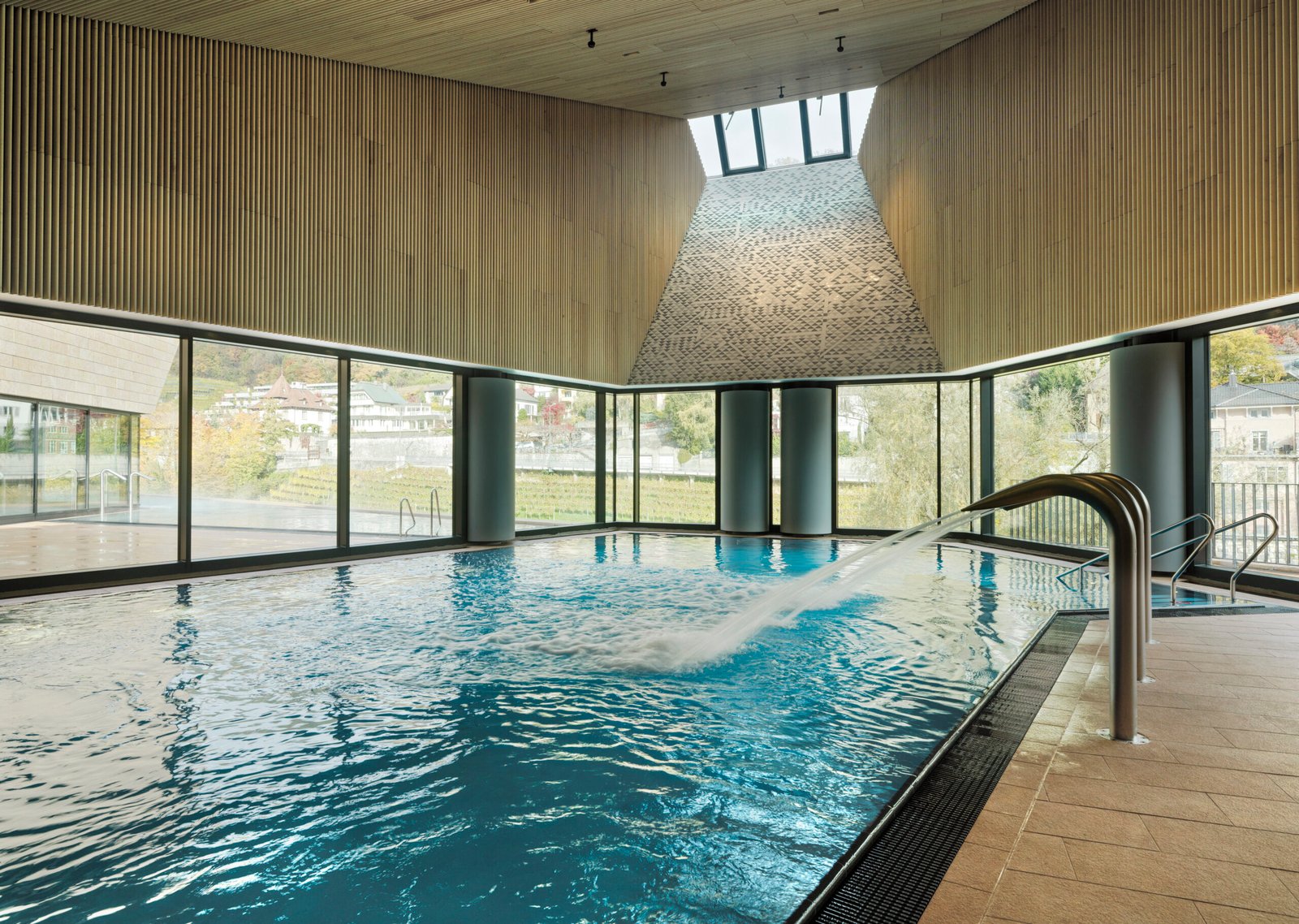
Photo courtesy of FORTYSEVEN Wellness Therme, Baden Switzerland © Enrico Cano.
Bathing traditions vary across Switzerland, from historic spa towns and contemporary architectural baths to outdoor mineral pools surrounded by alpine landscapes.
Each offers a different relationship with water and place, shaped by local history, geography, and seasonal rhythms.
Where to Experience Outdoor Thermal Bathing in Switzerland
Switzerland’s thermal baths offer very different experiences, from architectural sanctuaries to open-air pools framed by alpine peaks. These four destinations provide a starting point for exploring the country’s bathing traditions.
Leukerbad, Valais — For the Mountain Views
Surrounded by the towering peaks of the Valais Alps, Leukerbad is one of Switzerland’s best-known thermal bathing destinations. Visitors can choose between several bathing complexes, including Leukerbad Therme, with its extensive outdoor pools and family facilities, and Walliser Alpentherme, where a large outdoor mineral pool offers sweeping mountain views.
Worth knowing: Leukerbad Therme is particularly suited to families, while Walliser Alpentherme offers a more traditional spa experience. Both welcome day visitors.
Explore Leukerbad’s thermal baths
7132 Therme Vals, Graubünden — For Architecture and Quiet
Designed by Swiss architect Peter Zumthor, the thermal baths at Vals are built from local quartzite stone, creating an intimate relationship between architecture and landscape. Moving through softly lit stone chambers, contrasting water temperatures, and an outdoor pool becomes an experience of light, texture, and water.
Worth knowing: You don’t need to stay at the hotel to visit, but external visitors must reserve online in advance. Admission is limited to preserve the quiet atmosphere, making this an especially appealing destination for architecture enthusiasts and travelers seeking stillness.
Les Bains de Lavey, Vaud — For an Evening in Warm Water
Situated near the Rhône Valley beneath the Dents du Midi and Dents de Morcles, Les Bains de Lavey is known for its exceptionally hot natural spring. The outdoor pools are maintained at comfortable bathing temperatures, allowing visitors to enjoy the contrast of warm mineral water and cool mountain air.
Worth knowing: The baths offer evening opening hours, making them an appealing choice after a day exploring the region. Advance reservations are recommended during weekends and holidays, and children are admitted from age four.
Bogn Engiadina, Scuol, Graubünden — For an Engadin Escape
In the Lower Engadin, Bogn Engiadina draws on the region’s long tradition of mineral bathing. Its outdoor panorama pool looks toward the surrounding mountains, while the indoor bathing areas offer a quieter retreat from the alpine weather.
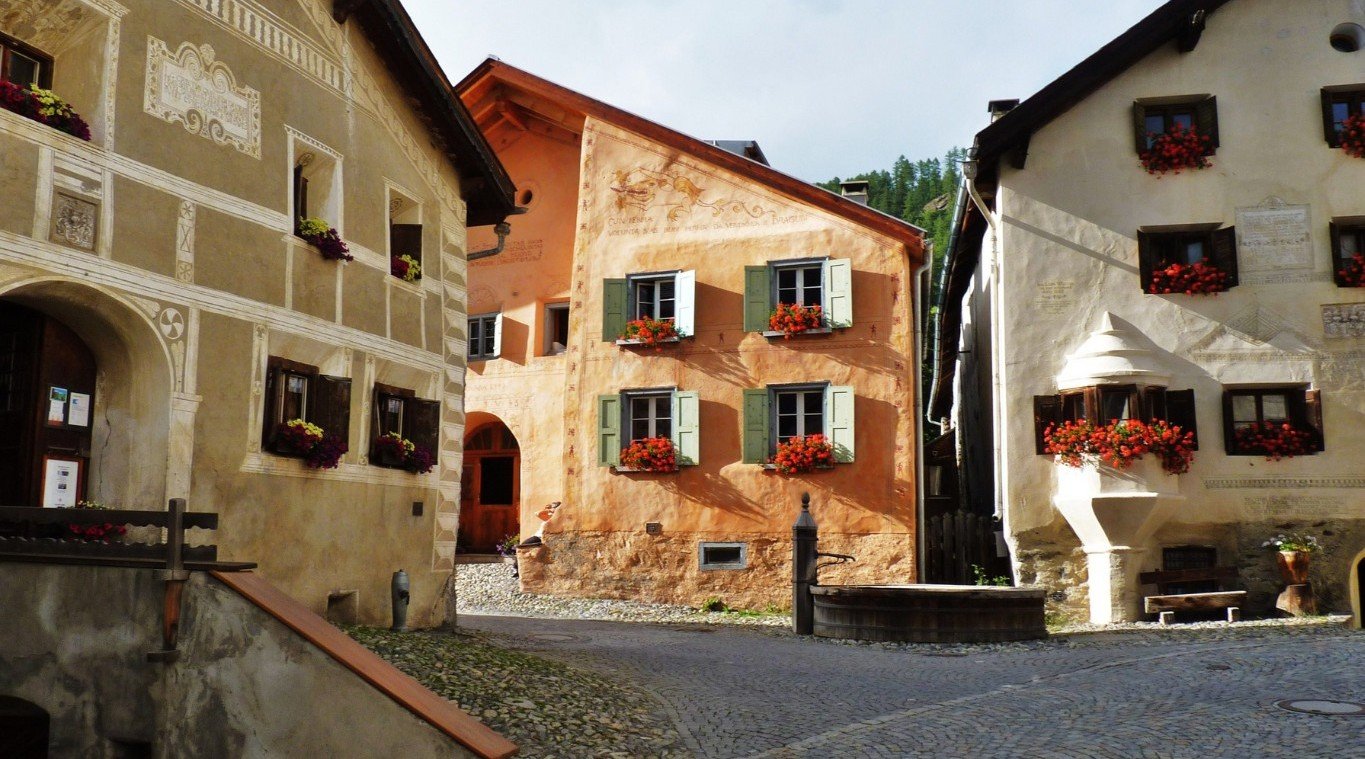
Worth knowing: Scuol is an appealing base for exploring the Lower Engadin, combining thermal bathing with traditional village architecture and mountain walks. The baths offer shorter visits as well as day admission, making them easy to incorporate into a longer stay.
Bath Etiquette & Rhythm
Swiss bath culture tends to be calm and understated.
Most baths encourage quiet conversation, slow movement, and respect for shared space. Phones are usually discouraged around pools and saunas, and many visitors move gradually between indoor and outdoor areas over several hours rather than treating the experience as something rushed.
Practically speaking, it is always useful to:
- shower before entering pools or saunas
- check sauna clothing rules in advance
- bring sandals and water
- reserve evening or winter slots early during colder months
The atmosphere is generally less about spectacle and more about settling into the environment itself.
Tour Noir Note
There is something quietly restorative about arriving by train on a cold winter afternoon, stepping into warm mineral water, and watching the mountains disappear into evening light.
In Switzerland, thermal bathing is not simply an escape from winter, but a way of experiencing it more fully.
Leave a Reply