

No products in the cart.
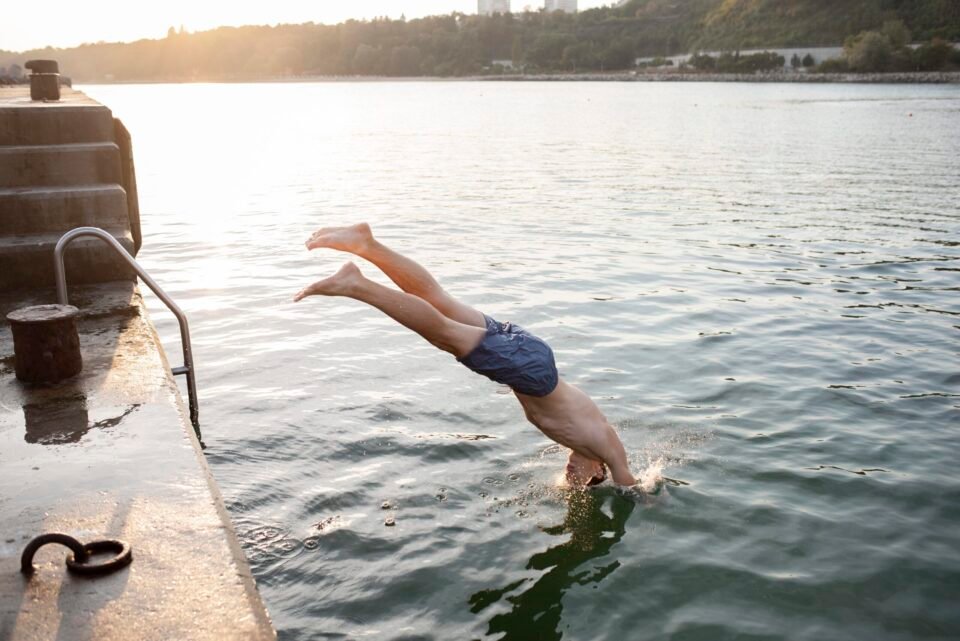
River Swimming in Switzerland — A Swiss Summer Ritual
One of the most surprising parts of summer in Switzerland is not the mountains or the lakes, but the rivers themselves.
In cities like Bern, Basel, Zürich, and Geneva, people do not simply sit beside the water. They enter it. Office workers float downstream after work. Teenagers gather on stone riverbanks late into the evening. Swimmers drift past historic old towns with waterproof bags trailing behind them.
River swimming in Switzerland is not treated as an extreme sport or tourist attraction. It is part of everyday life in summer — woven into the rhythm of the cities themselves.
For visitors, this can feel unexpectedly freeing: the idea that a river running through the center of a city is not only beautiful, but actively lived in.
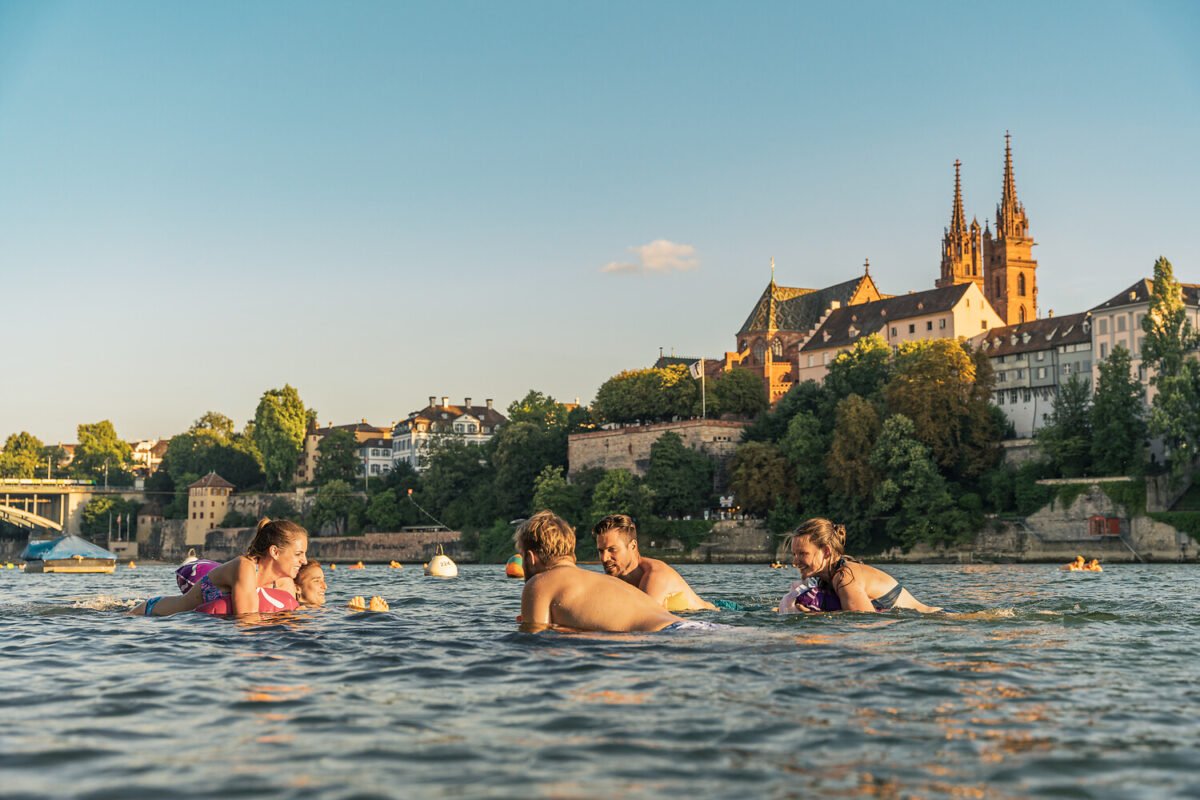
Summer swimmers enjoy the Rhine River in Basel, Switzerland. Photo courtesy of Basel Tourismus.
Why River Swimming Exists in Switzerland
Switzerland’s river culture is shaped by several things at once: unusually clean water, strong public infrastructure, widespread swimming ability, and cities designed around lakes and rivers rather than separated from them.
In warmer months, the water becomes part of daily movement through the city. People swim before dinner, after work, between classes, or on weekends with friends.
The atmosphere is surprisingly relaxed. You quickly notice bicycles leaned against railings, towels drying beside the river, swimmers carrying waterproof float bags, and groups sitting near the water long after sunset.
Before You Swim
River swimming in Switzerland is part of local culture, but it is not casual swimming. Currents, weather, water levels, boats, and exit points all matter. Swim only where permitted, check local guidance, and never enter the river alone or unprepared.
Bern & The Aare
If there is a symbolic center of Swiss river swimming culture, it is probably the Aare in Bern.
The river curves around the old city in wide turquoise loops, fast-moving but remarkably clear. On warm evenings, much of Bern seems to migrate toward the water: students, families, office workers, groups of friends floating downstream together.
Many swimmers enter upstream and let the current carry them gently around the city before climbing out farther below and walking back barefoot through town.
The experience feels both urban and strangely natural at the same time — medieval architecture above, mountain water below.
Useful Phrases
| Deutsch | English |
|---|---|
| Kann man hier schwimmen? | Can you swim here? |
| Wo ist der Einstieg? | Where is the entry point? |
| Wie stark ist die Strömung? | How strong is the current? |
| Wo steigt man wieder aus? | Where do you get out again? |
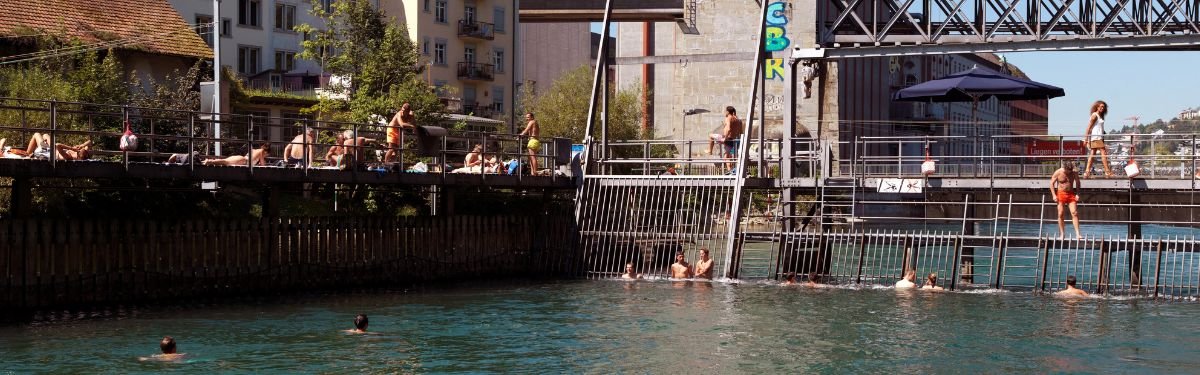
All rights reserved. Photo: © Siggi Bucher / Zürich Tourismus
Zürich & The Limmat
River swimming in Zürich feels slightly different: more urban, more integrated into daily city movement.
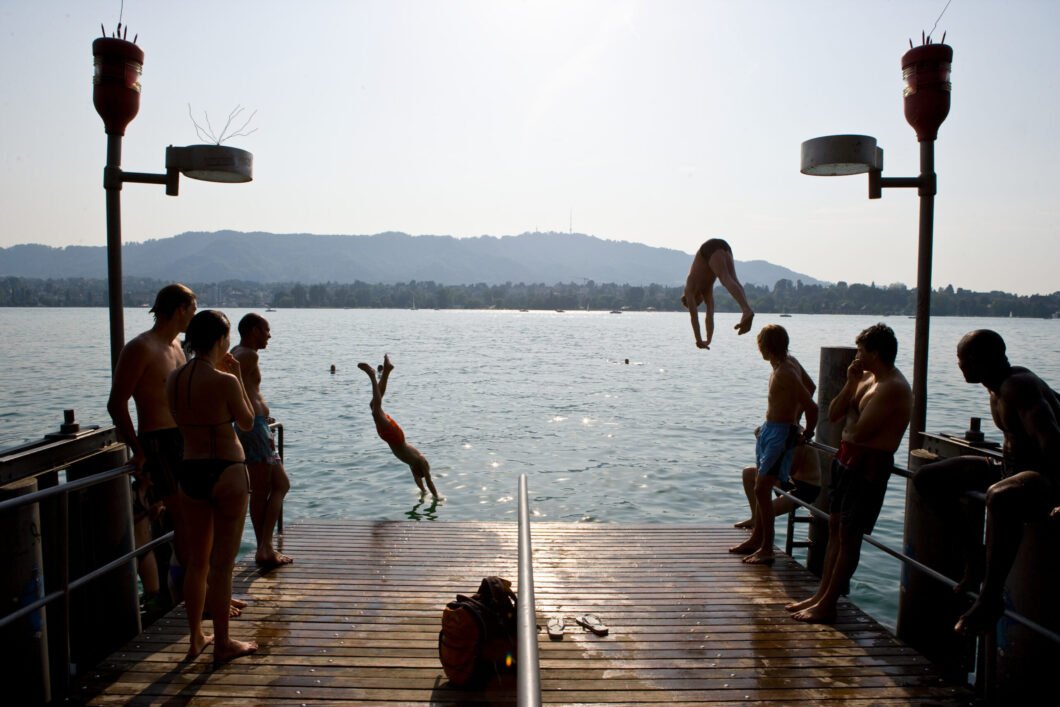
People swim directly through the center of the city, moving between bridges, old stone buildings, cafés, and public bathhouses along the Limmat and Lake Zürich.
In summer, the rhythm of the city changes noticeably near the water. Swimmers gather near wooden docks and river steps late into the evening, while bars and cafés remain active nearby.
The contrast between Swiss efficiency and the relaxed lake culture is part of what makes Zürich so distinctive in warmer months.
Basel & The Rhine
Basel has one of the strongest river swimming cultures in Switzerland.
On summer evenings, the Rhine fills with swimmers floating downstream through the center of the city, often carrying bright waterproof swim bags known locally as Wickelfisch.
The current here is stronger than in some other Swiss cities, and the river feels larger and more powerful, but the atmosphere remains remarkably calm and communal.
You begin to realize that the river is not separate from city life in Basel — it is part of it.
Useful Phrases
| Deutsch | English |
|---|---|
| Ist die Strömung heute stark? | Is the current strong today? |
| Gibt es hier Umkleiden? | Are there changing rooms here? |
| Kann man den Wickelfisch hier kaufen? | Can you buy the Wickelfisch here? |
| Das Wasser ist heute perfekt. | The water is perfect today. |
Lake Swimming in Geneva & Lausanne
In western Switzerland, lake swimming often replaces river swimming.
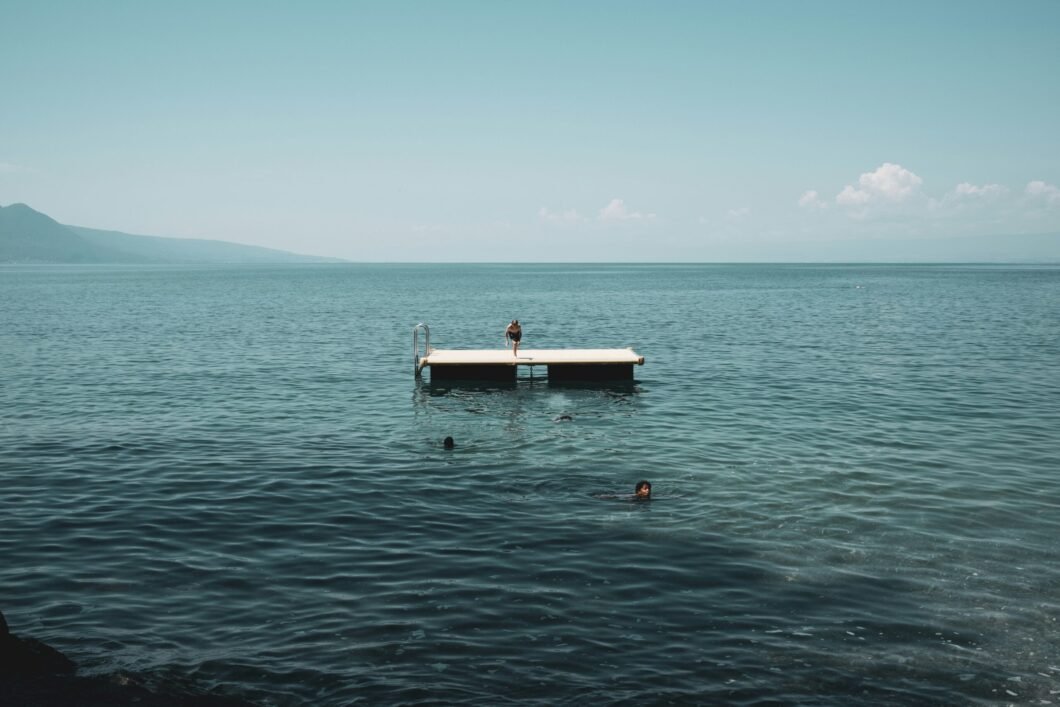
Along Lake Geneva, public swimming areas, floating platforms, ladders, and lakeside steps become part of daily life during summer. In Geneva and Lausanne especially, people head toward the water after work and remain there well into the evening.
The atmosphere tends to feel slower and quieter than river swimming further north: long sunsets over the lake, ferry crossings, conversations on stone steps beside the water.
Swimming here becomes less about movement downstream and more about lingering near the shoreline.
The Wickelfisch
One of the most recognizable objects of Swiss river culture is the Wickelfisch: a waterproof float bag used to carry clothes and personal belongings while swimming.
The bag seals tightly, traps air inside, and floats beside you as you move through the water. In cities like Basel and Bern, seeing dozens of bright Wickelfisch bags drifting downstream in summer has become part of the visual rhythm of the rivers themselves.
The design is practical, simple, and distinctly Swiss — functional without feeling overdesigned.
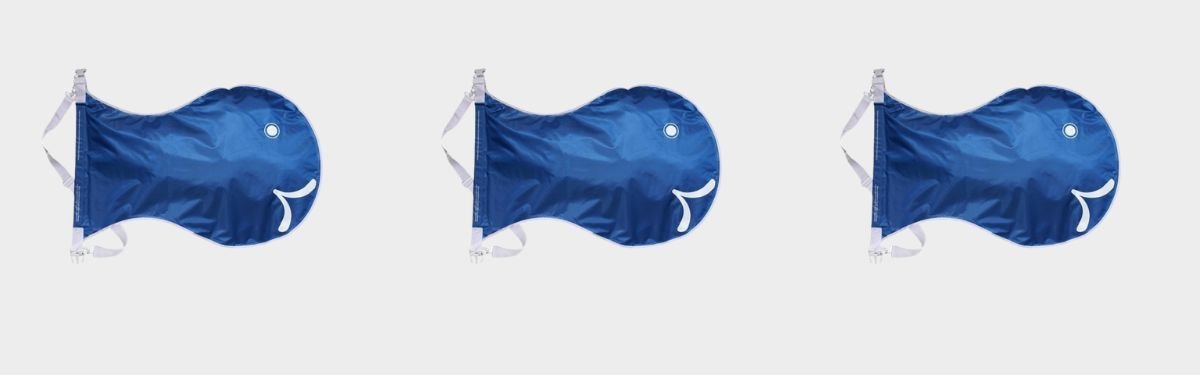
Wickelfisch medium (M), dark blue; 71 cm, 16 L. RSFM20003. Made from recycled material – available at biderundtanner.ch
River Etiquette & Safety
Swiss rivers may appear calm, but currents can be strong and conditions can change quickly depending on weather and snowmelt.
A few basic principles matter:
- Observe where locals enter and exit the water.
- Swim sober, alert, and only if you are a confident swimmer.
- Never swim alone; go with someone who knows the river or follow designated swimming areas.
- Do not underestimate the current.
- Avoid swimming after storms or heavy rain.
- Use a brightly coloured dry bag for visibility and belongings, but do not rely on it as a rescue device or tie it to your body.
- Follow local signage and safety recommendations.
Many cities provide designated swimming areas, ladders, changing spaces, and clearly marked entry and exit points.
A Different Relationship With the City
For many visitors, river swimming changes the way Swiss cities feel.
The water is not hidden behind development or fenced away from public life. Rivers and lakes remain accessible, shared, and deeply integrated into daily routines.
A city begins to feel different when people end the workday by stepping directly into the water.
Tour Noir Note
In Switzerland, swimming is rarely separated from everyday life. Rivers become part of the city itself: crossed, entered, floated through, and returned to again the next evening. Sometimes the clearest understanding of a place comes not from sightseeing, but from joining the quiet routines already happening there.
All rights reserved. Photo © Martin Rütschi / Zürich Tourismus
Continue the Ritual
River swimming is not just a way to cool down in Switzerland. It is a way of entering the rhythm of summer: slowly, locally, and with attention to the weather, the current, the city, and the people around you.
From the Aare in Bern to the Rhine in Basel, from lakeside Badis to quiet swimming places beyond the obvious routes, Swiss summer is shaped by water. It is practical, social, refreshing, and deeply atmospheric — one of the clearest ways to experience the country not as a checklist, but as a season.
For more slow Swiss summer ideas, continue exploring:
- Swiss Train Culture — Movement through Switzerland becomes part of the experience
- Thermal Bath Culture in Switzerland — A quieter counterpart to summer swimming
- Mountain Hut Culture — Sleeping above the valleys, closer to weather and landscape
- Modern Architecture in Switzerland — Architecture shaped by landscape
- Valais, Switzerland — Vineyard, Stone, Weather, and Alpine Rhythm
Less tourist noise. More hidden Switzerland.
Receive the free TOUR NOIR planning companion, quiet Swiss travel notes, and upcoming guide releases.

Leave a Reply