

No products in the cart.
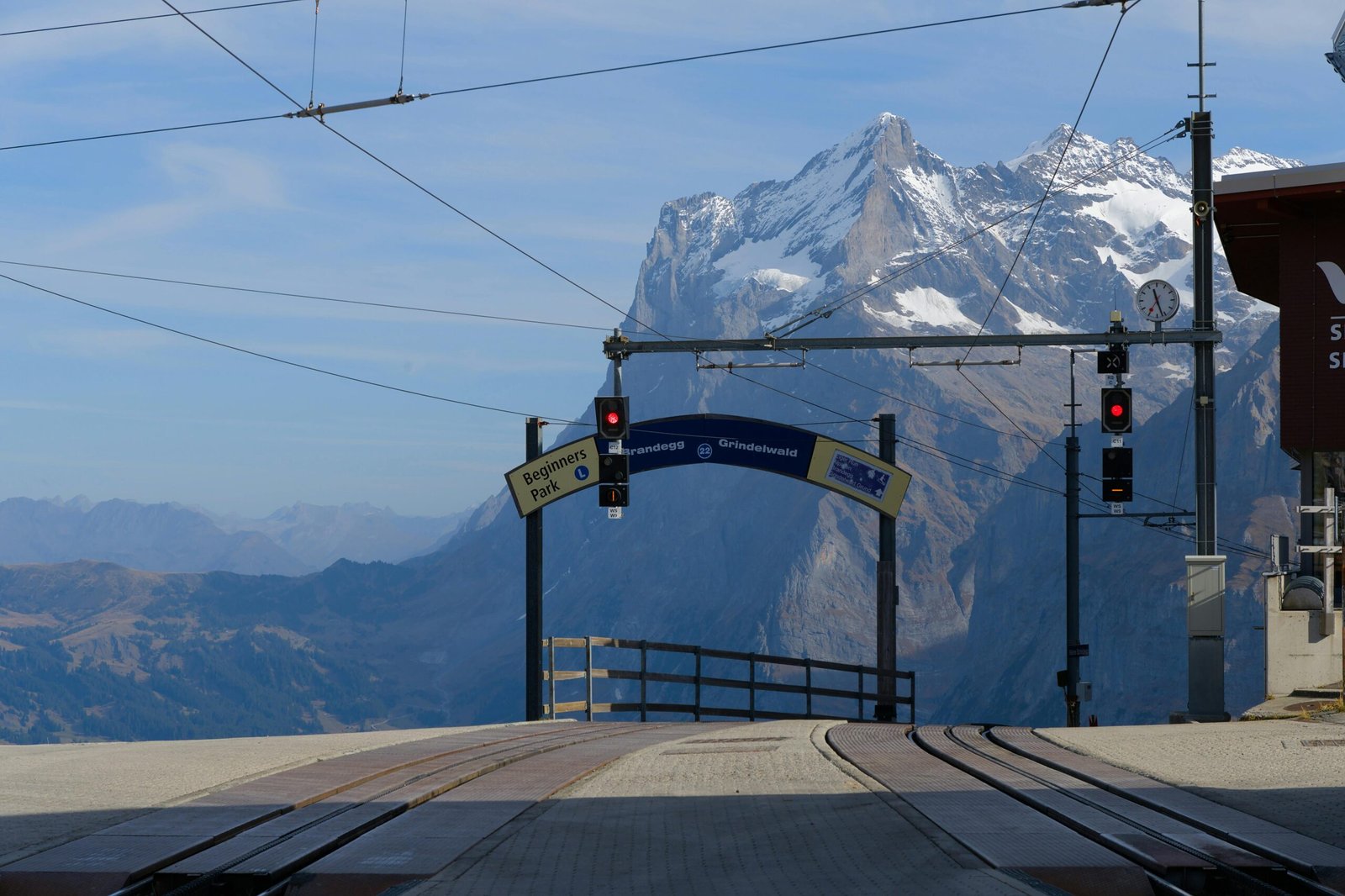
Swiss Train Culture — Movement Through Landscape
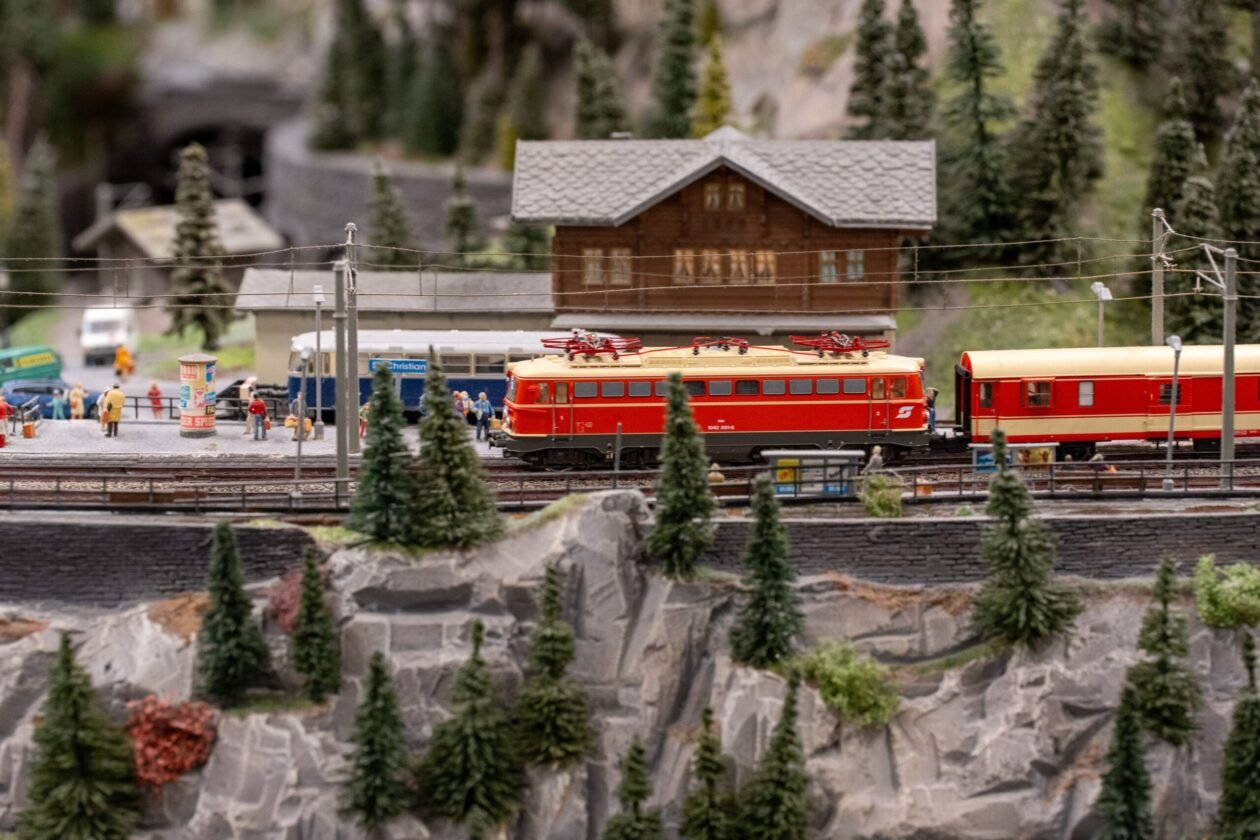
One of the first things many visitors notice about Switzerland is that the trains run on time.
What takes longer to notice is how deeply rail travel shapes everyday life here.
In Switzerland, trains are not separate from the country’s atmosphere or landscape. They are part of how people move through mountains, lakes, cities, weather, and seasons on a daily basis. Office workers, students, hikers, skiers, families, and travelers often share the same routes, crossing between languages and landscapes within a few hours.
Over time, the train becomes less like transportation and more like a rhythm: a quiet carriage at sunrise, fog lifting outside the windows, a bakery stop during a transfer, the gradual transition from city to lake to alpine valley.
Much of Switzerland is experienced sequentially through rail lines.
The Train as Everyday Space
Swiss trains are remarkably integrated into daily life.
Morning commuters work quietly with coffee beside them. Hikers board early regional lines carrying boots and backpacks. Cyclists load bicycles onto trains heading toward lakes or mountain passes. In winter, entire carriages fill with skis, wool coats, and damp gloves drying slowly in the warmth.
The atmosphere is usually calm and understated. Conversations remain quiet, phone calls are brief, and people move through stations with little visible urgency despite the precision of the schedules around them.
For travelers coming from more car-dependent countries, this often changes the feeling of movement entirely. The journey itself becomes usable time rather than dead time.
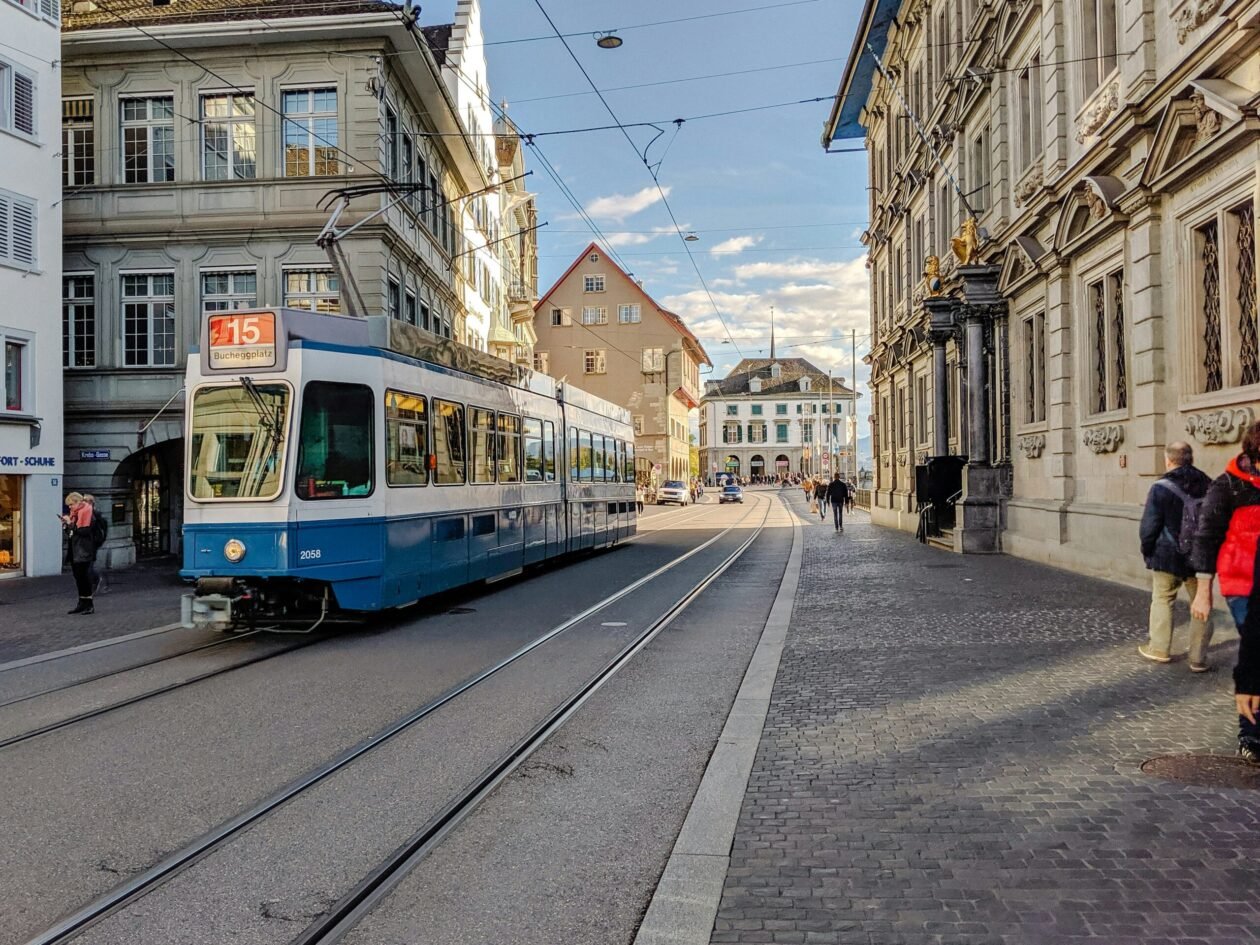
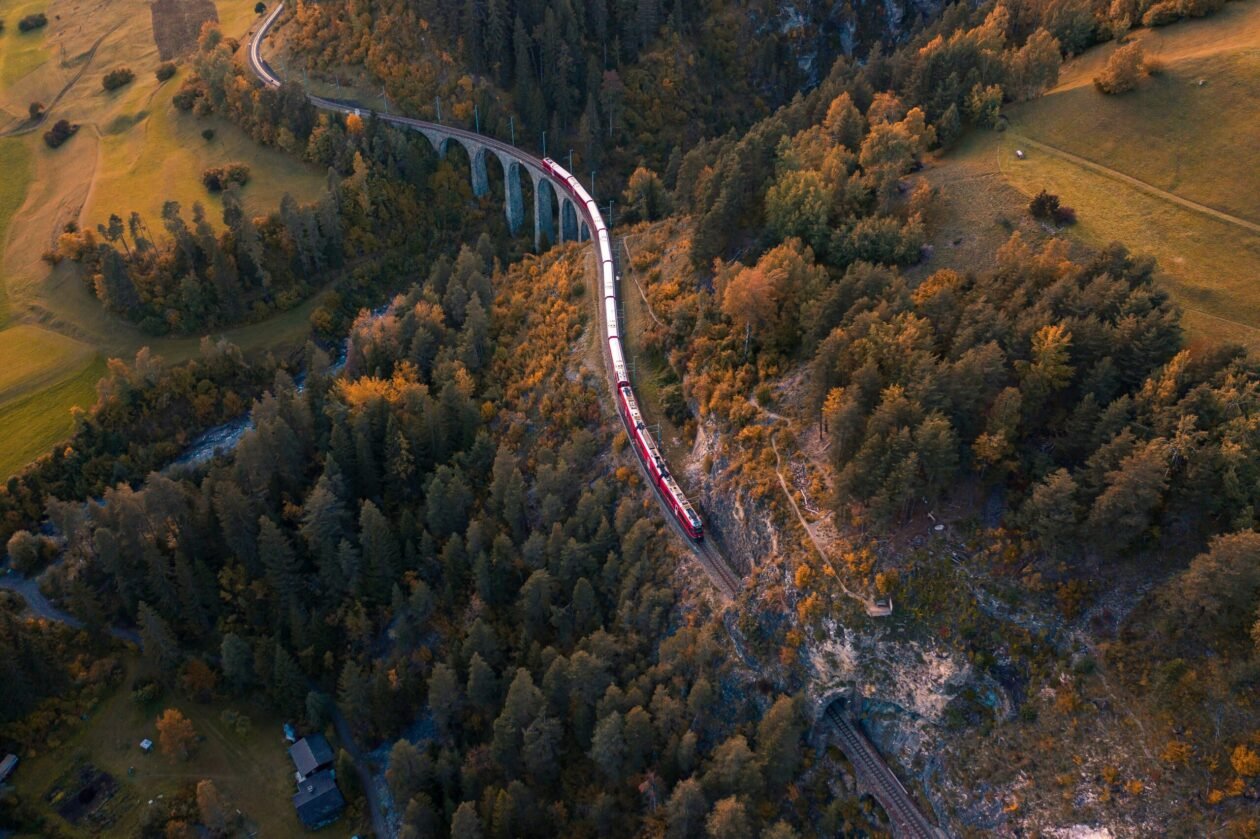
Movement Through Landscape
Switzerland reveals itself unusually well by train.
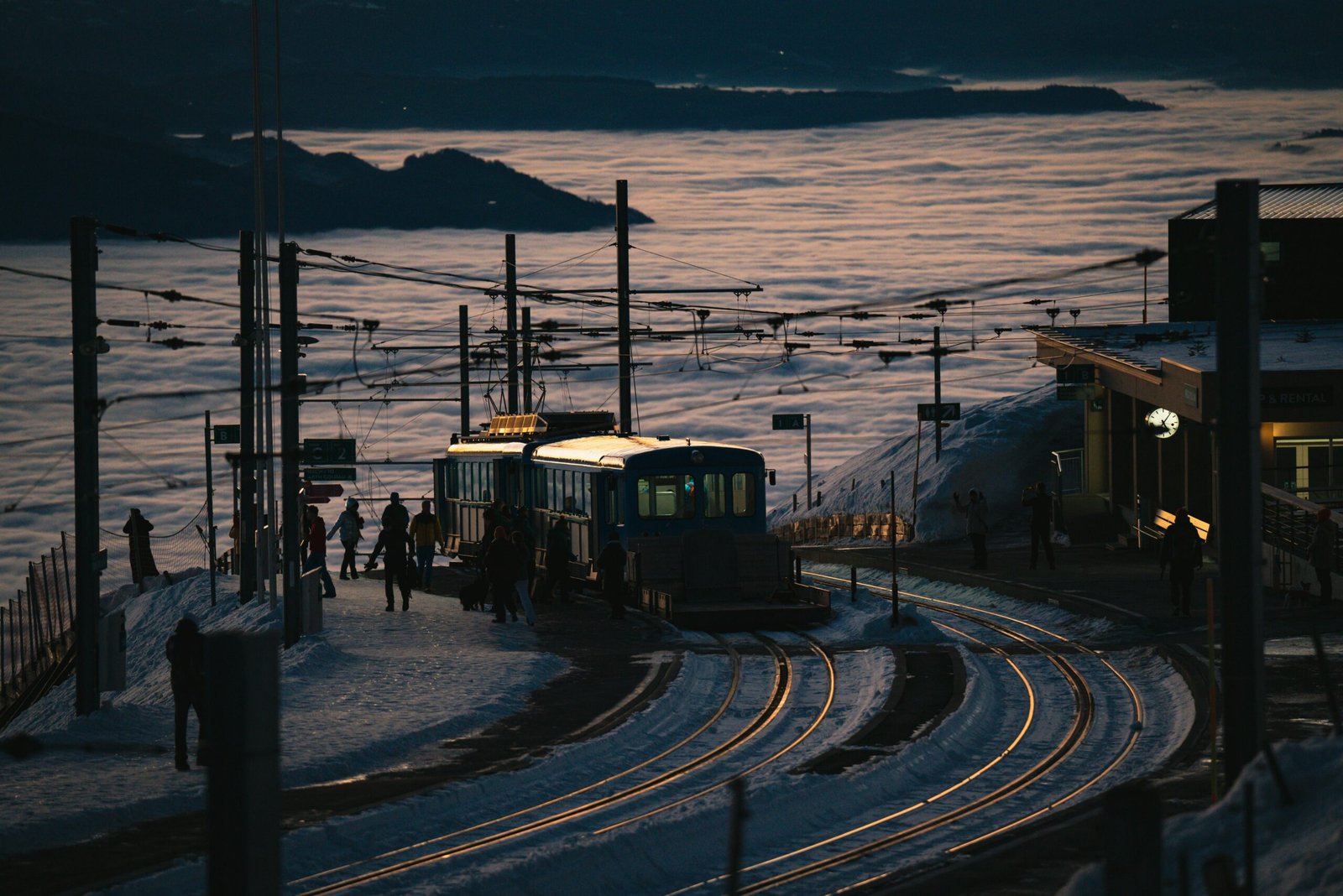
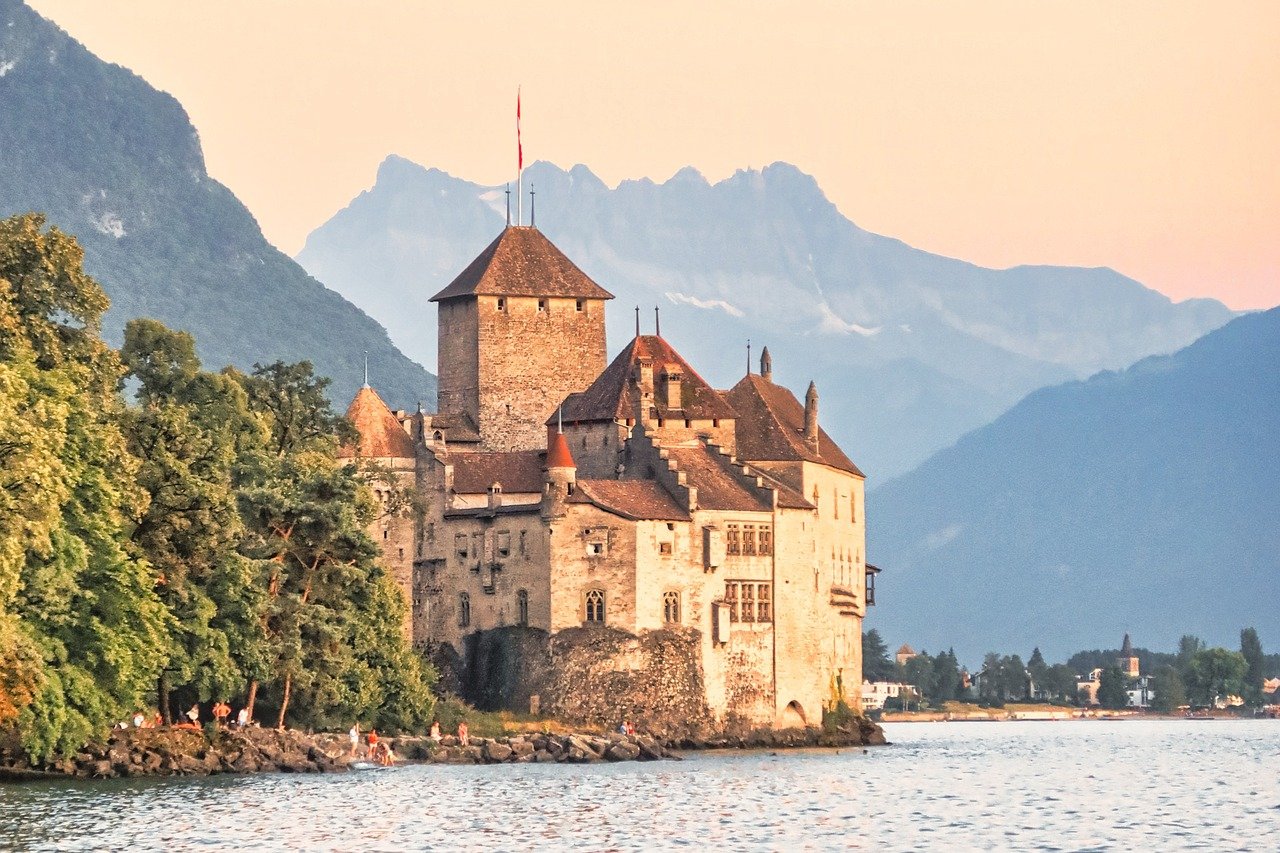
Lakes appear gradually between trees and tunnels. Vineyards descend toward the water near Lavaux. Rivers follow valleys beneath mountain villages. Snow gathers higher along the route as the train climbs into the Alps.
What makes Swiss train travel memorable is not only the scenery itself, but the continuity of it. The country unfolds slowly through windows: weather changing by elevation, languages shifting by region, architecture adapting to landscape.
Even ordinary routes can feel surprisingly cinematic.
A regional train from Bern toward the Oberland, a lakeside journey between Lausanne and Montreux, or a slow climb into Graubünden often leaves a stronger impression than heavily marketed panoramic routes.
Regional Trains & Everyday Switzerland
Scenic trains like the Glacier Express attract international attention, but regional trains often reveal more of daily Swiss life.
Small stations, schoolchildren boarding in mountain villages, grocery bags beside hiking poles, workers returning home at dusk — these quieter details become part of the experience.
Regional lines also encourage a different pace of travel. Instead of racing between famous destinations, the train allows space for intermediate places: lake towns, smaller valleys, riverside cities, village bakeries, thermal baths, or hiking trails reached directly from the station platform.
Switzerland feels unusually connected because even remote places often remain accessible without a car.
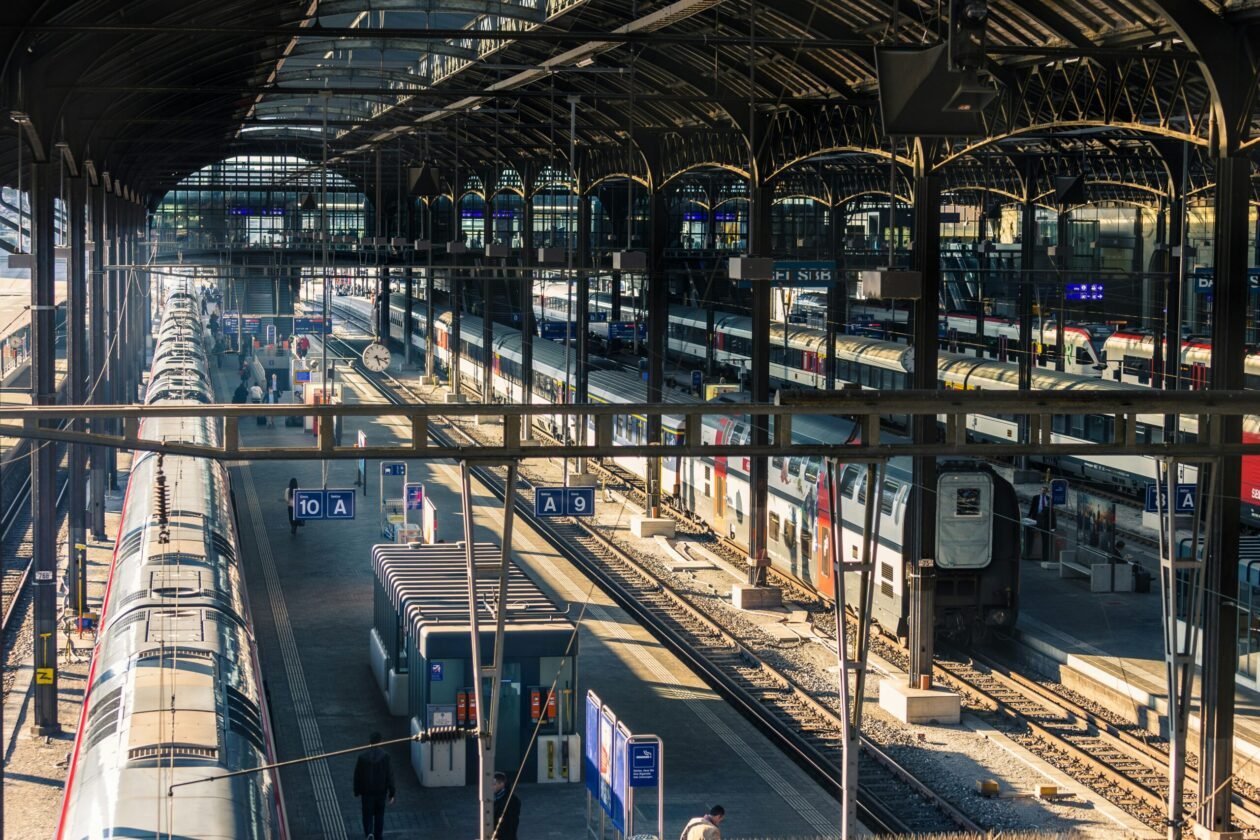
Stations, Transfers, and Small Rituals
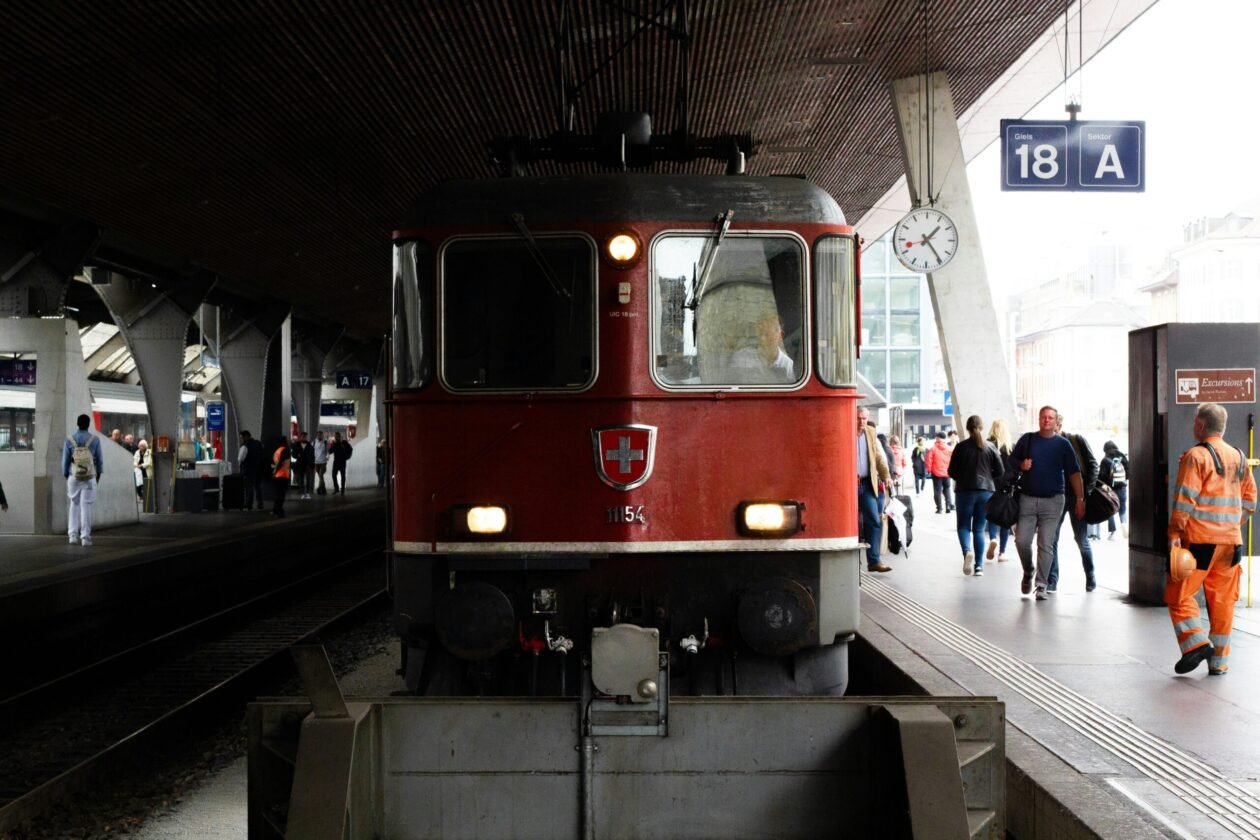
Swiss stations are their own kind of public space.
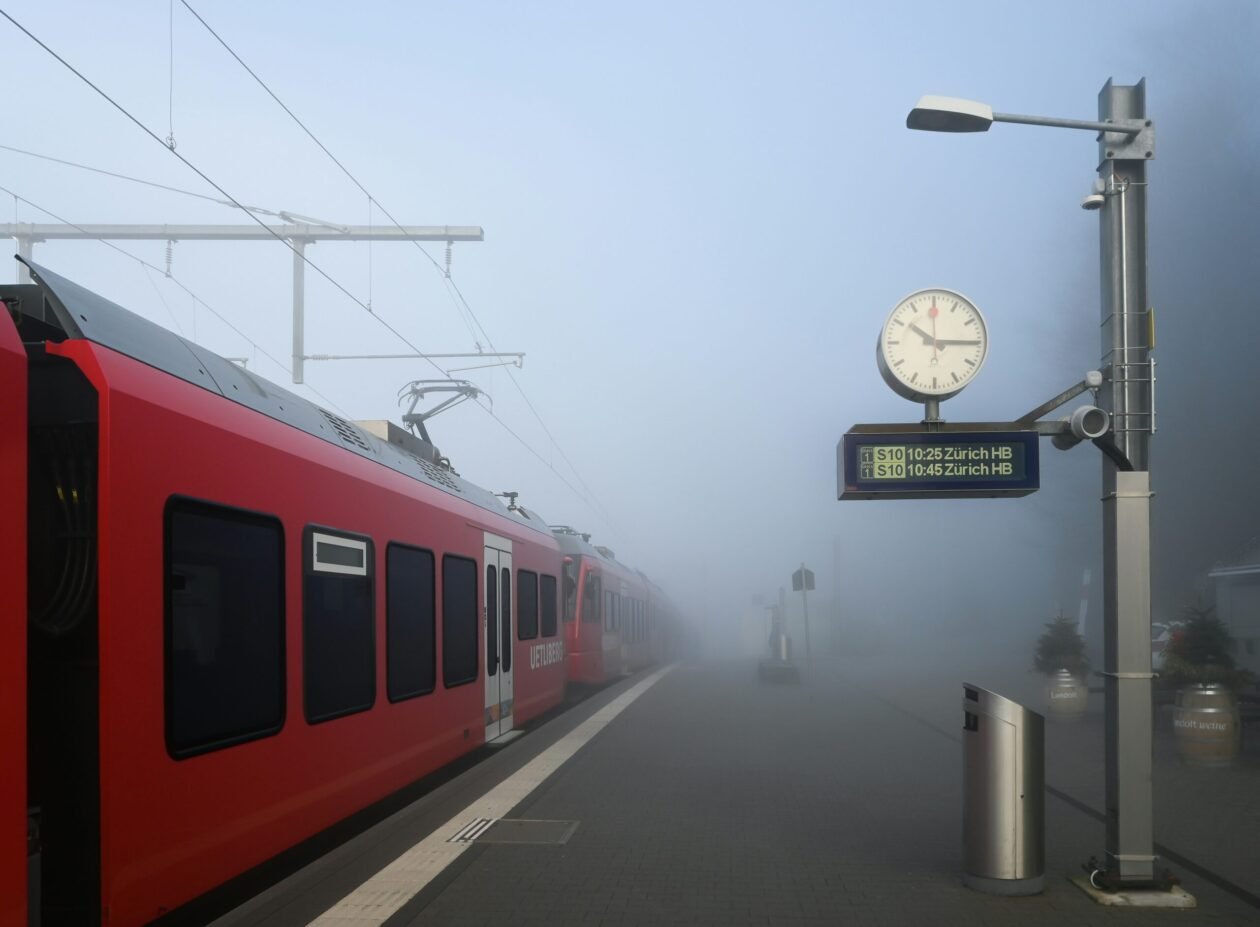
Some are large and urban, others little more than a single platform beside a mountain road, but many share the same atmosphere: bakeries opening early, newspaper kiosks, quiet waiting areas, precise departure boards, and trains arriving almost exactly when expected.
Transfers become small rituals of movement through the country itself:
- coffee before the next connection
- watching weather move through the valley
- stepping briefly onto a platform cold from snow or rain
- changing from one language region to another without noticing immediately
The stations rarely feel theatrical. Their calmness is part of what makes them memorable.
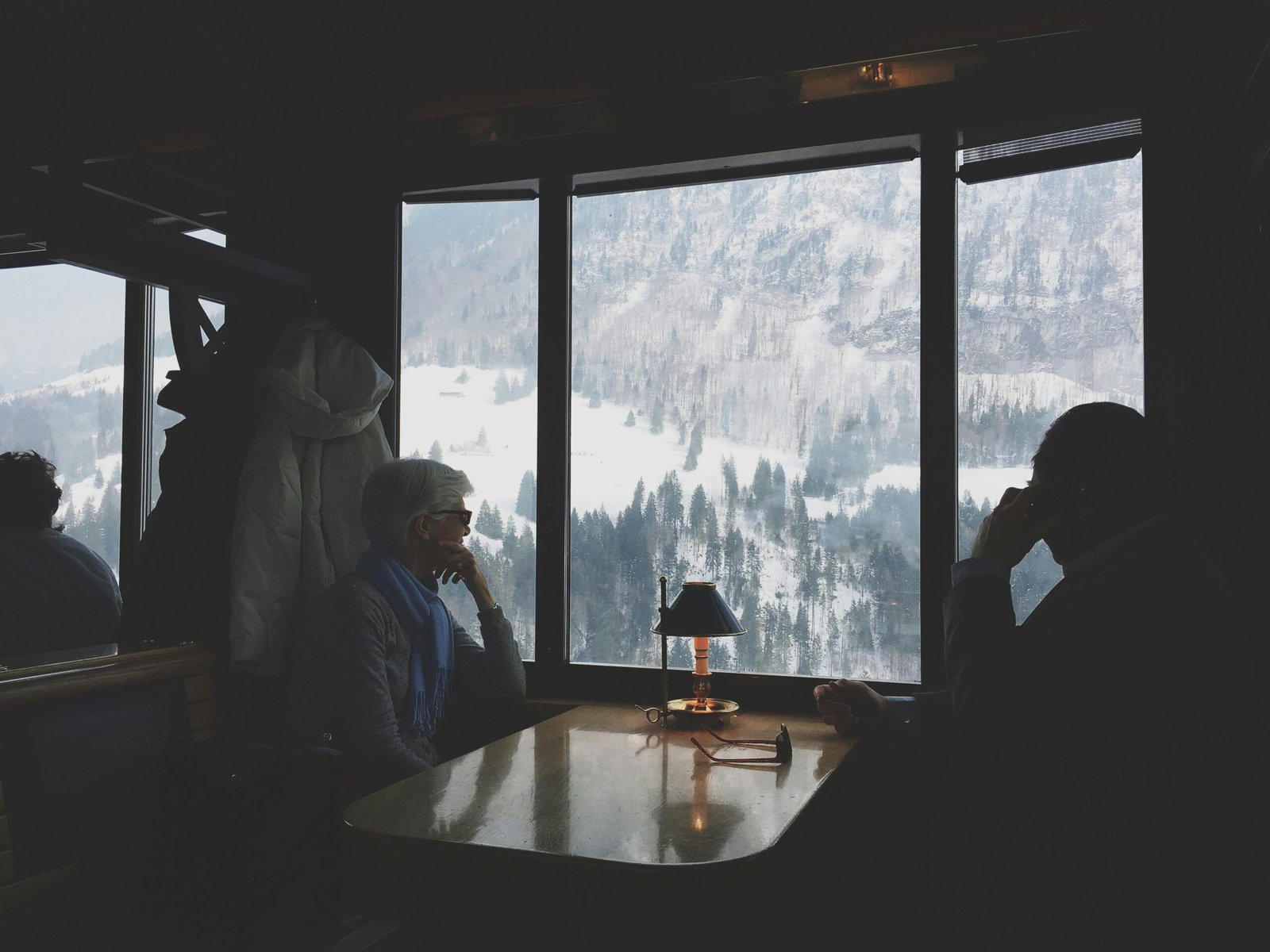
Seasonal Train Atmosphere
Swiss train culture changes noticeably with the seasons.
In summer, trains fill with swimmers heading toward rivers and lakes, bicycles loaded near the doors, hikers descending from mountain routes late in the evening.
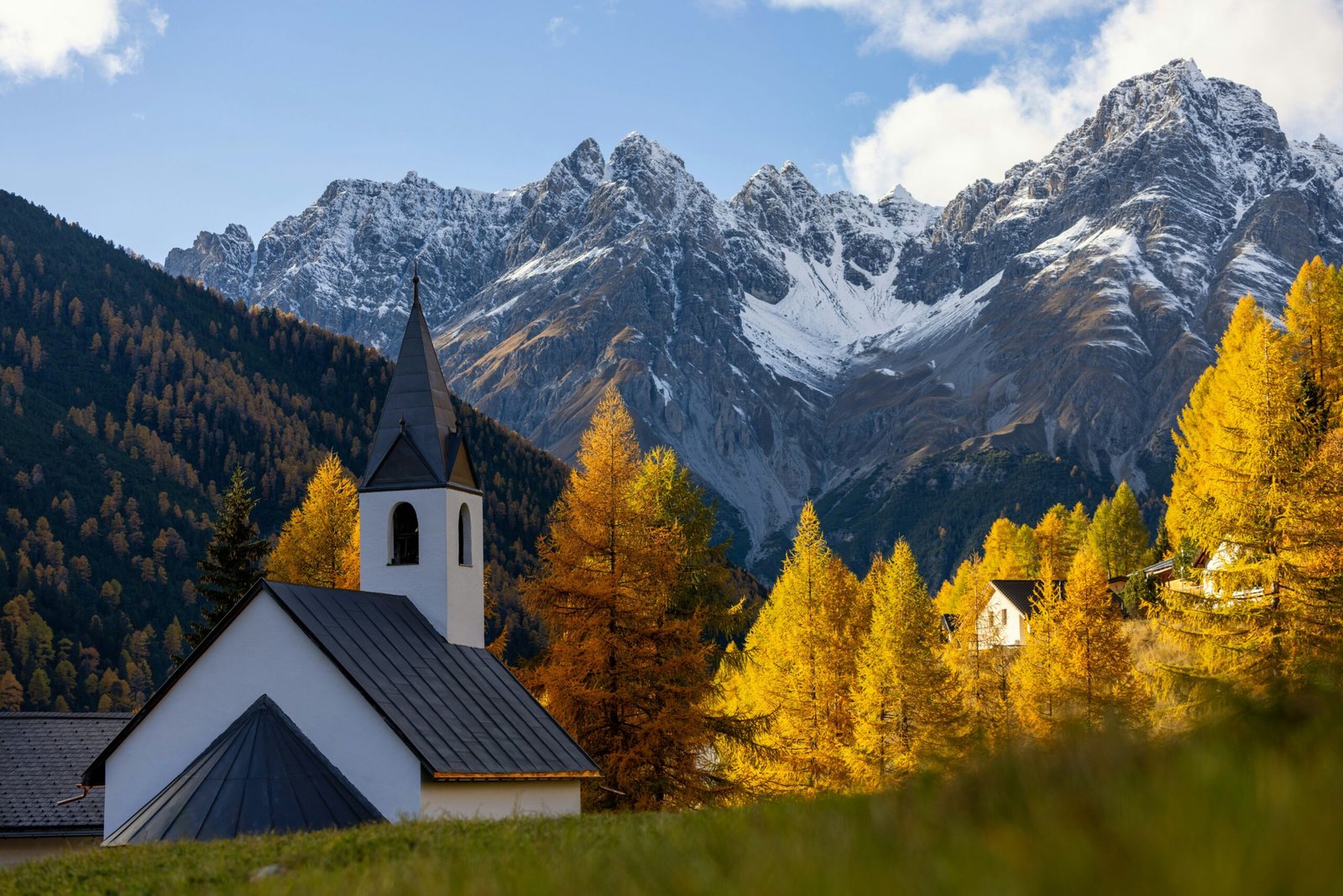
Autumn brings fog across farmland, wet platforms, vineyard colors, and lower clouds settling into the valleys.
In winter, the atmosphere becomes quieter and more enclosed: warm carriage interiors, snow gathering outside the windows, passengers returning from ski slopes or thermal baths after dark.
The changing weather becomes part of the journey itself.
The Quiet Etiquette of Swiss Trains
Part of what makes Swiss trains feel calm is the collective understanding of shared space.
People generally keep conversations low, use headphones, and move efficiently during boarding and transfers. Quiet zones are respected, luggage is organized carefully, and platforms remain surprisingly orderly even during busy hours.
For visitors, the system often feels intuitive quickly. Trains are frequent, clearly marked, and deeply integrated with buses, boats, mountain railways, and local transit systems throughout the country.
The result is not only efficiency, but a noticeable reduction in friction while traveling.
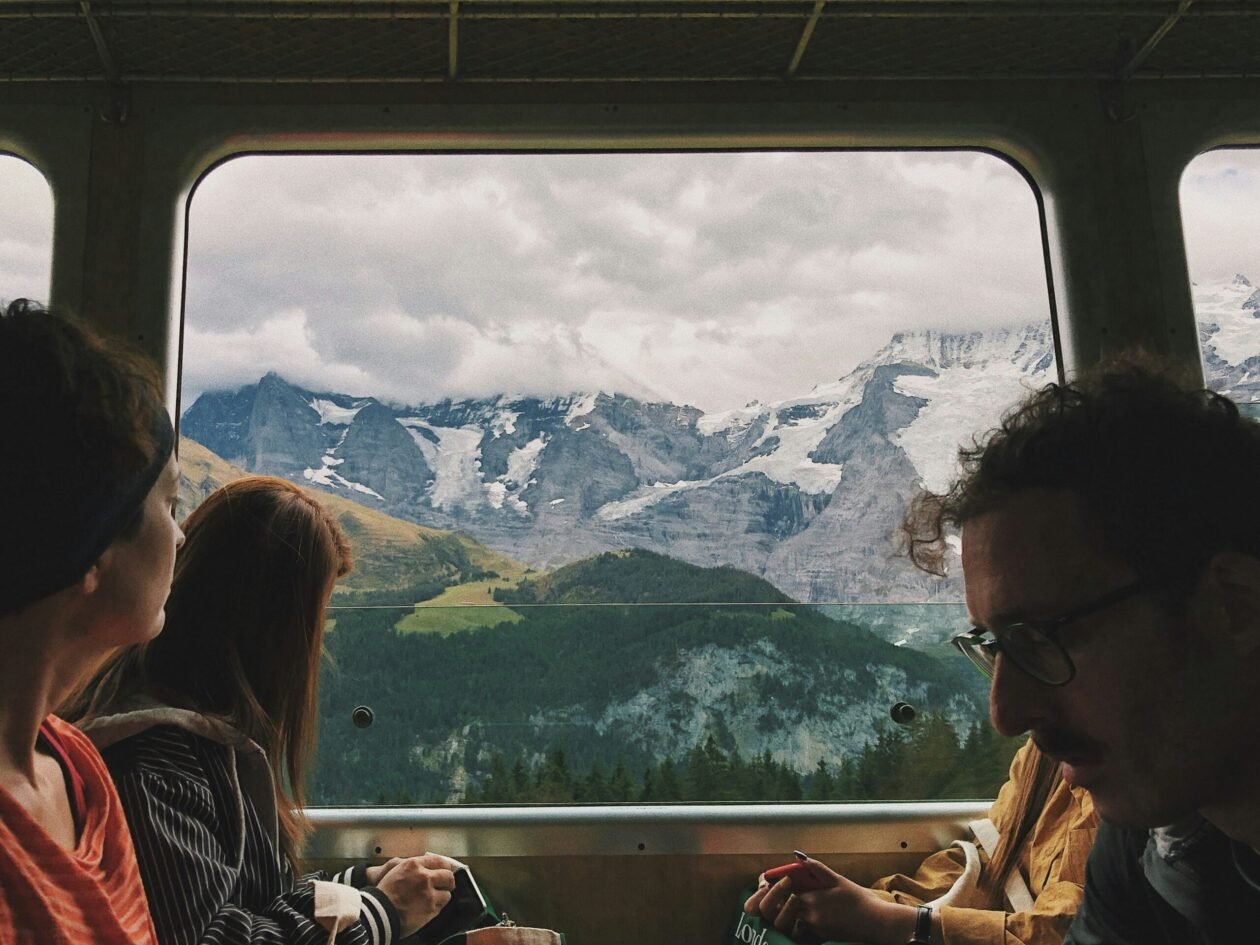
Why Swiss Trains Feel Different
Swiss rail culture works because it is treated as ordinary rather than exceptional.
The infrastructure is reliable enough that people trust it with daily life: work, school, hiking, shopping, skiing, visiting family, crossing cities, or simply spending a day elsewhere.
Over time, this creates something larger than transportation alone. The train becomes part of the national rhythm of movement — a shared system connecting lakes, mountains, valleys, villages, and cities into one continuous landscape.
For travelers, it often changes the emotional pace of the trip itself.
Tour Noir Note
In Switzerland, trains shape the way the country is experienced: lakes appearing gradually through fog, mountain villages arriving without hurry, evening returns after swimming or hiking, quiet station platforms between weather systems.
Sometimes the journey through the landscape becomes as memorable as the destination itself.
Continue Through Switzerland
Explore quieter ways of moving through Switzerland
— trains, lakes, rivers, language, architecture, and seasonal life.

Leave a Reply