

No products in the cart.
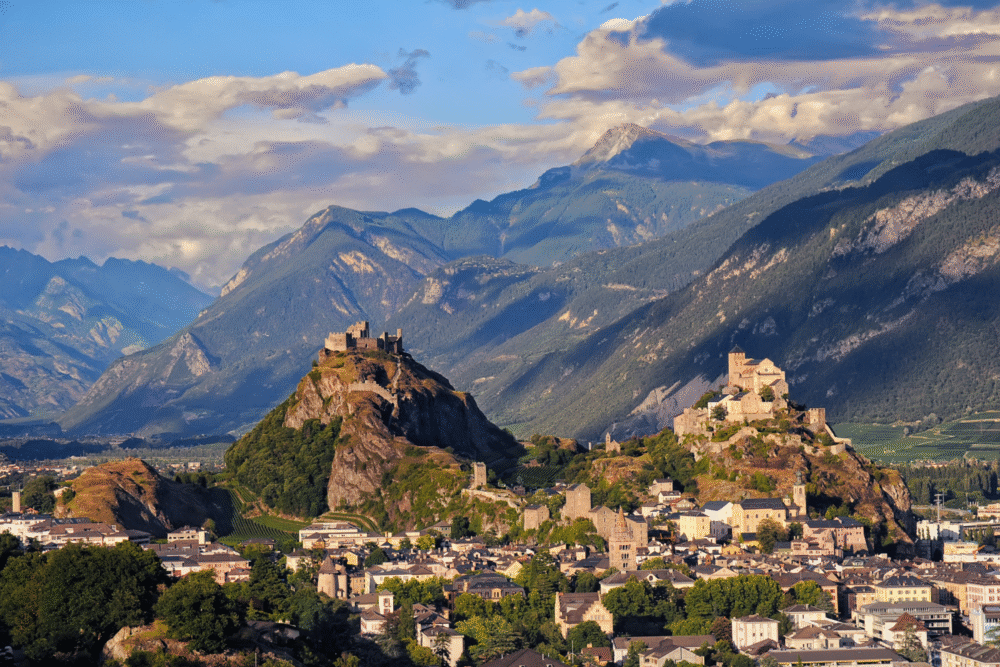
Valais, Switzerland — Vineyards, Thermal Water, and Mountain Light
Valais is one of the most geographically dramatic regions in Switzerland, but what lingers most here is not spectacle. It is rhythm.
The Rhône Valley moves between vineyard terraces, thermal water, dry stone villages, glacier-fed rivers, and steep mountain infrastructure that climbs steadily toward snow and altitude. Trains thread through the valley floor while old irrigation channels still carry meltwater across the hillsides.
More than many parts of Switzerland, Valais feels shaped by climate and vertical geography. Vineyards exist below glaciers. Palm trees occasionally appear beneath snow-covered peaks. In winter, steam rises from outdoor thermal baths while trains continue moving quietly through the valley.
This is a region best experienced slowly.
The Geography of Valais
Valais stretches across southwestern Switzerland along the Rhône River, bordered by some of the highest mountains in the Alps. Yet despite the dramatic peaks, daily life here often unfolds closer to the valley floor — among vineyards, apricot orchards, train stations, village markets, and stone terraces built into the slopes.
The landscape feels unusually vertical. Movement is constantly upward or downward: from towns to mountain railways, from vineyard roads to alpine trails, from thermal baths into snow-covered air.
Unlike parts of Switzerland shaped by lakes and dense forests, Valais often feels dry, sunlit, and exposed to weather. Light reflects sharply off rock and stone. Villages cling to hillsides. Water remains visible everywhere — in rivers, irrigation channels, glaciers, and steam.
Water Beneath the Mountains
Water shapes Valais in visible and invisible ways.
The Rhône River runs through the center of the canton, fed by surrounding glaciers high in the Alps. Historic irrigation channels known as bisses carry meltwater across dry slopes and vineyards — an old mountain infrastructure system still woven into the landscape today through walking paths and wooden channels suspended along hillsides.
Thermal water rises from beneath the region as well.
Places like Leukerbad and Brigerbad have turned naturally heated mineral springs into part of everyday winter culture. In colder months, outdoor pools fill with steam while snow gathers on rooftops and surrounding cliffs.
In Valais, thermal bathing often feels less like luxury tourism than seasonal adaptation — a slower rhythm built around weather, altitude, and recovery.
Wine, Stone, and Sunlight
Valais is Switzerland’s largest wine-producing region, though much of its production remains surprisingly local.
Terraced vineyards line the valley slopes between villages and train routes, creating geometric patterns across the mountainsides. Stone retaining walls absorb heat during the day and release it slowly into the evening air, helping grapes mature in the dry alpine climate.
Many of the villages still feel tied to agricultural rhythms rather than tourism performance. Cellars open quietly beneath old houses. Local wines appear beside regional cheeses, rye bread, raclette, and dried meats.
The atmosphere is less polished than some of Switzerland’s lakefront regions — and often more grounded because of it.
Trains Through the Rhône Valley
Some of the most memorable experiences in Valais happen in motion.
Regional trains move steadily through vineyards, industrial towns, medieval villages, and wide valley landscapes beneath massive peaks. Cable cars and mountain railways climb into thinner air toward glaciers, hiking routes, and alpine stations suspended high above the valley floor.
Unlike scenic train journeys designed purely for spectacle, daily rail life in Valais still feels practical and inhabited. Schoolchildren, workers, skiers, and older residents share the same routes through mountain weather and changing seasons.
Movement through the region becomes part of understanding it.
Villages Between Slopes and Sky
Valais contains some of Switzerland’s most visually striking villages, but the quieter places often leave the strongest impression.
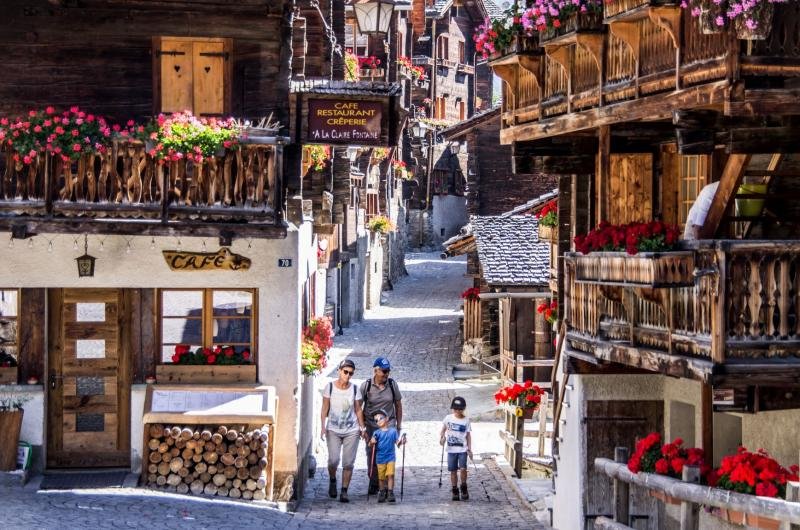
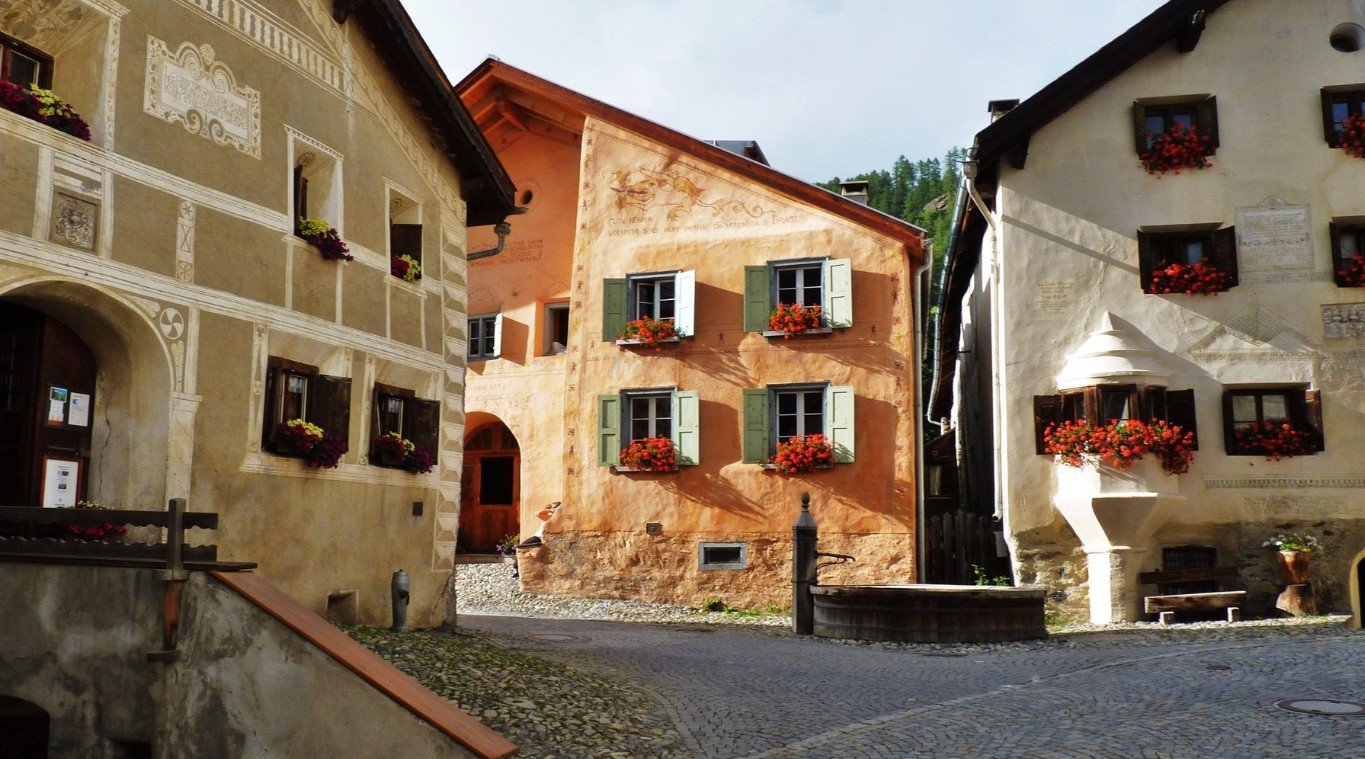
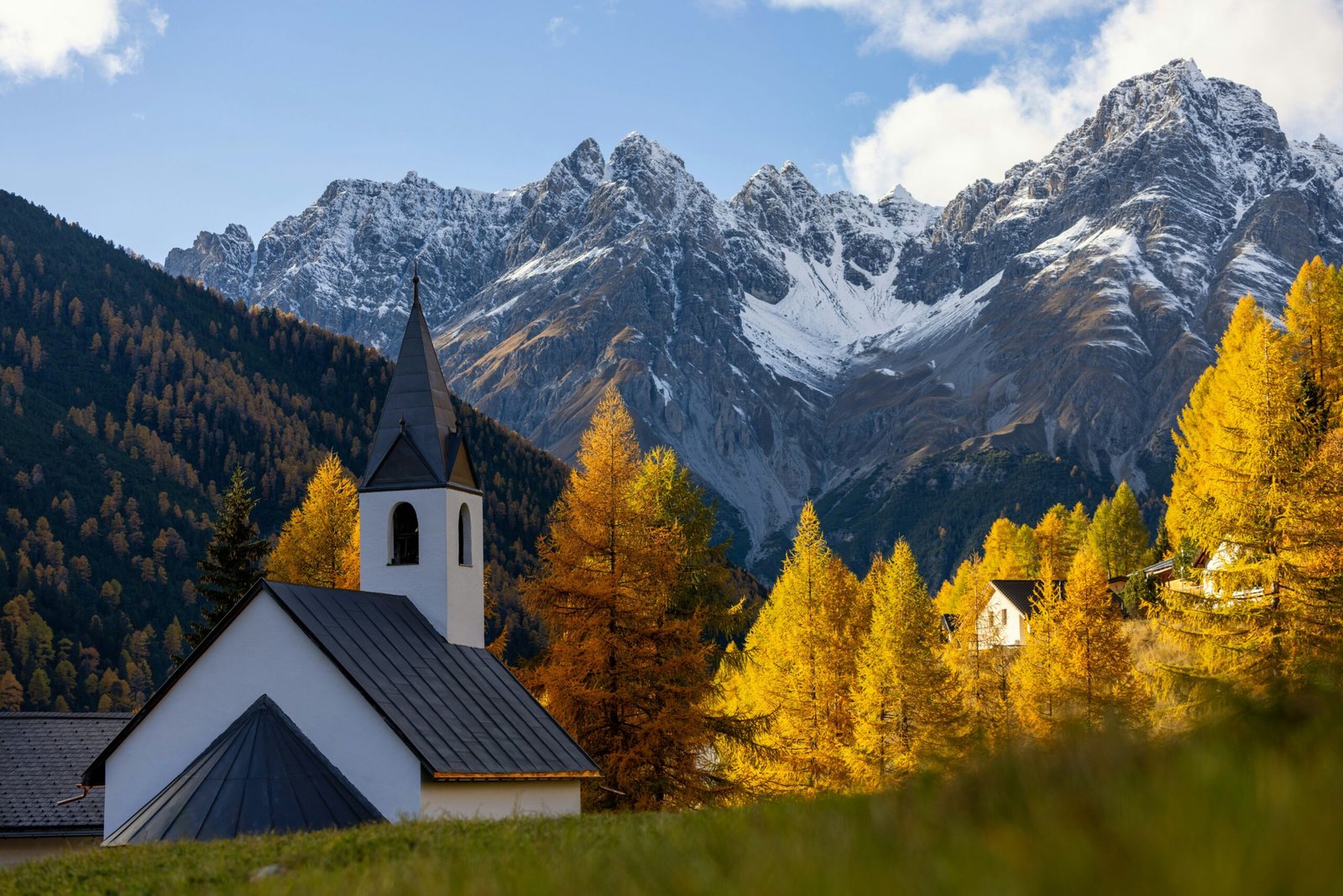
Stone houses darkened by sun and age stand beside barns elevated on wooden stilts. Church towers rise above vineyards. In winter, smoke and steam collect in the cold valley air while snow remains visible high above the settlements.
In places like Evolène, Saas-Fee, Grimentz, or smaller villages scattered throughout the valley, architecture still feels closely tied to weather, storage, altitude, and seasonal life.
The mountains remain present constantly — not as background scenery, but as conditions shaping everyday existence.
Tour Noir Note
Valais reveals itself gradually through movement: train windows, vineyard paths, thermal steam, mountain weather, and long changes in altitude.
More than many parts of Switzerland, it feels like a region where climate, infrastructure, agriculture, and daily life still remain visibly connected.
Continue Through Switzerland:
- Swiss Train Culture – Movement through Landscape
- River Swimming – A Swiss Summer Ritual
- Thermal Bath Culture in Switzerland
- Historic Buildings in Switzerland – Stone, Landscape, and Everyday Life
- Mountain Hut Culture – Movement through the Alps
Less Tourist Noise,
More hidden Switzerland. Get the free Tour Noir planning companion.

Leave a Reply