

No products in the cart.
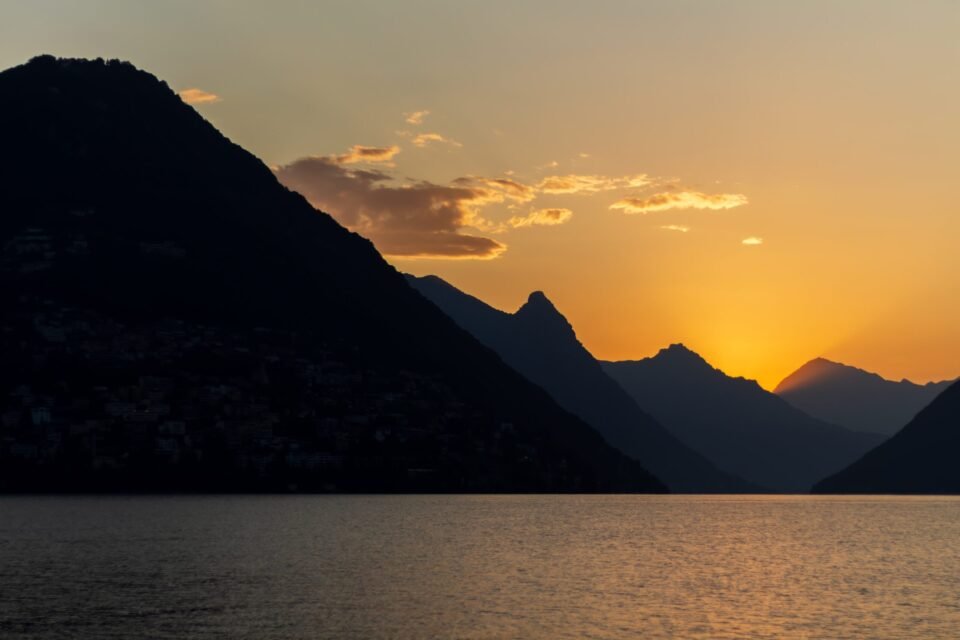
THREE DAYS IN TICINO — MILLS, MOUNTAIN PASTURES, AND SOUTHERN LIGHT
VIA Swiss trainS and bus ROUTES
Ticino arrives gradually.
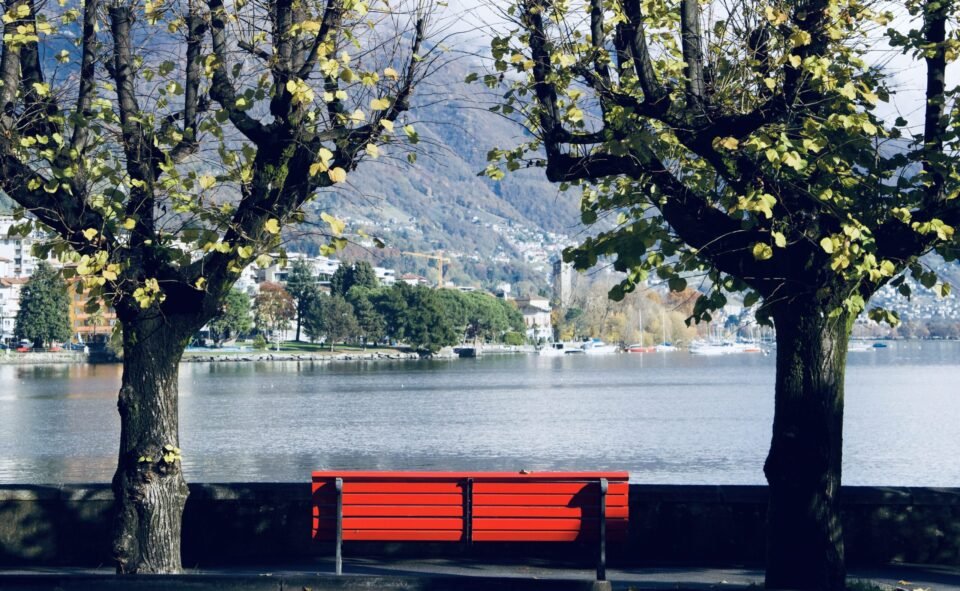
South of the Gotthard, the light becomes warmer. Stone houses replace timber chalets. Chestnut forests cover the lower slopes, church towers rise above compact villages, and water appears almost everywhere — in rivers, fountains, mills, mountain lakes, and long reflections across Lake Maggiore.
The region is often described as Switzerland with an Italian atmosphere, but Ticino has a character of its own. It is a border landscape shaped by Alpine geography, Italian language, seasonal agriculture, migration, engineering, and the movement of people between mountains and lakes.
Three days are not enough to see the whole canton.
They are enough, however, to experience three very different Ticino landscapes: the cultivated hills of the Mendrisiotto, the stone villages of the Centovalli, and the high pastures and cold lakes of the Piora Valley.
This itinerary is designed around public transport, one main experience each day, and a single accommodation base. The aim is not to cover as much territory as possible, but to move carefully through it.
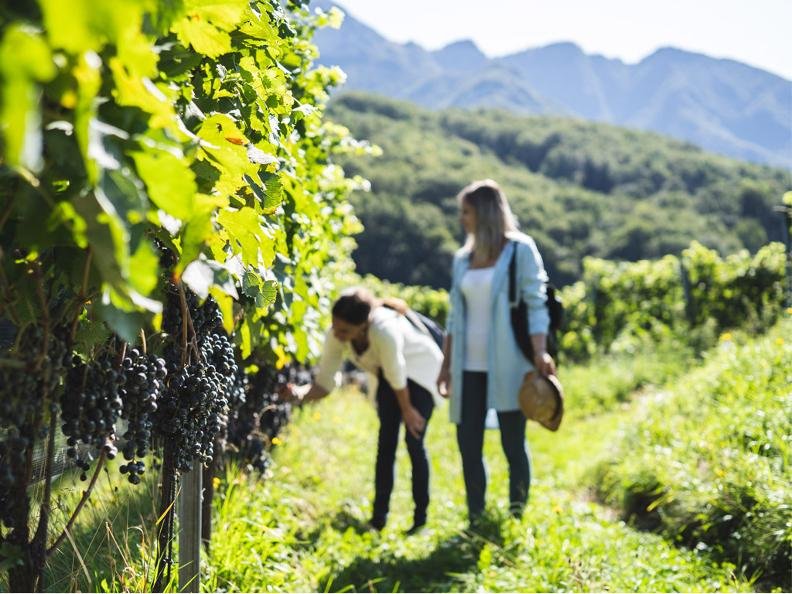
Winery in Ticino, Switzerland Photo courtesy of Azienda Agricola Bianchi | mendrisiottoturismo.ch
WHERE TO STAY
Bellinzona as a central base
For this itinerary, Bellinzona makes a practical and atmospheric base.
The city sits between Ticino’s northern valleys, the Lake Maggiore region, and the southern Mendrisiotto. Trains leave regularly in each direction, allowing you to explore several landscapes without changing hotels every night.
Bellinzona also has a rhythm that settles naturally after day visitors leave. Stone streets grow quieter, restaurant terraces fill slowly, and the silhouettes of the city’s three castles remain visible above the old town.
Staying in one place reduces unnecessary movement and leaves more time for evenings without plans.
Locarno is a good alternative for travelers who prefer to remain close to the lake, although the journey to the Mendrisiotto and Piora will be longer.
DAY ONE
MENDRISIOTTO — BEES, MAIZE, AND THE VALLE DI MUGGIO
The southernmost part of Switzerland feels noticeably different from the rest of the country.
Vineyards climb low hills above villages. Courtyards open behind stone walls. Chestnut woodland, small farms, and narrow roads extend toward the Italian border.
Rather than trying to cover the entire region, spend the day between Arogno and the Valle di Muggio.
Morning — Beekeeping above Lake Lugano
Begin at Azienda Agricola Bianchi, a family-run organic farm near Arogno.
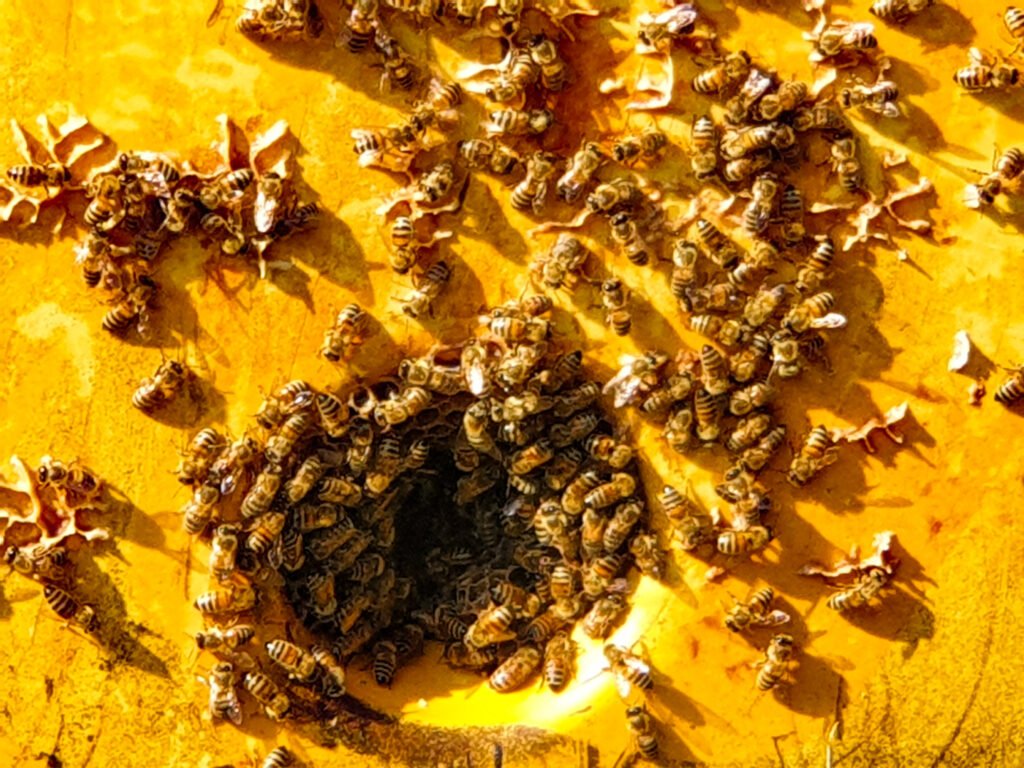
During a pre-arranged apiary visit, guests put on protective clothing and enter the working landscape of the bees. The experience may include examining the frames, learning how smoke is used to calm the hive, and tasting local honeys with different colors, textures, and seasonal characteristics.
The pleasure of the visit lies partly in its scale.
This is not an industrial attraction or a polished tasting room. It is an encounter with a small agricultural system shaped by flowers, weather, insects, and the careful observation of a landscape over time.
Visits are seasonal and must be reserved directly with the farm.
Leave space afterward for a simple lunch rather than immediately moving on. In Ticino, a plate of local cheese, bread, vegetables, or polenta often says more about the region than a heavily scheduled tasting menu.
Afternoon — The old mill at Bruzella
Continue into the Valle di Muggio, one of Ticino’s quieter rural landscapes.
The Mulino di Bruzella sits below the village beside the Breggia River. Reached by a short walk along an old path, the restored mill still uses water to turn its machinery and grind local maize.
Inside, the atmosphere is physical and precise: stone, timber, flour dust, turning mechanisms, and the continuous sound of water outside.
The mill belongs to the wider Museo Etnografico della Valle di Muggio, which treats the valley itself as a living museum. Mills, chestnut-drying houses, old paths, farm buildings, and cultivated terraces all form part of the collection.
Opening and active-milling days vary, so plan the visit around the museum calendar rather than assuming the mill will be operating.
There is no need to add another major destination afterward.
Walk back slowly through Bruzella or Cabbio, stop for coffee, and notice the relationship between the villages and the surrounding slopes. The landscape here has been shaped gradually through farming, water management, woodland, and repeated human use.
Tour Noir Note
The Valle di Muggio is most memorable when it is not treated as a shortcut between attractions.
Allow time for the footpath, the river, the quiet around the mill, and the return through the village. The slower sections of the day are part of the experience.
Photo courtesy of minimeexplorer.ch
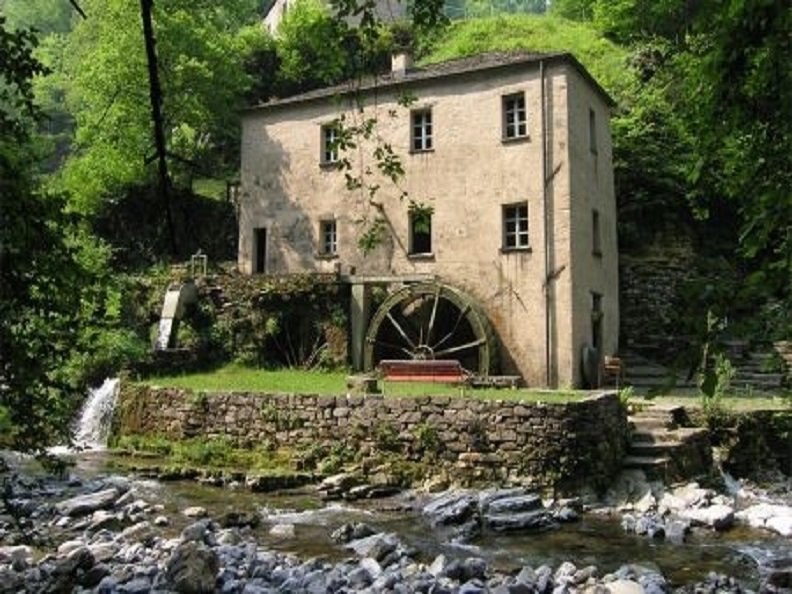
Photo of Il Mulino di Bruzella courtesy of Centro di Competenze Agroalimentari Ticino
DAY TWO
CENTOVALLI — OLD OVENS, STONE HOUSES, AND THE JOURNEY WEST
The Centovalli Railway leaves Locarno and begins threading west through a landscape of wooded slopes, deep ravines, stone bridges, and small stations.
The journey is not simply transportation. It is part of the day.
Sit near a window and watch the landscape change as the train moves away from Lake Maggiore. Houses become more scattered, rivers appear below the tracks, and villages gather around church towers and narrow stone lanes.
Morning — Intragna
Leave the train at Intragna, a village built on a rocky rise at the entrance to the Centovalli.
Its lanes lead between old stone houses, small courtyards, shaded passages, and the Church of San Gottardo. Beside it stands Ticino’s highest church tower, rising above the village and the surrounding valleys.
The climb up its granite steps offers a different view of the region: rooftops below, wooded slopes beyond, and the railway crossing the landscape through bridges and cuttings.
The Regional Museum of Centovalli and Pedemonte provides a deeper understanding of the valley. Its rooms explore local agriculture, migration, domestic life, traditional trades, and the difficult livelihoods once carried beyond Ticino by generations of residents.
This context changes the way the village is seen.
Intragna becomes more than an attractive collection of stone buildings. It becomes part of a larger history of movement, work, family separation, and adaptation to a demanding landscape.
Traditional bread in the museum courtyard
On selected dates or by advance arrangement, visitors can take part in a bread-making workshop using the museum’s traditional wood-fired oven.
Dough is prepared in the courtyard and left to bake while participants explore the museum or climb the bell tower. Gradually, the smell of warm bread fills the enclosed space.
It is a simple experience, but one closely connected to the character of the region: grain, fire, stone, time, and food made collectively rather than consumed quickly.
Reserve well ahead, particularly when traveling as a family or small group.
Without the workshop, Intragna still deserves several unhurried hours. Have lunch in the village, follow one of the shorter paths nearby, or remain in the square as the trains arrive and disappear again into the valley.
Late afternoon — Return to Lake Maggiore
Return by train to Locarno and continue to Ascona for the final hours of the day.
The transition from the dark, wooded valleys to the open surface of Lake Maggiore is part of what makes this route memorable.
Walk through Ascona’s old center toward the lakeside piazza. In the evening, the light softens across the water, boats return toward the shore, and the mountains appear in layers behind the lake.
A short boat journey can be added when seasonal schedules allow. It is equally satisfying to remain on land, find a table away from the busiest section of the promenade, and let the day settle.
Tour Noir Note
The Centovalli train is often presented as a scenic attraction, but the quieter pleasure lies in using it as part of an ordinary journey.
Leave the train, walk through a village, eat something made locally, and return toward the lake as the light begins to change.
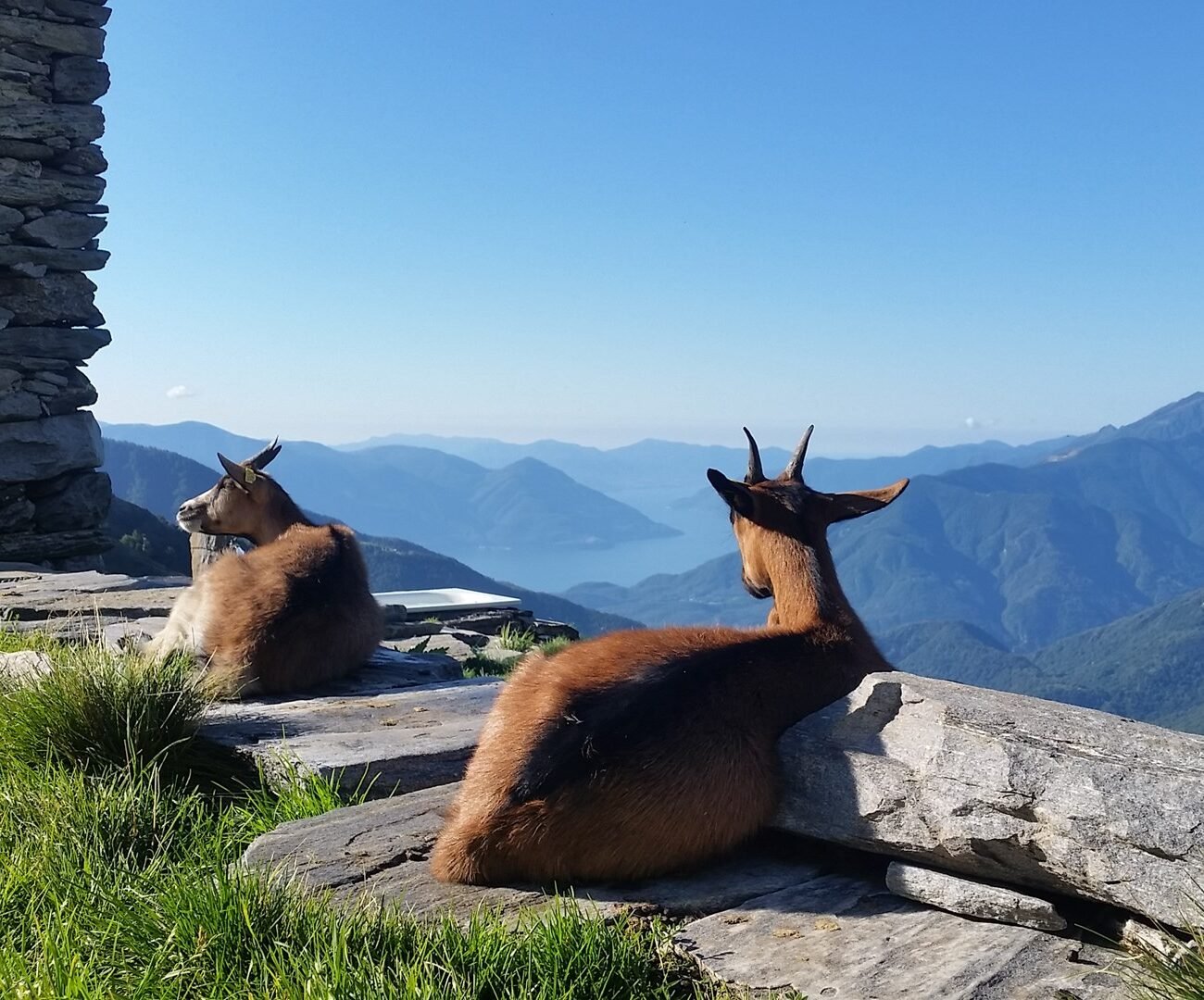
Photo of goats at Capanna Alpe Nimi courtesy of Roberto Buzzini | Locarno Switzerland
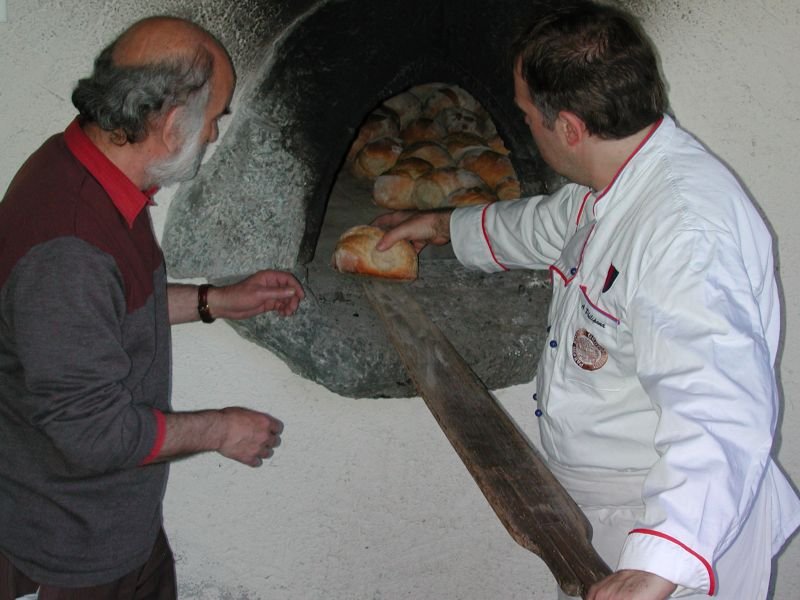
Photo courtesy of ticino.ch
DAY THREE
PIORA — HIGH WATER, ALPINE CHEESE, AND A CHANGE IN WEATHER
The third day moves north.
From Bellinzona, the railway follows the Leventina toward Ambrì-Piotta, where the warmer atmosphere of southern Ticino begins giving way to a higher Alpine landscape.
The change can happen quickly.
Palm trees and lake promenades disappear. The valley narrows. Air cools, clouds gather differently around the mountains, and the architecture becomes more closely tied to altitude and winter.
Morning — The Ritom Funicular
The Ritom Funicular climbs steeply from Piotta toward the Piora region.
Built originally in connection with the hydroelectric infrastructure of the valley, it now carries hikers into a landscape of mountain lakes, forest, pasture, and exposed rock.
The ascent is brief but dramatic. The valley floor falls away below, revealing the Upper Leventina from an angle that would otherwise require hours of walking.
At the upper station, the atmosphere changes immediately.
Even on a warm day below, the air may be cool. Weather moves quickly across the ridges, and the landscape feels more open and elemental than the lower valleys visited during the previous two days.
Walking toward Lake Ritom
From the upper station, follow the route toward Lake Ritom.
The walk can be kept gentle or extended farther into the Piora Valley depending on weather, ability, and available time. The region contains several lakes, mountain paths, grazing areas, and places to stop for food during the summer season.
This is not a day to over-plan.
Walk until the landscape begins to feel present rather than scenic. Stop beside the water. Watch clouds move over the slopes. Listen for cowbells across the pasture and the quieter sounds of wind, insects, and water near the shoreline.
Travelers with more time and suitable conditions can continue toward Lake Cadagno and the broader Alpe Piora landscape.
Cheese and the summer pasture
Piora is one of Ticino’s important Alpine pasture regions.
During summer, cattle graze at altitude and milk is transformed into cheese within the seasonal rhythm of the alp. Production depends on terrain, weather, grass, water, and the limited months during which the high pasture is accessible.
Where available, buy cheese directly from a local producer or mountain restaurant. It is a small way of supporting the agricultural landscape rather than experiencing it only as scenery.
The Ritom Funicular operates seasonally. Always check current opening dates, weather conditions, and the final descent before leaving the valley floor.
Tour Noir Note
Ticino is often associated with warmth, palms, and lakeside terraces.
Piora reveals another side of the canton.
Cold water, shifting cloud, grazing animals, hydroelectric infrastructure, and mountain paths all belong to the same region. Within little more than an hour, Ticino can move from Mediterranean atmosphere to high Alpine weather.
That contrast is part of its identity.
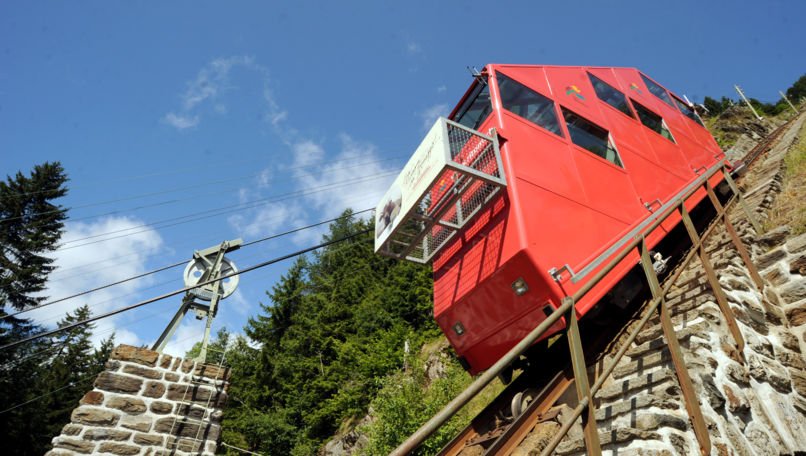
Ritcom funicular photo courtesy of ©Ti-Press/Samuel Golay / Ti-Press
TRAVELING THROUGH TICINO WITHOUT A CAR
Guests staying at participating hotels, youth hostels, and campsites receive the Ticino Ticket for the duration of their stay.
The ticket includes public transportation within the canton and reductions with many participating mountain railways, boat services, and attractions.
This makes a car-free itinerary particularly natural in Ticino. Regional trains connect the main towns, while buses and smaller railways continue into the valleys.
Check each day’s connections in advance, particularly for rural buses, seasonal funiculars, and the final return journey of the evening.
Public transport works best when the itinerary leaves room around it. Rather than treating every connection as a race, allow time for station cafés, short walks, weather changes, and the unexpected pauses that often become the most memorable parts of the journey.
WHEN TO GO
Late spring through early autumn is the most practical period for this itinerary.
The apiary experience and high Alpine routes are seasonal. The Bruzella mill follows its own opening calendar, while the Ritom Funicular operates during the warmer months.
Early summer brings long days, green valleys, and water moving strongly through rivers and streams.
Late summer tends to feel warmer and more settled around the lakes, although the most popular places can become busy.
Early autumn is particularly atmospheric in the lower valleys. Chestnut forests begin to change, light becomes softer, and villages regain a quieter rhythm. High-mountain transport, however, may already be approaching the end of its operating season.
A SLOWER FORM OF SUSTAINABILITY
Sustainable travel is often presented as a list of products to buy or rules to follow.
In practice, it can be something quieter.
Stay in one accommodation rather than changing hotels each night. Travel by regional train and bus. Choose one meaningful experience instead of several rushed attractions. Book directly with small farms, museums, guides, and producers. Carry what you need, respect working landscapes, and leave enough time to understand where you are.
The result is not only a lower-impact journey.
It is often a better one.
Ticino reveals itself through transitions: lake to valley, village to pasture, Italian language to Alpine weather, cultivated land to exposed rock.
Moving slowly allows those changes to remain visible.

XMC.PL
–This piece feels like a gentle invitation to think more deeply, while never losing the sense of wonder.