

No products in the cart.
Following Autumn Down the Mountain: Four Autumn Hikes in Switzerland
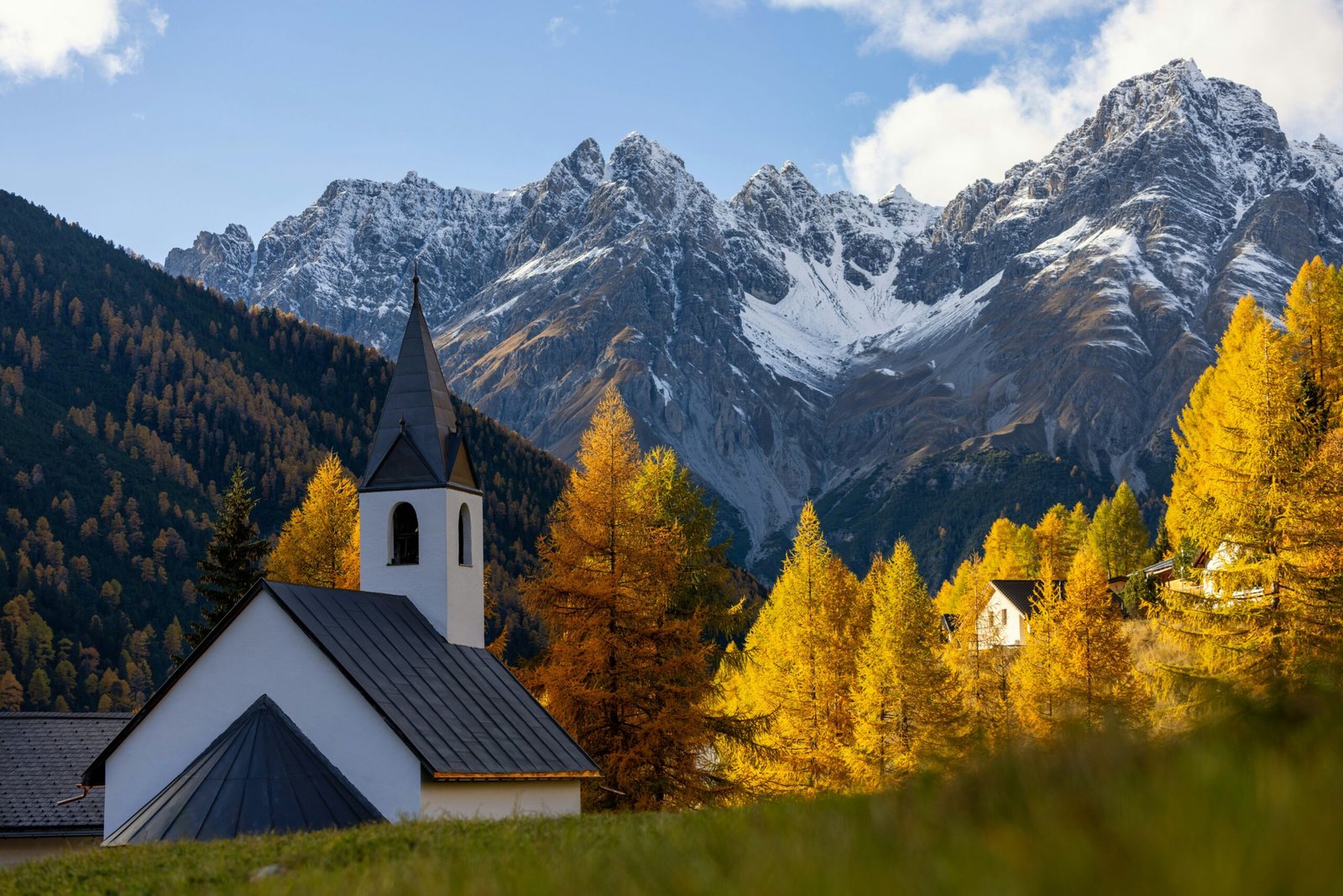
Autumn does not arrive in Switzerland all at once. It begins high in the Alps, where larch needles turn from green to luminous gold. From there, the season gradually descends: through the copper-colored woods of the Jura, into the beech forests surrounding Zurich and, finally, across the vineyard terraces above Lake Geneva.
For travelers wondering where to see autumn colors in Switzerland, the answer changes as the season progresses. Following the color means following autumn downhill.
These four Swiss autumn hiking routes trace that movement from the high Engadin to the lower vineyards of Lavaux. Some are established routes; others are flexible walks through forests and along lakeshores. Together, they reveal how varied autumn walks in Switzerland can be.
The dates below are a guide rather than a promise. Altitude, rainfall, temperature and wind all influence the transformation—and a single storm can bring the brightest days to an abrupt end. Check regional webcams and current trail conditions shortly before traveling.
Early to Mid-October
Lake Sils and the Golden Larches
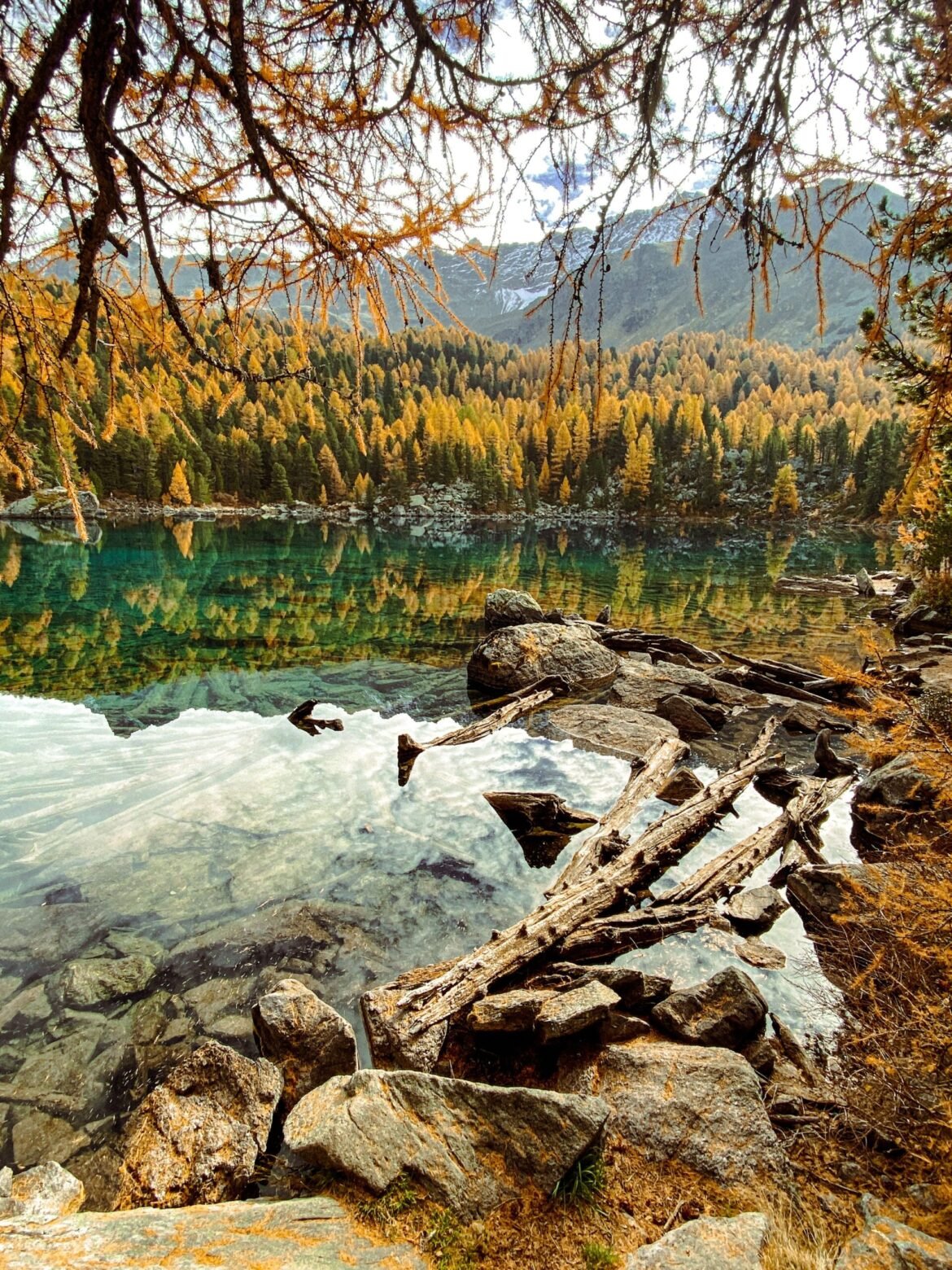
At approximately 1,800 meters above sea level, the Upper Engadin is among the first Swiss landscapes to enter autumn fully. Here, the season is defined not by red maple leaves but by larches: deciduous conifers whose fine needles turn yellow before falling.
Lake Sils provides one of the most atmospheric settings for seeing the golden larches in Switzerland. From Sils Maria, walking paths lead toward the wooded Chastè peninsula and continue along the lakeshore in the direction of Isola. The landscape alternates between still water, open meadow and forests illuminated in shades of amber and gold.
Rather than attempting to circle the entire lake, choose a section according to the weather and available daylight. Chastè makes a gentle shorter walk; continuing toward Isola creates a longer excursion through the larch forest.
The transformation usually unfolds during October, but its timing changes from year to year. Graubünden Tourism’s Larch Tracker provides current images and regional updates.
Best for: Golden larches, quiet lakeshores and high-altitude light
When to go: Usually early to late October
Starting point: Sils/Segl Maria or Sils/Segl Baselgia
Before leaving: Check weather, snow conditions and local transport
Mid- to Late October
Wasserfallen and the Baselbieter Jura
As the Alpine larches begin to fade, autumn strengthens in the Jura. Above Reigoldswil, the Wasserfallen landscape replaces the Engadin’s gold with a more varied palette: russet beech leaves, copper woodland and dark fir trees along the ridgeline.
A regional circuit from the upper Wasserfallen cable-car station leads through Waldweid toward Chellenchöpfli and Passwang before returning by way of Vogelberg and Bürten. The approximately 9.8-kilometer walk takes around three hours and includes close to 485 meters of ascent and descent.
The experience is less about a single celebrated viewpoint than the gradual movement between forest and open ridge. On a clear day, the higher sections reveal a broad sweep of northern Switzerland; in cloud or light mist, the woods take on a quieter character of their own.
Best for: Beech forest, Jura ridges and expansive views
When to go: Usually mid- to late October
Distance: Approximately 9.8 km
Walking time: Around 3 hours
Difficulty: Moderate
Starting point: Upper Wasserfallen cable-car station
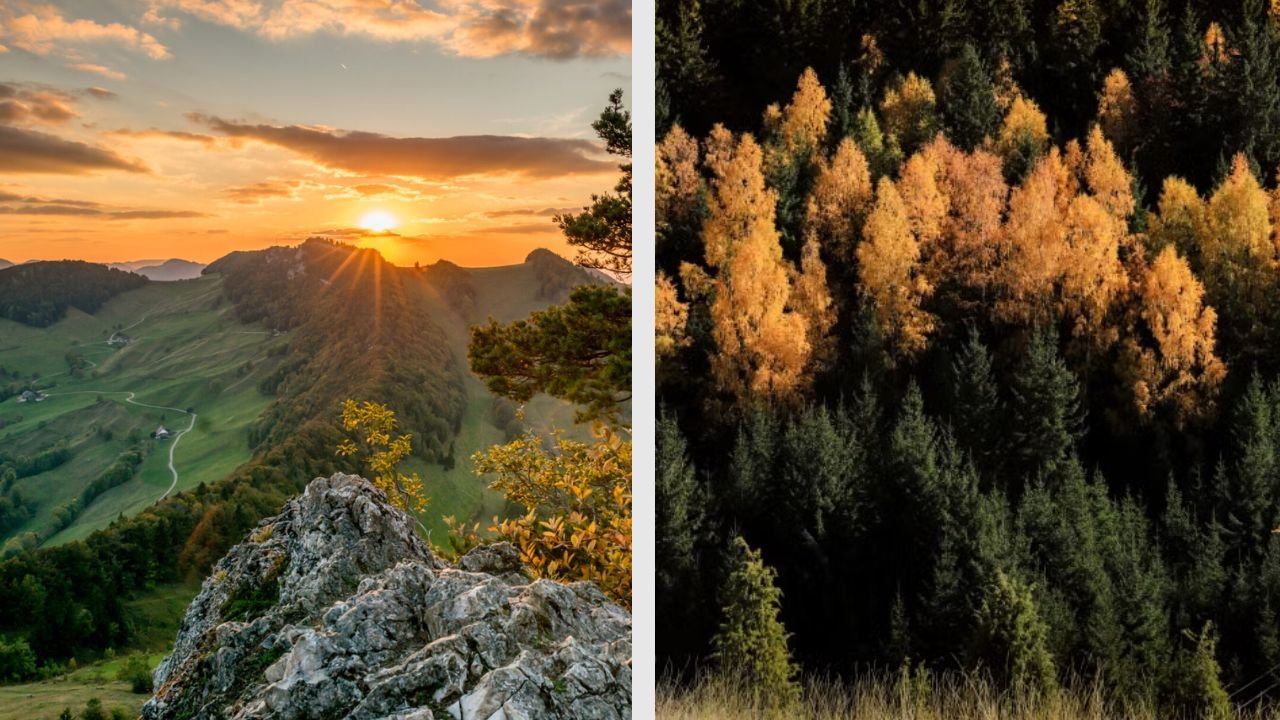
(Left) Wasserfallen landscape courtesy of region-Wasserfallen.ch
Late October
Sihlwald: Zurich’s Overlooked Autumn Forest
Zurich rarely appears on lists of Switzerland’s great autumn destinations. Its color is less concentrated than the golden larch forests of the Engadin and less immediately recognizable than the vineyards of Lavaux. It is found instead in wooded hills, lakeside parks and the broad Sihl Valley.
South of the city, Sihlwald offers the most compelling version of this quieter season. Once intensively managed for timber, the forest is now protected and increasingly left to develop according to its own natural rhythms. Old trees, fallen trunks, moss and the Sihl River create a landscape that feels unexpectedly wild for somewhere so accessible from Zurich.
There is no need to pursue a single definitive route. Begin near the Sihlwald visitor center and follow one of the marked forest paths according to the daylight and conditions. The experience lies in the woodland itself: wet bark, decomposing leaves, filtered light and the sound of the river beneath the canopy.
Among the many possible autumn walks in Switzerland, Sihlwald offers something unusually intimate. There is no grand Alpine reveal—only a forest settling slowly toward winter.
Best for: Old woodland, river paths and a quiet day from Zurich
When to go: Usually late October into early November
Starting point: Sihlwald railway station or visitor center
Information: Wildnispark Zürich
Late October to Early November
The Vineyard Terraces of Lavaux
By the time the high larches have shed their needles, autumn may still be spreading through the vineyards above Lake Geneva.
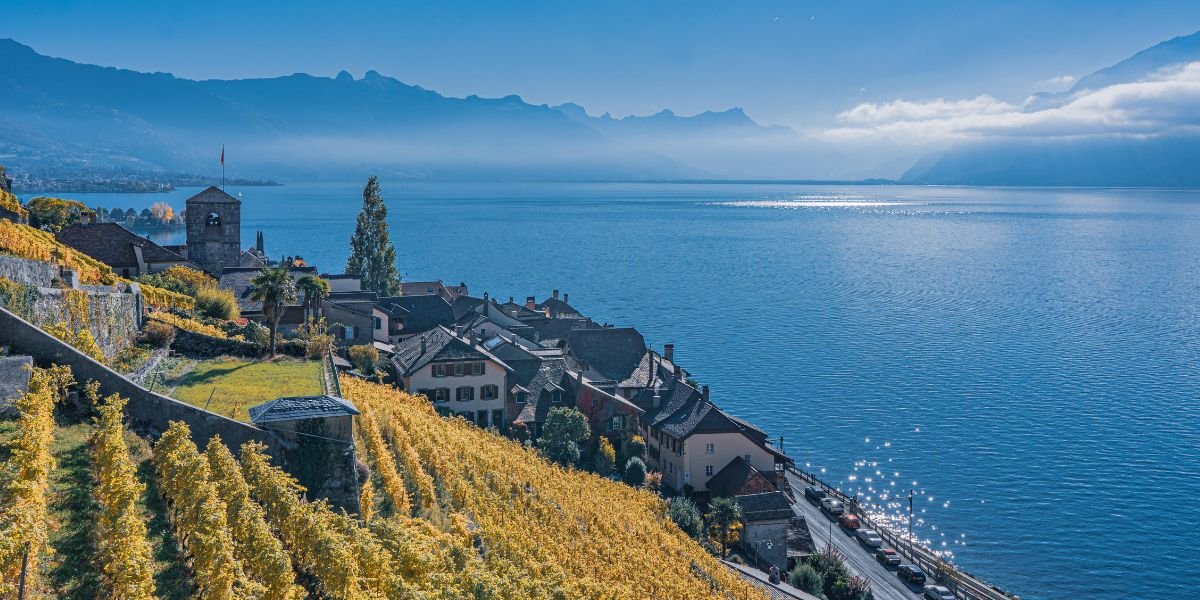
SwitzerlandMobility Route 113, Terrasses de Lavaux, crosses the UNESCO-listed wine landscape between Lutry and St-Saphorin. The route passes through a succession of vineyard villages, stone walls and steeply arranged terraces overlooking the lake.
This is not wilderness. Lavaux is a cultivated landscape shaped over centuries by human labor, sunlight and the geometry of the slopes. After the harvest, the vines turn yellow, bronze and rust. The air becomes cooler, the paths quieter and the low autumn light catches the surface of the lake below.
The complete walk is approximately 11 kilometers and takes around three hours, although the nearby railway makes it easy to shorten the journey. Despite the paved and surfaced vineyard paths, the route includes noticeable climbing and descending.
Walk in the official direction from Lutry toward St-Saphorin, or select a shorter section around Grandvaux, Cully, Epesses or Rivaz.
Best for: Golden vineyards, historic villages and lake views
When to go: Usually late October to early November
Route: SwitzerlandMobility Route 113
Distance: Approximately 11 km
Walking time: Around 3 hours
Difficulty: Easy to moderate, with repeated inclines
Reading the Season
Exact peak dates are impossible to guarantee. A warm September may delay the color; early snow can close an Alpine path; strong wind can strip a forest almost overnight.
Use the calendar only as a starting point. Check webcams, regional foliage reports, mountain-railway schedules and current trail notices before departing. The free SwitzerlandMobility map shows Switzerland’s official hiking network and numbered routes.
The reward for remaining flexible is the possibility of seeing autumn more than once: first among the larches, then beneath the beeches and, weeks later, in the last illuminated rows of vines.
In Switzerland, autumn is not just a single weekend. It is a season moving slowly down the mountain.

Leave a Reply