

No products in the cart.
Art Nouveau from Germany into Switzerland — Jugendstil, Textile Cities, and the Jura Forest
Following nature’s patterns through Swiss architecture and everyday design.
A curling iron railing, a flower worked into stone, a fir branch repeated beneath a roofline. Switzerland’s Art Nouveau often reveals itself through details—small enough to pass unnoticed until something makes you pause.
Around the turn of the twentieth century, artists and architects across Europe were weaving new possibilities in natural forms.
Stems, leaves, blossoms, and branching structures became starting points for buildings, interiors, textiles, and printed pages. In Switzerland, these ideas met established craft traditions and industries with connections far beyond the country’s borders.
Following their traces leads through embroidery houses in St. Gallen and into the watchmaking city of La Chaux-de-Fonds, where the surrounding Jura forests gave the movement a distinctive local expression.
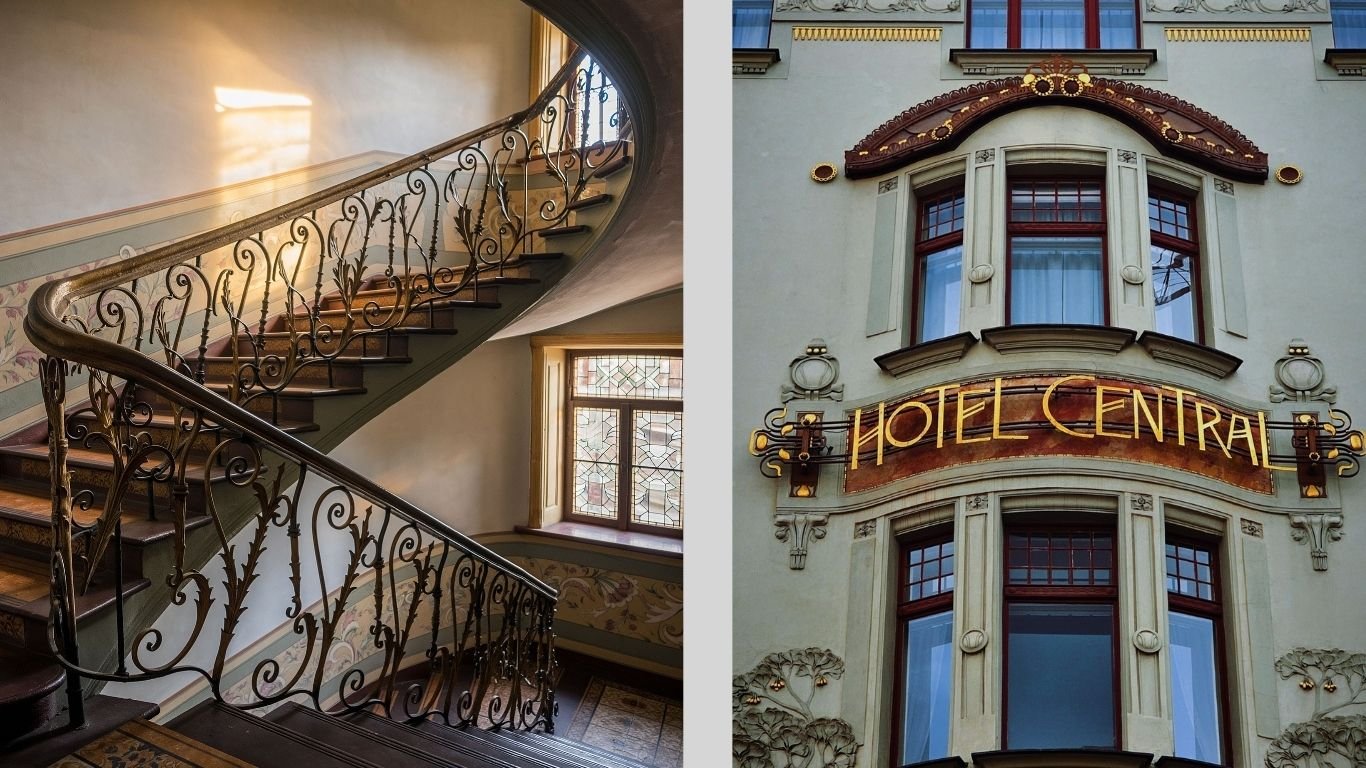
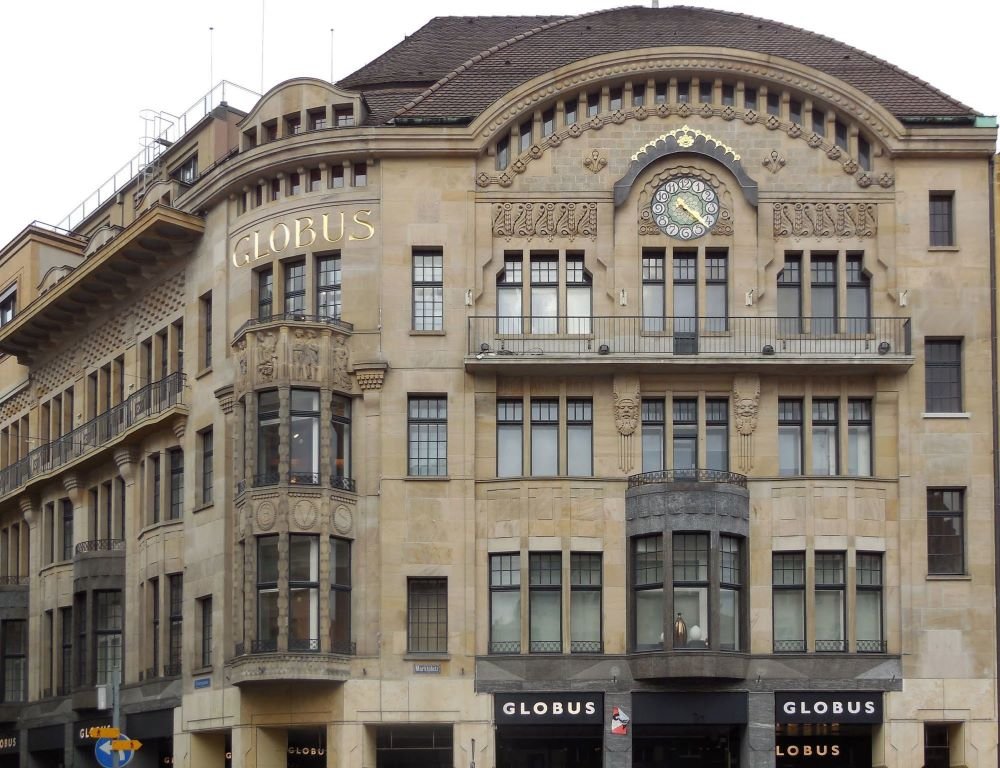
Photo of Globus building in Marktplatz, Basel courtesy of the Swiss Spectator.
A European Movement, a Swiss Expression
Art Nouveau emerged in the late nineteenth century as artists sought alternatives to the repeated historical styles of their time. Its flowing lines and plant-inspired ornament offered a fresh vocabulary, carrying design across the boundaries between architecture, fine art, and ordinary objects.
In German-speaking Europe, the movement became known as Jugendstil, taking its name from the Munich magazine Jugend, first published in 1896. Illustrated journals helped circulate these new ideas, bringing experimental design to readers well beyond the cities where it was being made. About Jugend.
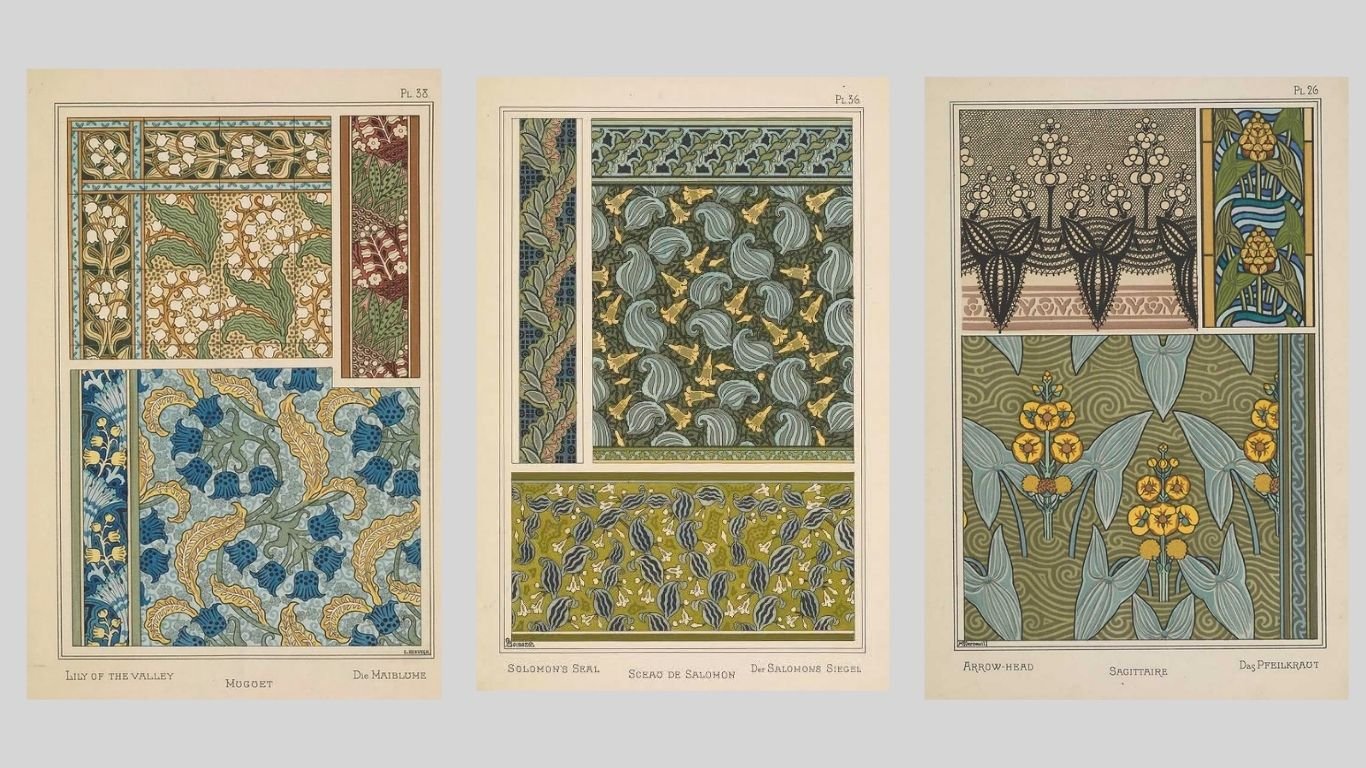
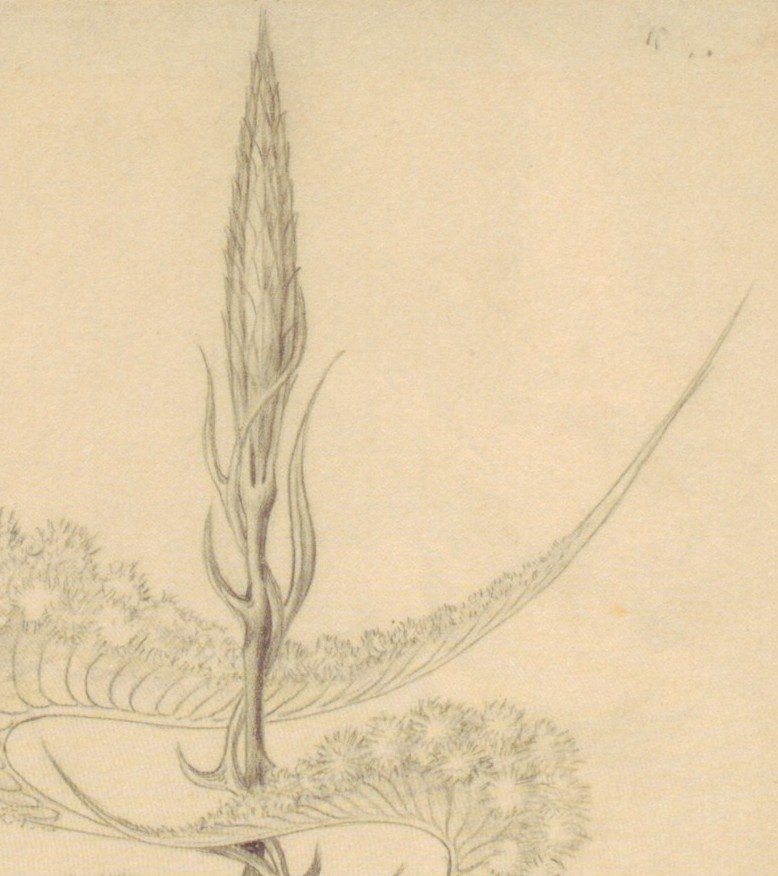
Thorny stem with bud (detail) by Hermann Obrist, State Graphic Collection Munich
Switzerland participated in this wider exchange through its artists, schools, workshops, and commercial networks. The Swiss-born designer Hermann Obrist, active in Munich, was one of the figures connecting the two countries. Within Switzerland, the movement took different forms according to the places and crafts that received it.
In St. Gallen, its story is closely tied to embroidery.
St. Gallen: Embroidery Written into the City
Around 1900, St. Gallen’s international embroidery trade helped shape an ambitious urban landscape. Businesses needed places to design, display, and sell their fabrics, and architecture became part of how they presented themselves to the world.
The Oceanic building, at St. Leonhardstrasse 20, makes that connection particularly clear. Built in 1904–1905 for embroidery entrepreneur Karl Fenkart, it brought showrooms, design spaces, and the family’s apartment together under one roof. Its curved sandstone façade gave a commercial building a distinctive presence, while its name expressed the industry’s international outlook. Oceanic building, Textilland.
Seen with this history in mind, the city’s decorative surfaces take on another meaning. Ornament belonged to the working life of a place whose fortunes depended on pattern, craftsmanship, and an eye for changing tastes.
The Broderbrunnen fountain offers another point of interest. Sculptor August Bösch combined neo-Baroque and Jugendstil elements here—a useful reminder that styles overlapped, and that buildings and public artworks rarely fit neatly into a single category. August Bösch and the Broderbrunnen.
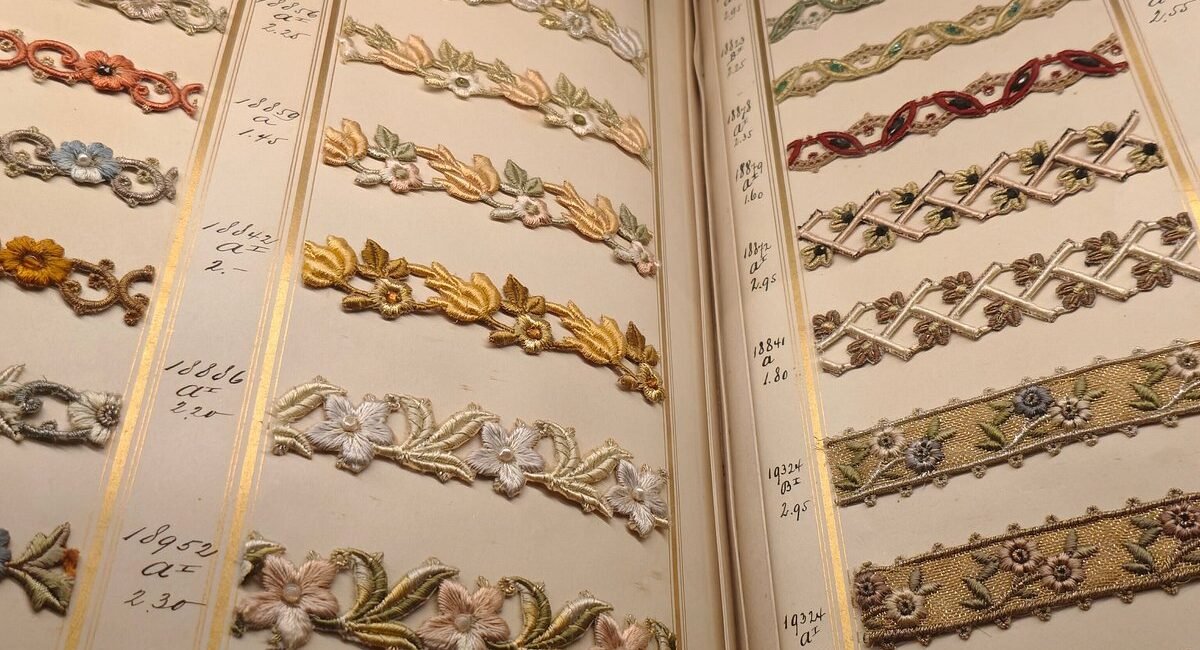
Textile Museum at St.Gallen courtesy of Tripadvisor
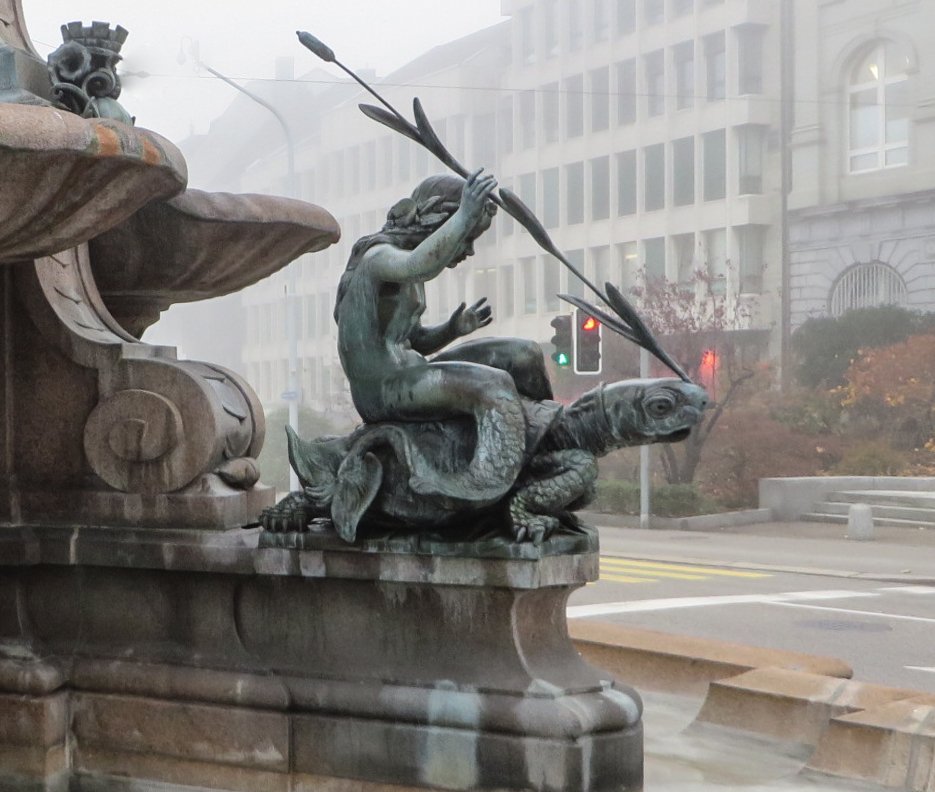
A detail of the Broderbrunnen Fountain in St. Gallen. Photo courtesy of Wikipedia.
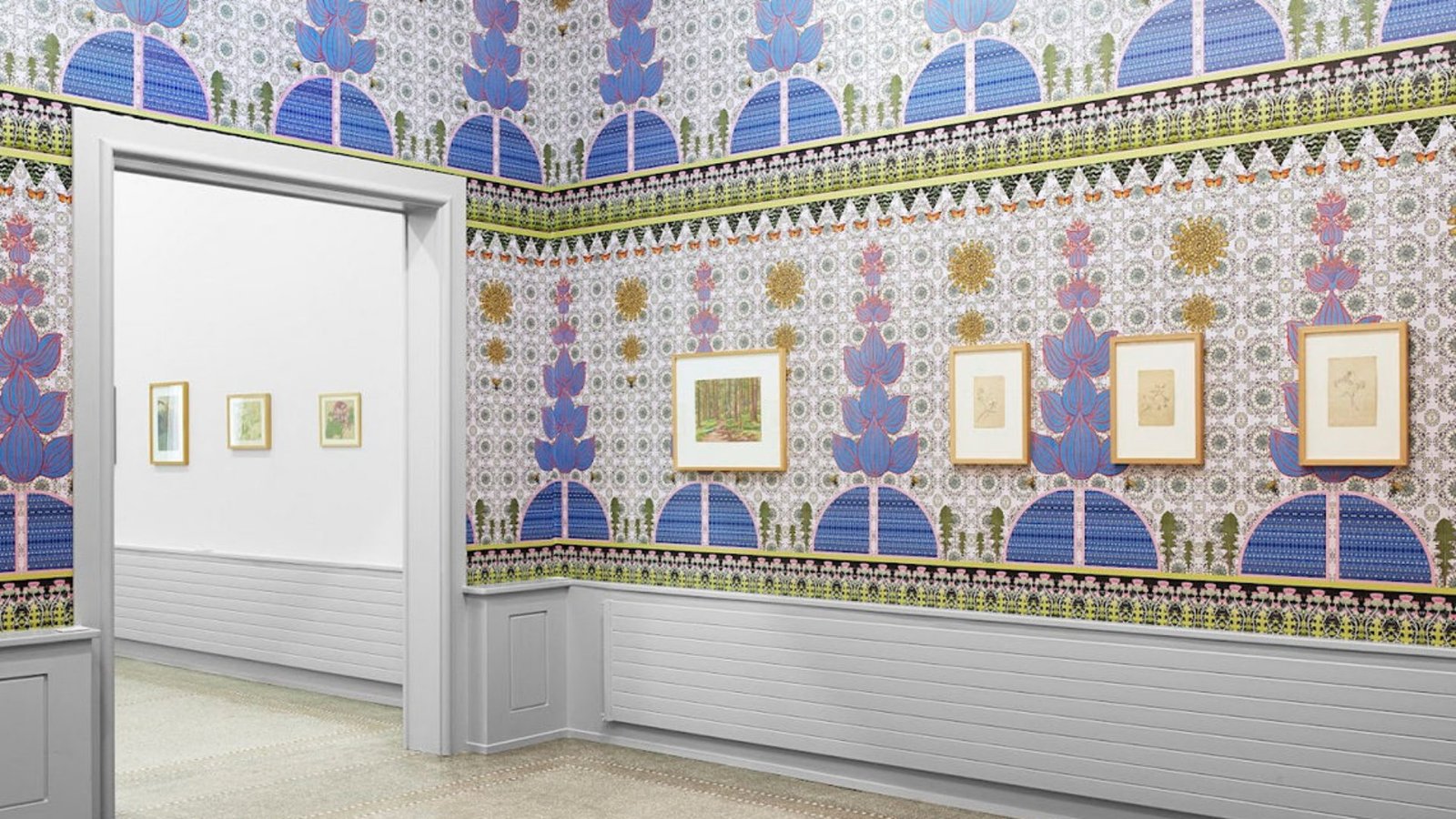
Photo of Musée des beaux-arts in La Chaux-de-Fonds courtesy of https://le-o.ch/.
Style Sapin in the Jura Mountains
An exclusive Swiss form of Art Nouveau, known as the “pine tree style” is characterized by stylized pine branches, especially noticeable in the Swiss Jura region. Between 1905 and 1914, this little watchmaking town became the birthplace of Style Sapin, Switzerland’s very own spin on Art Nouveau.
So what makes it special? While Art Nouveau across Europe leaned into flowing lines and nature-inspired motifs, Style Sapin rooted itself deeply in the local landscape. Think fir trees (the name literally means “fir style”), thistles, gentians, and even squirrels, lizards, and foxes. The artists weren’t just decorating with pretty patterns — they were telling the story of their home turf.
The movement was led by painter and architect Charles L’Eplattenier, a teacher at the local art school. He encouraged his students to look closely at the Jura’s flora and fauna and transform what they saw into a new design language. The result was art and architecture filled with stylised pine trees, geometric details, and that classic Art Nouveau “whiplash” curve.
And this wasn’t just about painting a few pretty pictures. The idea was to create a “total work of art” — Style Sapin showed up everywhere: on buildings, furniture, ceramics, textiles, and more.
Some places to spot it today:
- Villa Fallet (1906), a chalet where fir motifs climb across the façade.
- Musée des beaux-arts in La Chaux-de-Fonds, which holds a treasure trove of Style Sapin designs.
- And of course, around town in both public and private buildings, where you can still see its influence woven into the city’s fabric.
In short, Style Sapin is Switzerland’s Art Nouveau with a mountain soul — rooted in the Jura forests, yet still part of the bigger European movement.
La Chaux-de-Fonds: The Forest Becomes Ornament
Farther west, in the Jura, Art Nouveau developed a more explicitly local vocabulary.
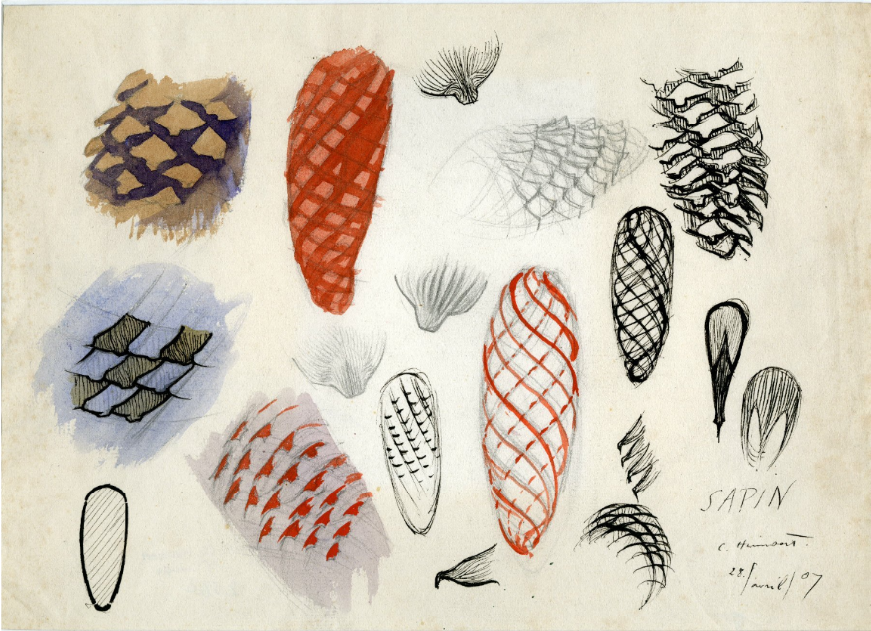
In La Chaux-de-Fonds, artist and teacher Charles L’Eplattenier encouraged his students to study the natural world around them. The forms of the Jura landscape became the basis for Style Sapin, or “fir style”: a regional expression of Art Nouveau in which branches, cones, and forest plants were translated into decorative patterns.
Here, nature offered both imagery and structure. A tree could suggest a repeated geometric form; the arrangement of its branches could guide a composition. The result feels closely connected to the wooded landscape surrounding the watchmaking city.
Villa Fallet brings these ideas into architecture. Designed by the young Charles-Édouard Jeanneret—the future Le Corbusier—with René Chapallaz under L’Eplattenier’s guidance, it combines local building traditions with Style Sapin decoration. It offers an intriguing glimpse of the architect’s beginnings, before the spare forms for which he later became known. Villa Fallet and Le Corbusier’s early training.
After looking at these patterns, the trees beyond the city become part of the experience. Their shapes are familiar again, now echoed in the buildings.
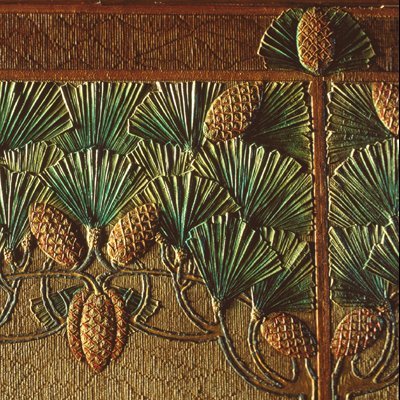
Above: Sapin Study courtesy of decoatouslesetages.fr. | Cover Image: Sapin Study. Charles Humbert, Fir Trees , 1907, Museum of Fine Arts of La Chaux-de-Fonds .
Key Figures in Swiss Jugendstil
- Hermann Obrist – A Swiss sculptor and applied artist whose work in Germany helped define Jugendstil.
- August Bösch – Known for his fountain in St. Gallen, blending sculptural elegance with decorative symbolism.
- Hans Eduard von Berlepsch-Valendas – A Munich-based designer deeply connected to the St. Gallen scene.
- Martha Cunz – Celebrated for her Japanese-inspired woodblock prints, she brought global influences into Swiss design.
- Charles L’Eplattenier – Painter, architect and teacher at the local art school who by studying the Jura’s flora and fauna and created a new design language.
Beyond Architecture: Everyday Beauty
Swiss Art Nouveau wasn’t confined to buildings. It spilled into everyday life through posters, graphic arts, and decorative objects. From elegant stairwells in La Chaux-de-Fonds—inspired by the Jura landscape—to residential villas like Museum Langmatt in Baden, the movement transformed how people experienced beauty in their daily surroundings.
Even Zurich, though less prominent than St. Gallen, showcases architectural gems from the period that invite exploration for design lovers.
To explore these details on foot, follow the Art Nouveau walk through La Chaux-de-Fonds. A free brochure from the tourist information office helps you find traces of Style Sapin in ironwork, stained glass, and stairwells—a way to follow the Jura’s natural forms into the fabric of the city.
Below: Print by Marie-Louise Goering, “Untitled”, undated. Gouache on paper. 31.6 x 23.2 cm. Courtesy of mbac.ch.
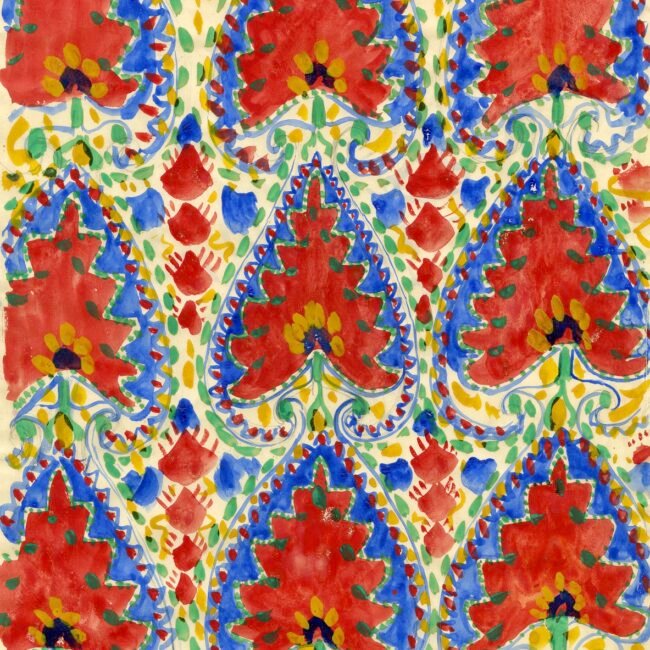
Beauty at the Scale of Everyday Life
The movement’s reach extended well beyond façades. Posters, embroidery, furniture, ceramics, and interior decoration all offered ways to bring art into daily surroundings.
This is part of its enduring appeal. A printed advertisement could receive the same care for line and composition as an interior. A staircase could become a place to linger. Useful objects could carry the rhythms of the natural world into rooms and routines.
For the traveler, these smaller encounters offer a rewarding way to explore. Look above a shopfront, follow the curve of a balcony, or spend a little longer with a textile or illustrated poster. Details begin to connect across materials and places.
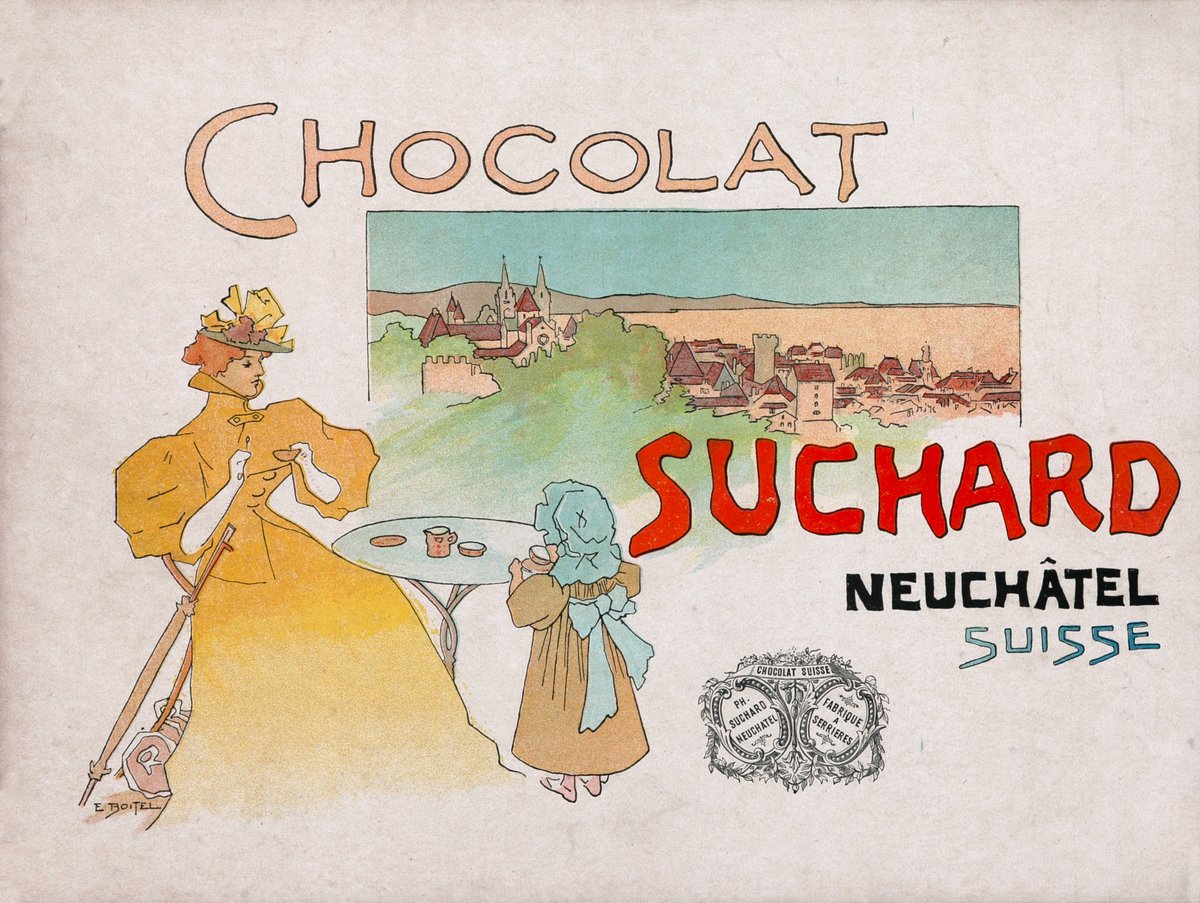
Art Nouveau Suchard Neuchatel Switzerland Chocolate Vintage Poster by E. Boitel. Photo courtesy of dpvintageposters.
A TOUR NOIR Note
Give this kind of looking an unhurried morning. Choose a few buildings, leave space between them, and sit somewhere you can watch the street. In St. Gallen, follow the relationship between embroidery and architecture. In La Chaux-de-Fonds, look for the forest in the ornament. You do not need to identify every motif to enjoy what it does to a doorway, a room, or the rhythm of a façade.
Sometimes a single detail is enough to change how you see the rest of a city. Pair it with a stop at a local café or embroidery museum for a full experience of the city’s cultural heritage. For modern travelers and design enthusiasts, Switzerland’s Jugendstil legacy offers a chance to see the Alps in a new light. It’s a reminder that this country isn’t only about rugged mountains and timeless traditions—it’s also about creativity, elegance, and innovation. Exploring these Art Nouveau landmarks means stepping into a moment when Switzerland exhaulted beauty in nature, art and design.
Leave a Reply