

No products in the cart.
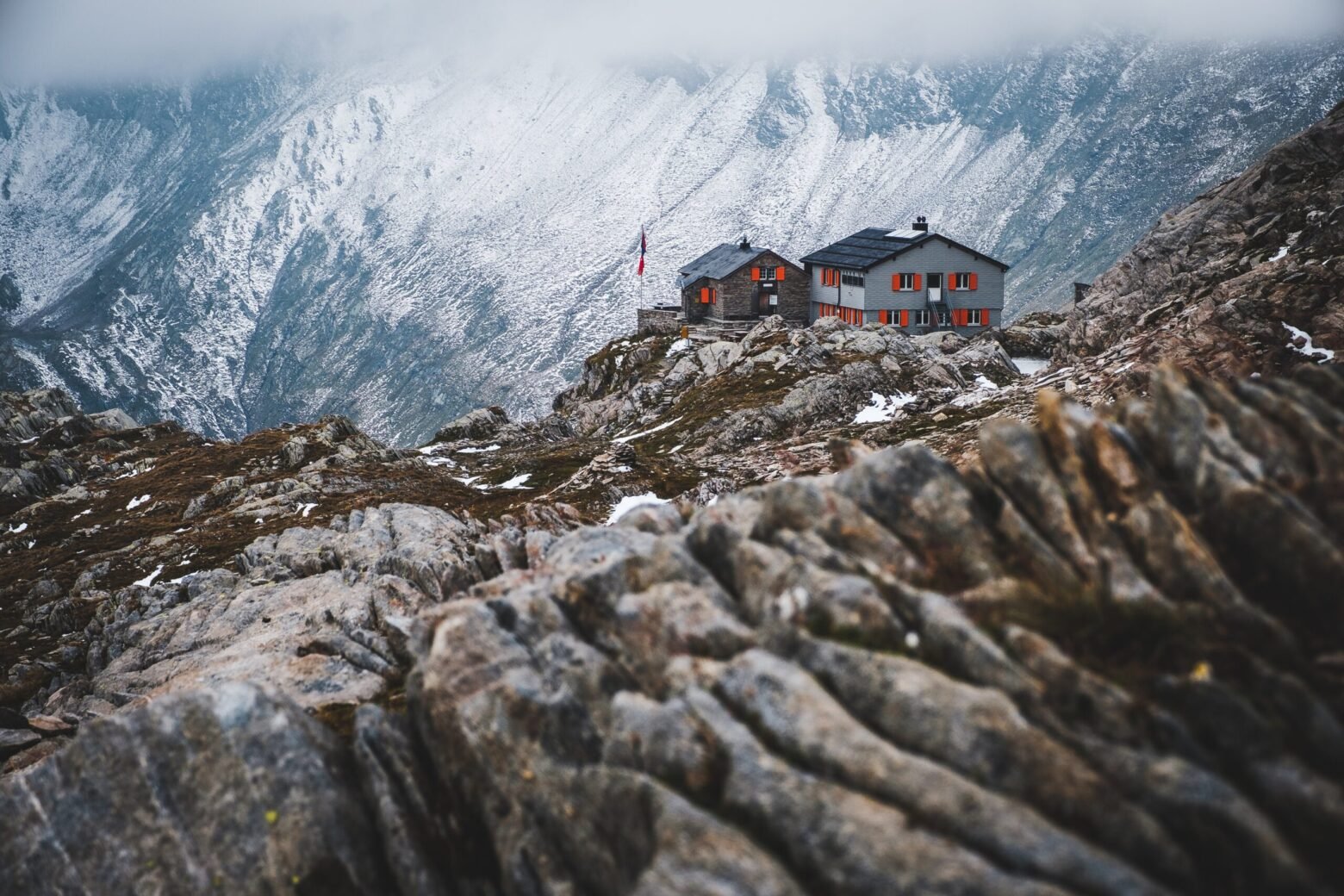
Experiencing the Swiss Mountain Hut — Shelter, Weather, and Slow Alpine Life
In the Alps, movement changes.
Distances stretch. Weather arrives quickly. Light shifts across rock faces and glaciers. Trails disappear into fog and reappear again higher above the valley floor. Walking becomes slower, quieter, and more attentive.
Swiss mountain huts exist within this rhythm.
Scattered across the Alps above forests, glaciers, lakes, and high passes, these huts were never designed as luxury destinations. They began as places of refuge — practical shelters for climbers, shepherds, hikers, scientists, and travelers moving through difficult terrain and changing weather.
Even today, many still carry this atmosphere.
After hours of walking, arrival feels unusually physical: boots left drying near the entrance, cold air still lingering in your clothes, soup and tea appearing quietly at long communal tables while clouds continue shifting outside the windows.
Mountain hut culture in Switzerland is less about conquering peaks than learning to move more slowly through altitude, weather, and landscape.
Why Mountain Huts Exist
The Swiss Alps are deeply shaped by infrastructure.
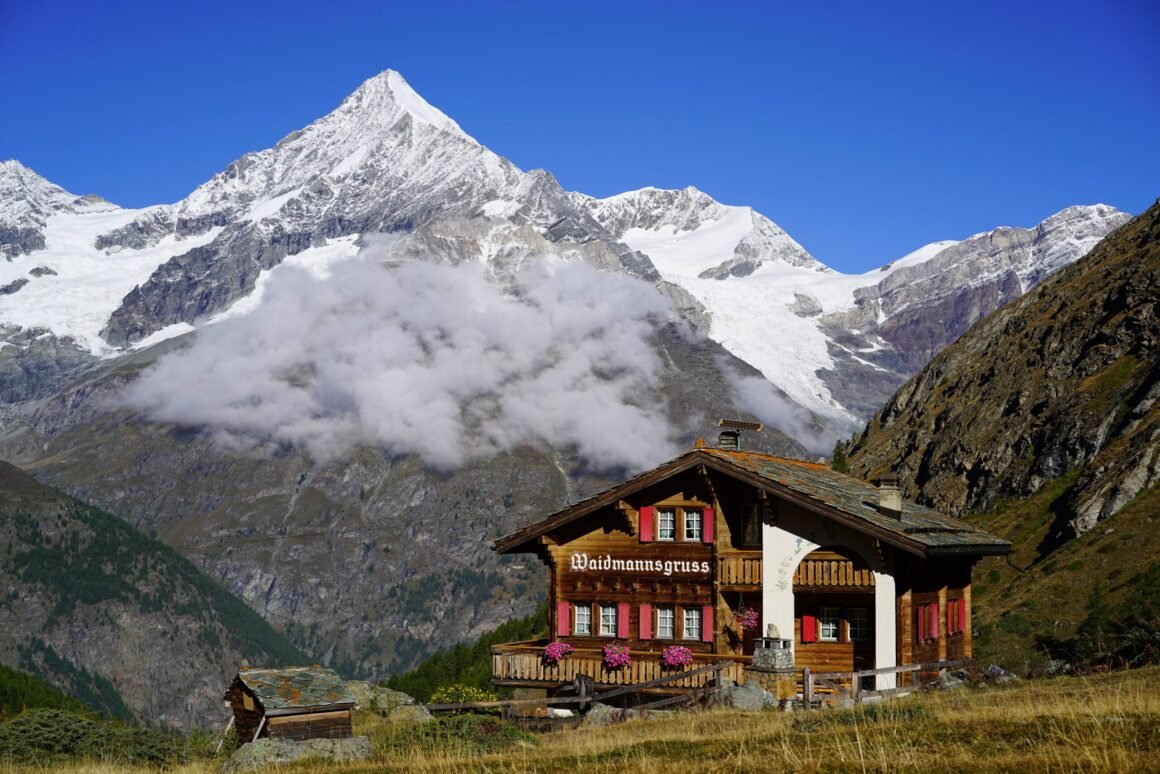
Trains climb mountain valleys. Cable cars connect villages to high terrain. Footpaths cross passes once used for trade, migration, and seasonal agriculture. And throughout the mountains, huts provide shelter in places where weather and distance still matter.
Many huts are operated by the Swiss Alpine Club (SAC), whose network extends across remote regions of the country. Some remain simple and traditional, while others have evolved into remarkable examples of contemporary alpine architecture.
Yet even the most modern huts still serve the same essential purpose: refuge.
Water, energy, food, building materials, and waste systems must all function under difficult environmental conditions. Every architectural decision becomes tied directly to climate, altitude, snow load, solar exposure, and isolation.
The mountains allow very little excess.
Walking Into Altitude
One of the most striking aspects of hut culture is how gradually it changes perception.
Unlike destinations reached immediately by car or train, huts often require hours of movement through changing terrain. Forest gives way to exposed rock. Air cools. Sounds soften. Villages disappear below the tree line.
By the time hikers arrive at a hut, the landscape has already begun slowing the body and mind.
This transition matters.
The hut becomes part of a larger rhythm of movement: departure in early morning light, long traverses across ridgelines, weather checks before storms, shared route conversations over dinner, and quiet observation from terraces suspended above valleys and glaciers.
The experience is shaped as much by the approach as the destination itself.
Shared Tables, Quiet Evenings
Swiss mountain huts operate through an unusually communal rhythm.
Strangers sit together at long wooden tables. Hiking boots line entryways. Weather forecasts are discussed alongside tomorrow’s routes. Drying rooms fill with damp jackets and gloves while dusk settles outside.
There is often little need for performance or spectacle in these spaces. The mountains themselves already demand attention.
Evenings tend to arrive quietly.
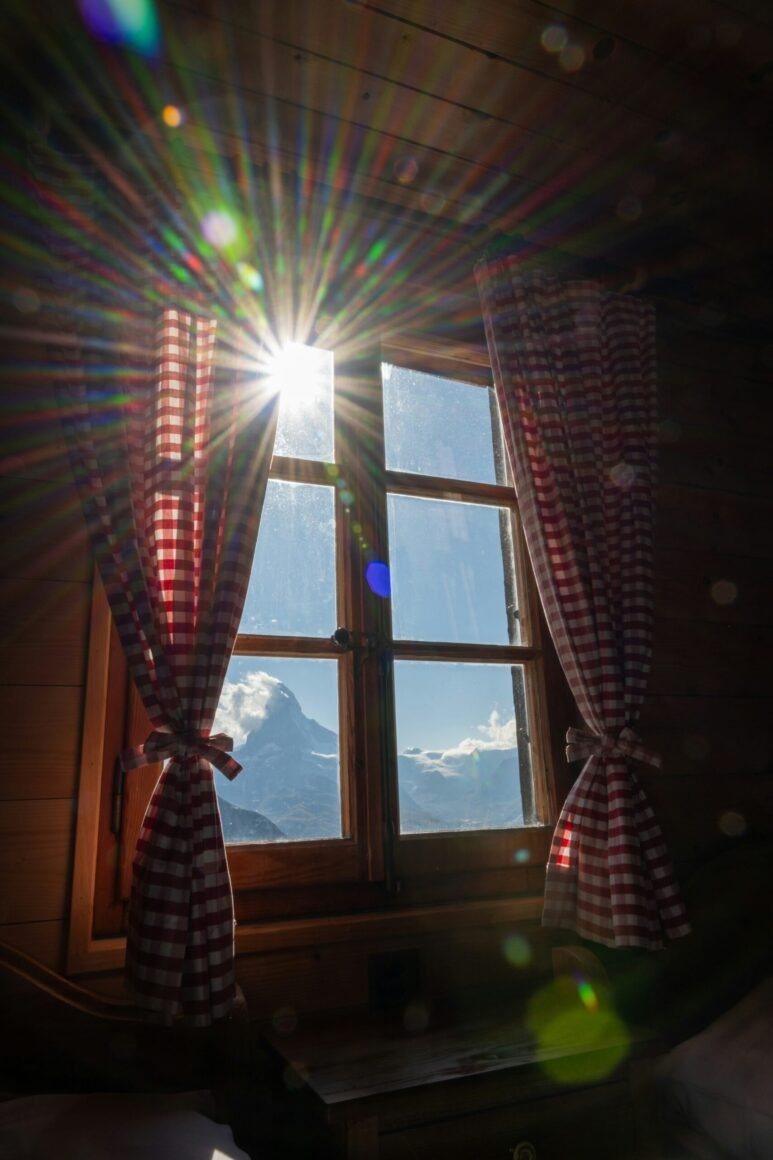
Windows fog slightly from warm interiors. Headlamps flicker outside after sunset. Conversations soften as hikers prepare for early departures before weather shifts again in the morning.
Many huts still maintain a sense of simplicity that feels increasingly rare elsewhere in tourism culture.
The focus remains on shelter, landscape, movement, and shared experience rather than consumption.
Modern Alpine Architecture
Some of Switzerland’s most compelling contemporary architecture now exists high in the mountains.
Projects like the Monte Rosa Hut above Zermatt or the Chäserrugg summit building in Toggenburg show how modern alpine design increasingly responds to weather, energy efficiency, isolation, and landscape integration rather than spectacle alone.
Wood, stone, steel, and solar systems are used with remarkable restraint and precision. Buildings are designed to withstand snow, wind, temperature shifts, and difficult terrain while still creating spaces that feel calm, warm, and deeply connected to their surroundings.
In many of these structures, architecture becomes less about dominating the landscape than learning how to exist carefully within it.
Fog, cloud movement, reflected snow light, and changing visibility become part of the interior experience itself.
Weather as Daily Rhythm
In the mountains, weather is never background scenery.
It determines departure times, visibility, route conditions, energy levels, and sometimes whether movement is possible at all.
Swiss hut culture remains closely tied to this awareness.
Storms can arrive within minutes. Dense fog can erase entire landscapes. Snow may linger well into summer at higher elevations. At dawn, peaks emerge briefly before disappearing again into cloud.
This creates a different relationship with time.
Many travelers arrive expecting dramatic views and leave remembering smaller details instead: steam rising from drying clothes, cold air entering a hut doorway at sunrise, silence after snowfall, or the strange calmness that settles over alpine spaces once daylight fades.
Tour Noir Note
Swiss mountain huts are ultimately less about isolation from the world than deeper immersion within it.
Weather, altitude, fatigue, architecture, and landscape all begin shaping daily rhythm in more visible ways. Movement slows. Attention sharpens. Shelter becomes meaningful again.
And somewhere between the valley floor and the high mountain air, travel begins to feel less consumable — and more inhabited.
More Hidden Switzerland,
less tourist noise. Get the free Tour Noir planning companion.

Leave a Reply