

No products in the cart.
Thermal Bath Culture in Switzerland — Water, Weather, and Winter Rituals
One of the quietest pleasures of traveling through Switzerland in colder months is the thermal bath.
Not only for the water itself, but for the atmosphere surrounding it: trains arriving through fog and snow, steam rising into mountain air, stone pools warm against winter temperatures, and the strange calm that settles over everything once you enter the water.
In Switzerland, thermal baths are not only luxury destinations or wellness retreats. Many are woven naturally into seasonal life — places people return to during long winters, mountain storms, cold evenings, or weekends when the weather encourages slowing down for a few hours.
The experience feels deeply connected to climate and landscape. Water, weather, architecture, and silence all become part of the same ritual.
Water Beneath the Mountains
Switzerland’s bath culture stretches back centuries. Towns such as Baden, Leukerbad, Scuol, and Yverdon-les-Bains developed around mineral springs long before modern spa tourism existed, in some cases dating back to Roman times.
What remains interesting today is not simply the history itself, but the continuity of the ritual. People still travel toward warm water during winter months much as they always have: by train, through valleys and mountain towns, arriving at places shaped by stone, steam, and weather.
Thermal baths in Switzerland often feel less performative than in many other countries. The atmosphere tends to be quieter, more architectural, and more closely tied to the landscape around them.
The Feeling of a Swiss Thermal Bath
A thermal bath day in Switzerland often begins outside the bath itself.
A train ride through fog. Snow gathering beside the tracks. The transition from cold air into warm interior spaces. Changing rooms filled with winter boots and wool coats. Steam collecting against glass while mountains disappear gradually into evening light.
The strongest baths understand this rhythm well. The experience is not only about pools or treatments, but about transitions between temperatures, textures, light, and silence.
In winter especially, the contrast becomes memorable: cold air against your face while standing in warm outdoor water, snow falling quietly into steam, conversations lowering naturally as the evening settles in.
Architecture & Atmosphere
Swiss thermal baths are also deeply connected to architecture.
Many contemporary bath spaces in Switzerland avoid decorative luxury in favor of restraint: stone, wood, concrete, shadow, natural light, and carefully controlled acoustics.
At Therme Vals, designed by Peter Zumthor, the baths feel almost carved directly into the mountain itself. Local stone, dim passageways, echoing water, and shifting light create an atmosphere that feels both ancient and modern at the same time.
Elsewhere, baths such as Fortyseven Thermal Baths connect historic bathing culture with contemporary Swiss design, while alpine baths like Mineralbad & Spa Rigi Kaltbad and Bogn Engiadina place the experience directly within mountain weather itself.
The architecture rarely tries to dominate the landscape. More often, it frames it.
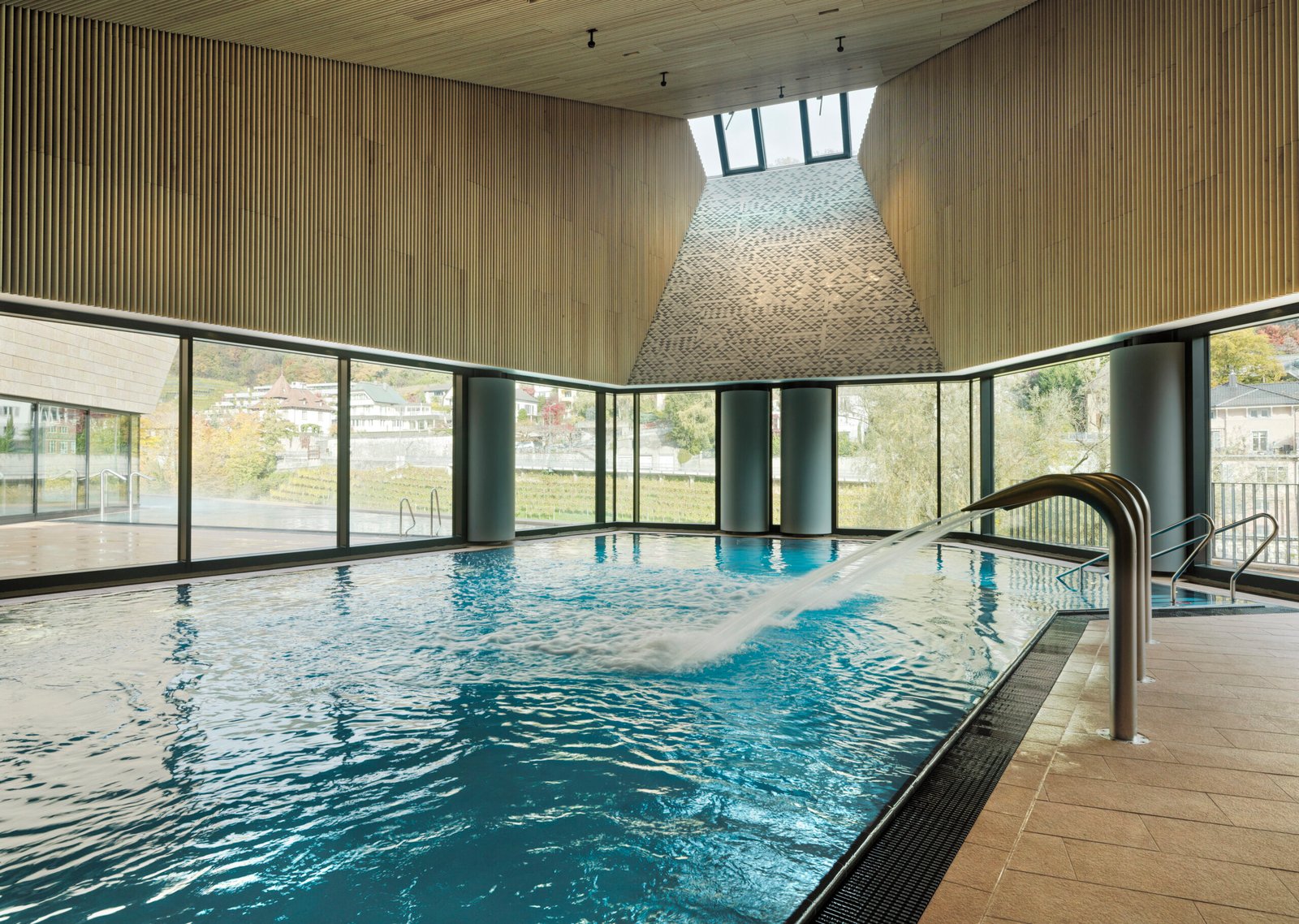
Photo courtesy of FORTYSEVEN Wellness Therme, Baden Switzerland / © Enrico Cano.
Different Bath Cultures Across Switzerland
Each region carries a slightly different bathing atmosphere.
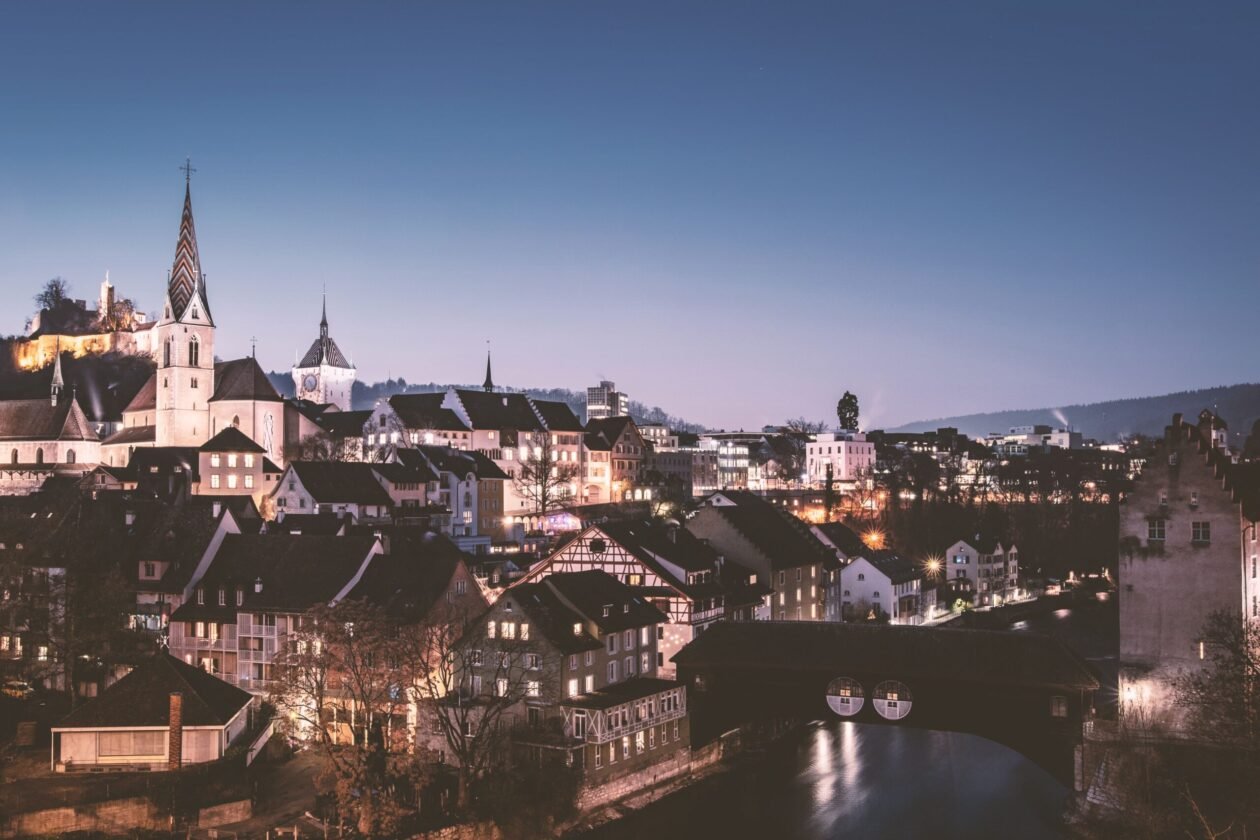
In Baden, thermal culture feels more urban and historic, tied to one of Switzerland’s oldest spa towns.
In Vals, the mood becomes quieter and more architectural, shaped by stone, altitude, and mountain silence.
At Les Bains de Lavey, outdoor pools remain open through winter evenings as steam rises into the Rhône Valley air.
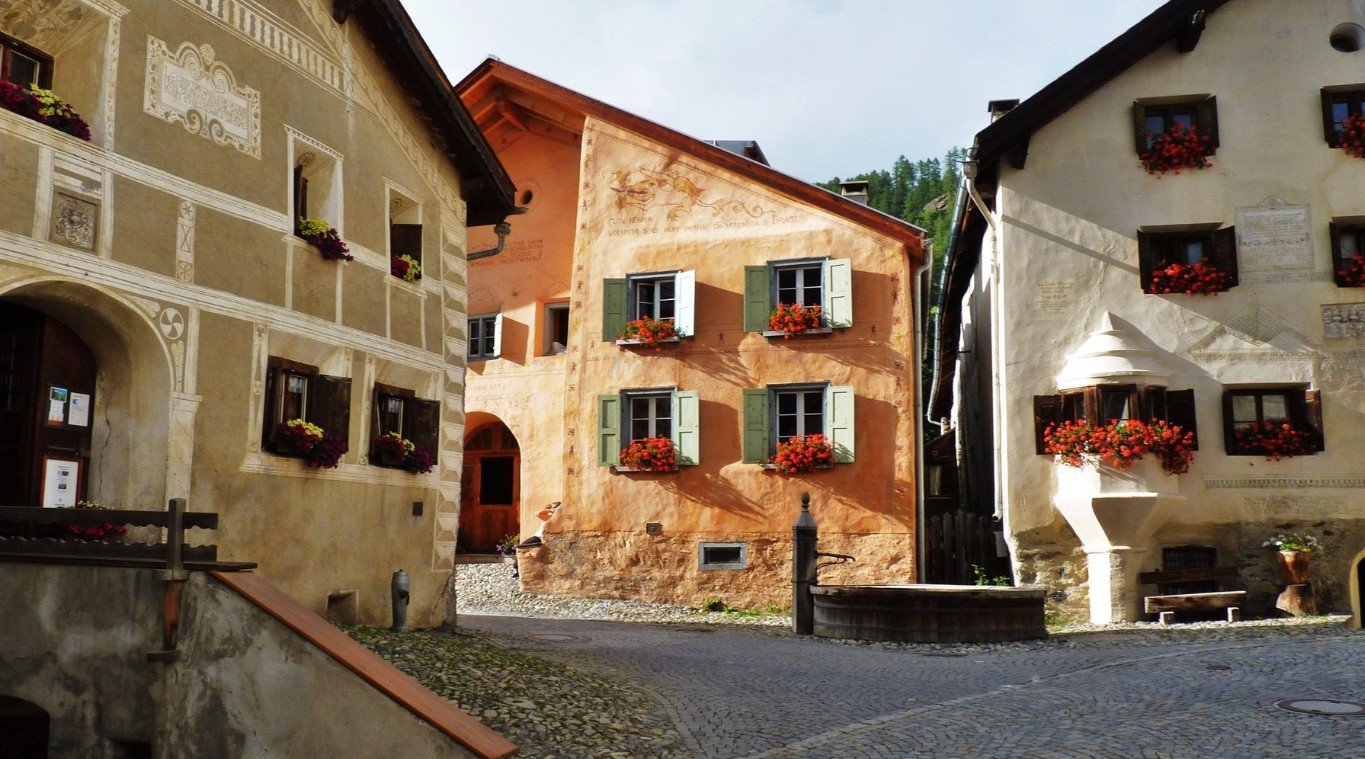
And in the Engadin around Scuol, mineral water traditions remain closely tied to alpine life and long winters.
What connects them is not luxury alone, but the relationship between water, weather, and seasonal rhythm.
Bath Etiquette & Rhythm
Swiss bath culture tends to be calm and understated.
Most baths encourage quiet conversation, slow movement, and respect for shared space. Phones are usually discouraged around pools and saunas, and many visitors move gradually between indoor and outdoor areas over several hours rather than treating the experience as something rushed.
Practically speaking, it is always useful to:
- shower before entering pools or saunas
- check sauna clothing rules in advance
- bring sandals and water
- reserve evening or winter slots early during colder months
The atmosphere is generally less about spectacle and more about settling into the environment itself.
Tour Noir Note
Thermal baths in Switzerland are less about escape than recalibration: weather, water, architecture, silence, and the gradual return of warmth after cold air.
Sometimes the experience is as simple as this: arriving by train, stepping into warm water as snow begins to fall, and staying long enough for the outside world to quiet down into nature’s pure stillness. Here, thermal baths often feel less like luxury destinations than extensions of climate and landscape — places where weather, stone, silence, and water shape the rhythm of winter life.
Continue Through Switzerland:
MORE HIDDEN SWITZERLAND
less tourist noise.
Get the free Tour Noir planning companion
Leave a Reply