

No products in the cart.
Martigny, Switzerland — Roman Roads, Art, Wine, and Alpine Light
art, appetite, roman echoes on a slower valais weekend
Martigny is one of those Swiss towns that does not demand attention immediately. It gathers slowly.
Set in a valley in the Lower Valais region, Martigny brings together Roman history, contemporary culture, strong local food, vineyard light, and easy access to quieter corners of the region. At TOUR NOIR we find it works best as a two- to three-night stay — enough time to move between museums, old stone, long lunches, and a few scenic detours without rushing.
If you are looking for a Swiss destination with depth, atmosphere, and a slightly softer edge, Martigny is worth your time.
Why Visit Martigny
Martigny holds several moods at once: cultured, historic, edible, sun-warmed, and quietly strategic.
It is a place of contrasts — sculpture gardens and Roman remains, Saint Bernards and exhibition spaces, fondue tables and dry hillside landscapes. It feels grounded and unshowy, which is part of its charm.
Rather than treating Martigny as a stopover, it’s also a viable base for a slower Valais weekend.
Where to stay in martigny
The best place to stay in Martigny depends on the mood you’re after.
If you prefer a more design-forward stay, Hôtel Borsari is the clearest fit. It suits travelers who care about atmosphere as much as convenience.
For a central boutique base, mARTigny Boutique Hôtel works well. It is a good option if you want to stay close to the town’s rhythm, museums, and restaurants while keeping some character around you.
If you would rather stay a little above the valley, Beau-Site Hotel in Chemin-Dessus offers a quieter, more removed feeling. It is a good choice if you want Martigny nearby, but not directly outside your window.
For something simple and practical, Hôtel Alpes & Rhône makes sense as a comfortable central base.
Plan a quieter Switzerland trip — get the free Swiss phrase card + travel checklist.
How to Get to Martigny
Martigny is one of the easier Valais towns to fold into a rail-based Switzerland itinerary. If you are pairing it with Lausanne, Montreux, Sion, Brig, or a wider Swiss route, train travel is often the most natural fit.
Part of Martigny’s appeal is exactly this sense of connection. It feels like a meeting point rather than an endpoint — a place you can arrive at smoothly, settle into fully, and use as a base for a slower few days.
What to Book Early
If a major exhibition at Fondation Pierre Gianadda is part of the reason you are coming, book that first and shape the rest of the weekend around it. This is Martigny’s cultural anchor, and it deserves to be treated as one.
Barryland is worth booking ahead if you are visiting during school holidays, traveling as a family, or simply want the day to run smoothly. It is an easy stop to underestimate, but it can quickly become one of the more memorable parts of a Martigny visit.
If you want more than a casual climb to Château de la Bâtiaz, check the current guided-visit schedule in advance. The château works beautifully as a scenic and historical counterpoint to the town below, but it is better when approached with a little intention.
And if you are visiting during a busy exhibition period, a long weekend, or a brighter shoulder-season stretch, book your hotel early too. Martigny has a way of feeling overlooked until the moment you realize many other people have had the same good idea.

Café, Village & Scenic Stop Picks
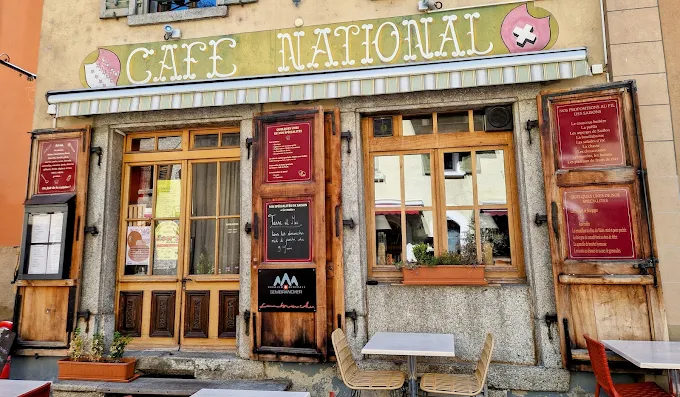
Café National is the place for the first proper meal — rooted, comforting, and unfussy. The kind of table that makes you feel you have arrived.
La Fromathèque leans further into Martigny’s edible identity. Cheese, wine, local products, and atmosphere come together here in a way that feels both grounded and distinctly regional.
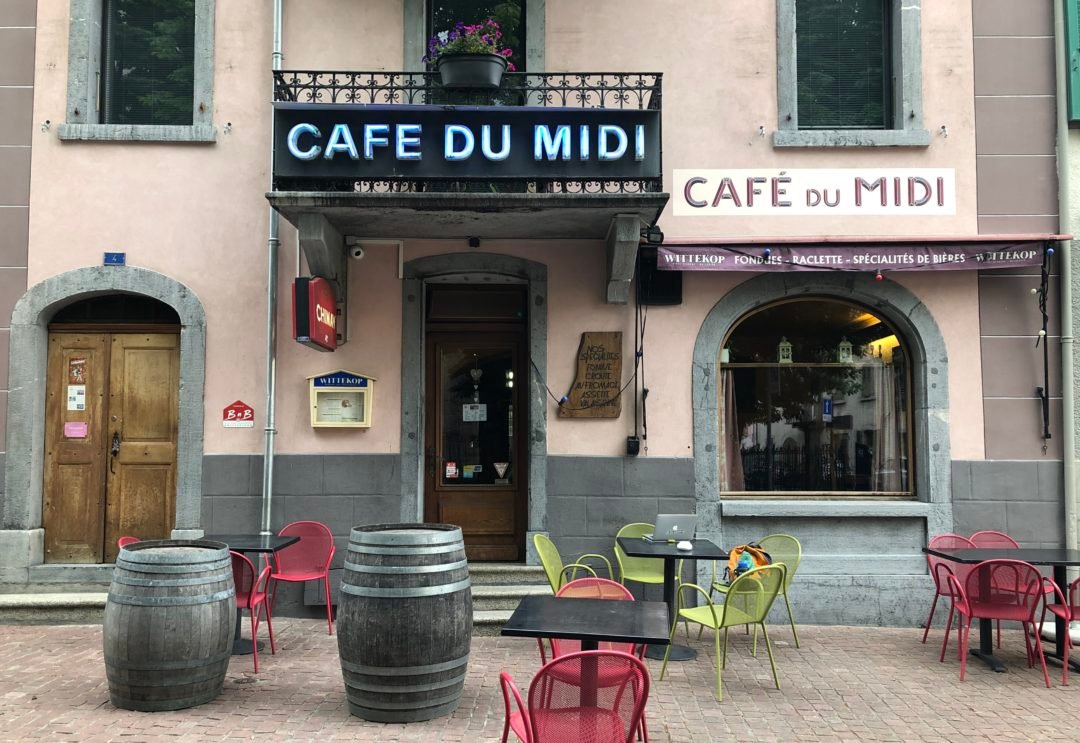
Café du Midi is the stronger, richer dinner option when you want fondue, raclette, and the full Alpine appetite. This is not the place for restraint. It is the place for surrender.
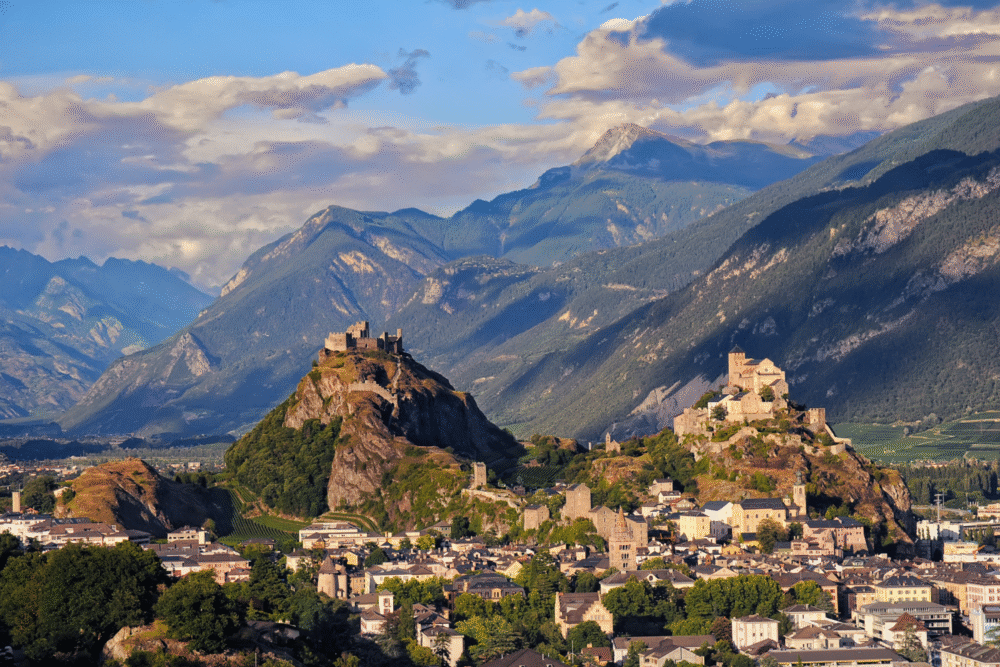
For a shift in perspective, head to Château de la Bâtiaz. Stone, elevation, and a wider sense of the valley all come together here. It gives Martigny a slightly older silhouette and reminds you that this has long been a place of routes, watchpoints, and passage.
If you want something drier, quieter, and slightly wilder, Les Follatères offers another register entirely — sun-struck, airy, and almost southern in mood. It is a good reminder that Martigny is not only about culture and food, but also about the peculiar beauty of the landscape that surrounds it.
Chemin-Dessus makes a good quieter detour if you want to move away from the town proper for a while. Not a trophy stop, but a tonal shift. The kind of place that works best when you want to relax into a not-trying-too hard vibe.
A Quiet Two-Days in Martigny
On the first day, arrive and resist the urge to overfill the schedule. Check in, walk first, and let the town register. Then make Fondation Pierre Gianadda your first real stop. It is a fitting entry point into Martigny: cultured, composed, and grounded in something larger than the town’s size might suggest. End the day at Café National or La Fromathèque, depending on whether you want comfort or something more elegant and atmospheric.
On the second day, begin with Barryland or the Roman amphitheatre, then move upward toward Château de la Bâtiaz later in the day. Let the afternoon open out a little. Finish with a longer, slower dinner — the kind that leaves no room for urgency.
If you have a third day, take the morning outward. Les Follatères, Fully, or simply one of the quieter edges beyond town will give the trip a wider frame and make Martigny feel less like a stop and more like a region.
unique travel experiences
Here are a few TOUR NOIR-style “insider tip” experiences for Martigny that feel personal, slow, agricultural, and quietly luxurious rather than touristy:
Vineyard Walk + Cave Tasting in Fully or Martigny-Combe
Instead of booking a formal wine tour, arrange a late-afternoon tasting directly with a small Valais producer in nearby Fully or Martigny-Combe. The best experiences happen slowly — walking the terraces, discussing the Fendant or Petite Arvine harvest, then tasting in a cellar rather than a showroom. In autumn, many family domaines still allow informal visits if contacted directly.
TOUR NOIR TIP:
Go near golden hour when the Rhône Valley turns copper and blue-grey. Ask for older vintages and local dried meats rather than a “wine package.”
Apricot Orchard Season (Late June–July)
Martigny is deeply connected to Valais apricots — especially the Luizet variety. During harvest season, small roadside stands and family farms around Saxon and Charrat sell fruit directly from the orchards. Some growers allow quiet picking experiences or tastings if arranged in advance.
TOUR NOIR TIP:
Buy a paper bag of warm apricots and eat them beside the vineyards rather than in town. This is one of the most “Valais” experiences you can have for under 10 CHF.
Cheese Aging Cellar + Raclette Evening
Skip large restaurant raclette and seek out a small mountain dairy or affineur above the valley toward Champex-Lac or the lower Val de Bagnes. A few family producers offer cellar visits followed by raclette served traditionally beside the wheel.
TOUR NOIR TIP:
The experience matters more than the menu: smoke in the wood beams, local white wine, silence after dark, and only a few tables.
The Hidden Slow Route: Martigny → Le Châtelard by Regional Train
Most visitors rush toward Chamonix. Instead, take the old Mont-Blanc Express slowly through the gorge toward Le Châtelard, stopping at tiny stations almost no one leaves the train for.
TOUR NOIR TIP:
Sit on the left side leaving Martigny for the valley views. Bring coffee and stay off your phone. The route itself is the experience.
INSIDER TIP
Skip the polished “Swiss experience” packages. Around Martigny, the best moments still happen quietly — an apricot stand beside the road, a cellar tasting with no signage, or a slow train climbing toward the French border while the valley disappears below you.
What to Pack
Pack for one museum interior, one scenic excursion, one long lunch, and one quiet hour with a notebook (or book) you did not expect to use.
Light layers work well for most of the year, along with a compact rain shell, comfortable walking shoes, sunglasses, and a small day bag. A refillable water bottle is always useful, and a notebook or journal feels especially right here.
In shoulder season, add a light knit, a warmer jacket for evening, and sturdier shoes if you plan to head toward drier or slightly rougher terrain around Les Follatères or the higher villages.
Martigny does not ask for anything too dramatic. Instead, it draws thoughtfully on its history and natural wonders, leaving you lots of room to roam and carve out your own journey.

Leave a Reply